1243
Hugh d'Aubigny, 5th Earl of Arundel
Hugh d'Aubigny, 5th Earl of Arundel was the last in the Aubigny male line to hold Arundel Castle.
Hugh d'Aubigny, 5th Earl of Arundel
Explore 52 historical events from 1240–1249.
Hugh d'Aubigny, 5th Earl of Arundel was the last in the Aubigny male line to hold Arundel Castle.
Hugh d'Aubigny, 5th Earl of Arundel

Güyük Khan or Güyüg Khagan, mononymously Güyüg, was the third Khagan of the Mongol Empire, the eldest son of Ögedei Khan and a grandson of Genghis Khan. He reigned from 1246 to 124…
Güyük Khan, Mongol ruler, 3rd Great Khan of the Mongol Empire (born 1206)
The Avignonet massacre occurred on the eve of 28 May 1242 when a small force, mainly consisting of Cathars, massacred a group of inquisitors during the Albigensian Crusade.
Avignonet massacre: A group of Cathars, with the probable connivance of Count Raymond VII of Toulouse, murdered the inqu
Hubert de Burgh, Earl of Kent was an English nobleman who served as Chief Justiciar of England (1215–1232) and Justiciar of Ireland (1232) during the reigns of King John and his so…
Hubert de Burgh, 1st Earl of Kent, English justiciar (born c
William de Warenne, 5th Earl of Surrey was the son of Isabel de Warenne, 4th Countess of Surrey and Hamelin de Warenne. His father Hamelin granted him the manor of Appleby, North L…
William de Warenne, 5th Earl of Surrey (born 1166)
Boniface of Valperga, venerated as a blessed in the Catholic Church, was a thirteenth-century Bishop of Aosta.
Boniface of Valperga, Bishop of Aosta
Isabella was Queen of England from 1200 to 1216 as the second wife of King John, Countess of Angoulême in her own right from 1202 until her death in 1246, and Countess of La Marche…
Isabella of Angoulême (born 1188)
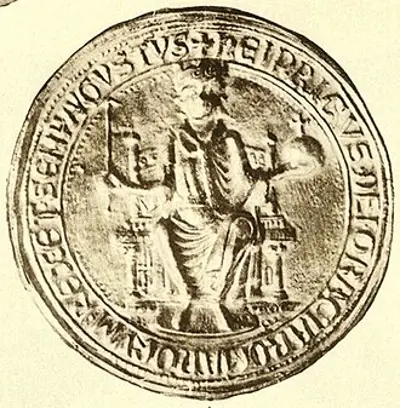
Henry Raspe was the Landgrave of Thuringia from 1231 until 1239 and again from 1241 until his death. In 1246, with the support of the Papacy, he was elected King of Germany in oppo…
Henry Raspe is elected anti-king of the Kingdom of Germany in opposition to Conrad IV
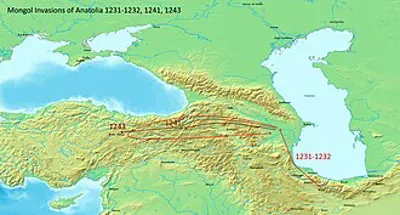
Mongol invasions of Anatolia or Mongol invasions of Turkey occurred at various times, starting with the campaign of 1241–1243 that culminated in the Battle of Köse Dağ. Real power …
Mongol conquest of Anatolia: Mongols achieved a decisive victory over the Seljuq Turks, leading to the decline and…
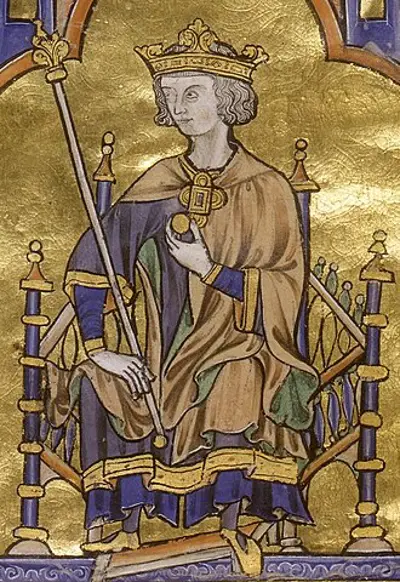
Louis IX, also known as Saint Louis, was King of France from 1226 until his death in 1270. He is widely recognized as the most distinguished of the Direct Capetians, is the sole ki…
At the instigation of Louis IX of France, an inter-faith debate, known as the Disputation of Paris, starts between a Chr
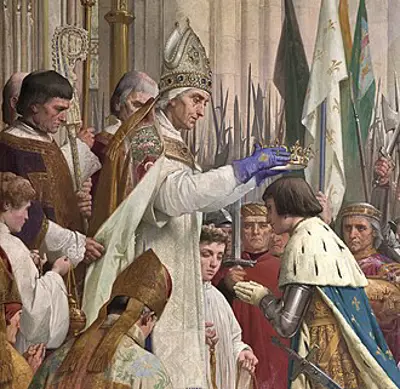
A coronation ceremony marks the formal investiture of a monarch with regal power using a crown. In addition to the crowning, this ceremony may include the presentation of other ite…
Coronation of Alexander III as King of Scots.
Emperor Kameyama was the 90th emperor of Japan, according to the traditional order of succession. His reign spanned the years from 1260 through 1274.
Emperor Kameyama of Japan (died 1305)
Alexander II (1198–1249) was King of Scotland from 1214 until his death. He was the son of William the Lion and Ermengarde de Beaumont, succeeding to the throne at the age of sixte…
Alexander II, king of Scotland (born 1198)
Jacopo Tiepolo, also known as Giacomo Tiepolo, was Doge of Venice from 1229 to 1249. He had previously served as the first Venetian Duke of Crete, and two terms as Podestà of Const…
Jacopo Tiepolo, doge of Venice
Raymond VII was Count of Toulouse, Duke of Narbonne and Marquis of Provence from 1222 until his death.
Raymond VII, Count of Toulouse (born 1197)
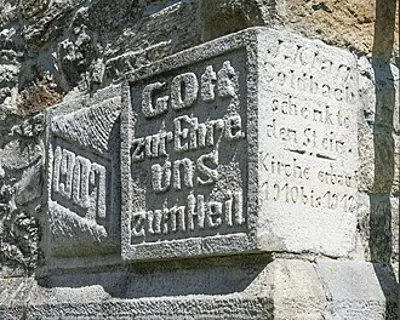
A cornerstone is the first stone set in the construction of a masonry foundation. All other stones will be set in reference to this stone, thus determining the position of the enti…
The foundation stone of Cologne Cathedral, built to house the relics of the Three Wise Men, is laid. (Construction is…
Ommen is a municipality and a Hanseatic city in the eastern Netherlands. It is located in the Vecht valley of the Salland region in Overijssel. Historical records first name Ommen …
The Dutch city of Ommen receives city rights and fortification rights from Otto III, the Archbishop of Utrecht.
Adachi Kagemori was a Japanese warrior. He was part of the Adachi clan, and then he joined the Hojo clan. He was the son of Adachi Morinaga, who was a close advisor to Minamoto no …
Adachi Kagemori, Japanese samurai
Güyük Khan or Güyüg Khagan, mononymously Güyüg, was the third Khagan of the Mongol Empire, the eldest son of Ögedei Khan and a grandson of Genghis Khan. He reigned from 1246 to 124…
Güyük Khan, Mongol ruler, 3rd Great Khan of the Mongol Empire (born 1206)
Henry Raspe was the Landgrave of Thuringia from 1231 until 1239 and again from 1241 until his death. In 1246, with the support of the Papacy, he was elected King of Germany in oppo…
Henry Raspe is elected anti-king of the Kingdom of Germany in opposition to Conrad IV
Frederick II, known as Frederick the Quarrelsome, was Duke of Austria and Styria from 1230 until his death. He was the fifth and last Austrian duke from the House of Babenberg, sin…
With the death of Frederick II, Duke of Austria, the Babenberg dynasty ends in Austria
John FitzAlan III, was an English nobleman. He was also Lord and Baron of Clun and Oswestry in the Welsh Marches.
John Fitzalan III, English nobleman (died 1272)
Isabella was Queen of England from 1200 to 1216 as the second wife of King John, Countess of Angoulême in her own right from 1202 until her death in 1246, and Countess of La Marche…
Isabella of Angoulême (born 1188)
Frederick II, known as Frederick the Quarrelsome, was Duke of Austria and Styria from 1230 until his death. He was the fifth and last Austrian duke from the House of Babenberg, sin…
Frederick II, Duke of Austria (born 1219)
Mikhail Vsevolodovich, known as Michael or Michael of Chernigov, was Grand Prince of Kiev ; he was also Prince of Pereyaslavl (1206), Novgorod-Seversk (1219–1226), Chernigov, Novgo…
Michael of Chernigov (born 1185)
Yaroslav II Vsevolodovich, also transliterated as Iaroslav, was Grand Prince of Vladimir from 1238 to 1246. He collaborated with Batu Khan following the Mongol invasion, before he …
Yaroslav II of Vladimir (born 1191)
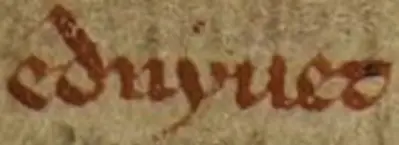
Ednyfed Fychan ap Cynfrig was a Welsh nobleman who served as distain or seneschal of the Kingdom of Gwynedd in North Wales. Ednyfed held this position under the princes of Gwynedd …
Ednyfed Fychan, distain of Gwynedd
Ramon Berenguer IV or V was a member of the House of Barcelona who ruled as count of Provence and Forcalquier. He was the first count of Provence to live in the county in more than…
Ramon Berenguer IV, Count of Provence (born 1195)
Alexander of Hales —known also as Doctor Irrefragibilis, or "Irrefutable Teacher", and as Theologorum Monarcha —was a Franciscan friar, theologian, and philosopher instrumental to …
Alexander of Hales, English theologian
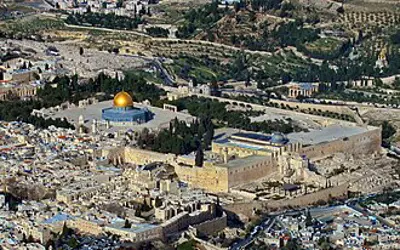
The siege of Jerusalem of 1244 took place after the Sixth Crusade, when a Khwarazmian army conquered the city on July 15, 1244.
Siege of Jerusalem: The city surrenders to the Khwarazmiyya, ending Christian control of the Jerusalem for the next…
Henry I of Hesse "the Child" was the first Landgrave of Hesse. He was the son of Henry II, Duke of Brabant and Sophie of Thuringia.
Henry I, Landgrave of Hesse (died 1308)
Emperor Go-Fukakusa was the 89th emperor of Japan, according to the traditional order of succession. This reign spanned the years 1246 through 1260.
Emperor Go-Fukakusa of Japan (died 1304)
Gilbert de Clare, 6th Earl of Hertford, 7th Earl of Gloucester was a powerful English magnate. He was also known as "Red" Gilbert de Clare or "The Red Earl", probably because of hi…
Gilbert de Clare, 7th Earl of Gloucester, 6th Earl of Hertford, English politician (died 1295)
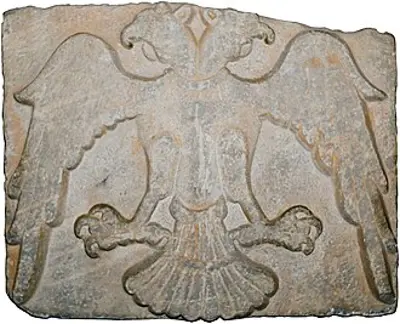
Baiju Noyan or Baichu was a Mongol commander in Persia, Armenia, Anatolia and Georgia. He was appointed by Ögedei Khan to succeed Chormagan. He was the last direct imperial governo…
Mongols under Baiju Noyan defeat the Seljuk Turks under Kaykhusraw II at the Battle of Köse Dağ