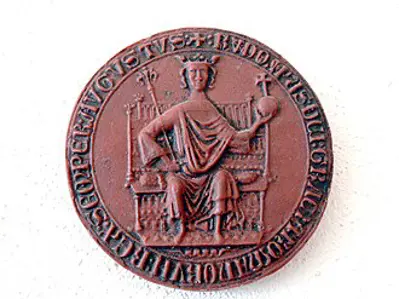
Rudolf of Habsburg (1 May 1218 – 15 July 1291) was a German nobleman and the first member of the House of Habsburg to become King of the Romans, reigning from 1273 until his death. Born into a relatively minor noble family, Rudolf succeeded his father as Count of Habsburg in 1240, gradually expanding his power through military campaigns, political alliances, and the construction of key fortresses such as Neuhabsburg Castle. His marriage to Gertrude of Hohenberg further strengthened his position among the Swabian nobility. During the turbulent period of the Great Interregnum, Rudolf distinguished himself both as a formidable military leader—participating in regional conflicts and even joining the Prussian Crusade in 1254—and as a restorer of order, often intervening against robber barons and feuding nobles. Despite facing excommunication due to disputes with the Church, Rudolf ultimately reconciled with ecclesiastical authorities and built a reputation for fairness and pragmatism. In 1273, he was elected King of the Romans, ending decades of imperial vacancy and division. As king, Rudolf reasserted imperial authority in Germany, notably defeating King Ottokar II of Bohemia and securing Habsburg control over Austria, Styria, and Carinthia. His reign laid the foundations for the rise of the Habsburg dynasty, which would become one of the most influential royal houses in European history. Rudolf died in 1291, leaving a legacy of restored stability and dynastic ambition within the Holy Roman Empire.
Rudolf of Habsburg is crowned king of the Romans in Aachen.
On October 24, in the year 1273, Rudolf of Habsburg is crowned king of the Romans in Aachen. This event is recorded as a Historical Events event in the history of October 24, one of 534 recorded events on this date across all of history.
Key Facts
- This event took place on October 24, 1273 (AD era).
- It is categorised as a Historical Events event in recorded history.
- Referenced in 2 Wikipedia articles.
- Wikipedia source last updated on 29 July 2026.
On This Date in History 534
This article draws on content from Wikipedia, available under CC BY-SA 4.0.
More on October 24
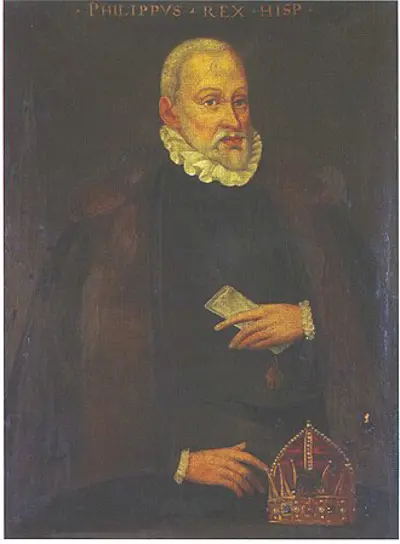
The second Spanish armada sets sail to strike against England, but is smashed by storms off Cape Finisterre forcing a…
The Second Spanish Armada also known as the Spanish Armada of 1596 was a naval operation that took place during the Anglo–Spanish War. Another invasion of England or Ireland was a…
The second Spanish armada sets sail to strike against England, but is smashed by storms off Cape Finisterre forcing a…
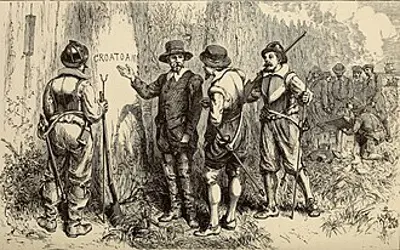
John White, the governor of the second Roanoke Colony, returns to England after an unsuccessful search for the "lost"…
John White was an English colonial governor, explorer, artist, and cartographer. White was among those who sailed with Richard Grenville in the first attempt to colonise Roanoke I…
John White, the governor of the second Roanoke Colony, returns to England after an unsuccessful search for the "lost"…
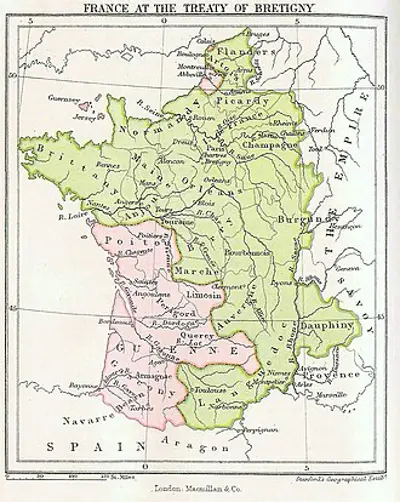
The Treaty of Brétigny is ratified, marking the end of the first phase of the Hundred Years' War.
The Treaty of Brétigny was a treaty, drafted on 8 May 1360 and ratified on 24 October 1360, between Kings Edward III of England and John II of France. In retrospect, it is seen as…
The Treaty of Brétigny is ratified, marking the end of the first phase of the Hundred Years' War.

Chartres Cathedral is dedicated in the presence of King Louis IX of France.
Chartres Cathedral is a Catholic cathedral in Chartres, France, about 80 km southwest of Paris, and is the seat of the Bishop of Chartres. Dedicated in honour of the Virgin Mary, …
Chartres Cathedral is dedicated in the presence of King Louis IX of France.

After defeating the Mongols at the Battle of Ain Jalut and assassinating the previous Mamluk sultan, Qutuz, Baybars…
The Ilkhanate or Il-khanate was a Mongol khanate founded in the southwestern territories of the Mongol Empire. It was ruled by the Il-Khans or Ilkhanids, and was known to the Mong…
After defeating the Mongols at the Battle of Ain Jalut and assassinating the previous Mamluk sultan, Qutuz, Baybars…
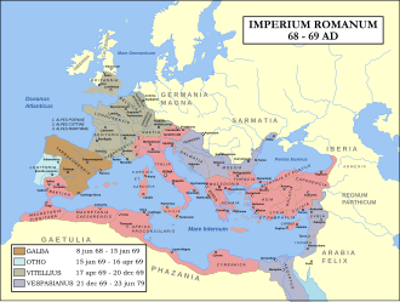
In the Second Battle of Bedriacum, troops loyal to Vespasian defeat those of Emperor Vitellius.
AD 69 (LXIX) was a common year starting on Sunday of the Julian calendar. In the Roman Empire, it was known as the Year of the consulship of Galba and Vinius. The denomination AD …
In the Second Battle of Bedriacum, troops loyal to Vespasian defeat those of Emperor Vitellius.
Comments 0
Sign in to join the discussion.