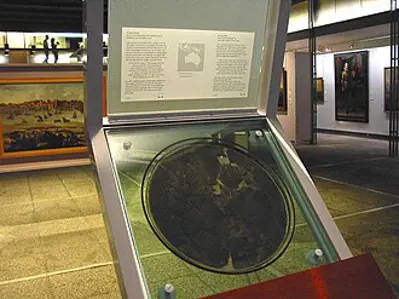
Dirk Hartog was a 17th-century Dutch mariner and explorer. Dirk Hartog's expedition was the second European group to land in Australia and the first to leave behind an artefact to record his visit, the Hartog Plate. His name is sometimes alternatively spelled Dirck Hartog or Dierick Hartochsz. Explorer Ernest Giles referred to him as Theodoric Hartog. The Western Australian island Dirk Hartog Island is named after Hartog.
Dutch sea-captain Dirk Hartog makes the second recorded landfall by a European on Australian soil, at the later-named Dirk Hartog Island off the West Australian coast.
On October 25, in the year 1616, Dutch sea-captain Dirk Hartog makes the second recorded landfall by a European on Australian soil, at the later-named Dirk Hartog Island off the West Australian coast. This event is recorded as a Historical Events event in the history of October 25, one of 656 recorded events on this date across all of history.
Key Facts
- This event took place on October 25, 1616 (AD era).
- It is categorised as a Historical Events event in recorded history.
- Referenced in 1 Wikipedia article.
- Wikipedia source last updated on 10 August 2026.
On This Date in History 656
This article draws on content from Wikipedia, available under CC BY-SA 4.0.
More on October 25
1809
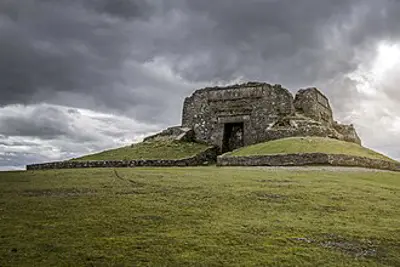
Golden Jubilee of George III is celebrated in Britain as he begins the fiftieth year of his reign.
The Golden Jubilee of George III, also known as the Grand National Jubilee, was held on 25 October 1809 to mark King George III's entrance into the 50th year of his reign. It was …
Golden Jubilee of George III is celebrated in Britain as he begins the fiftieth year of his reign.
1760
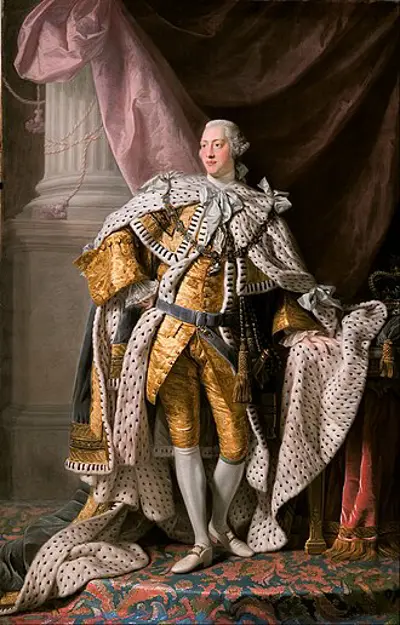
King George III succeeds to the British throne on the death of his grandfather George II.
George III was King of Great Britain and Ireland from 25 October 1760 until his death in 1820. He was concurrently duke and prince-elector of Hanover in the Holy Roman Empire befo…
King George III succeeds to the British throne on the death of his grandfather George II.
1747
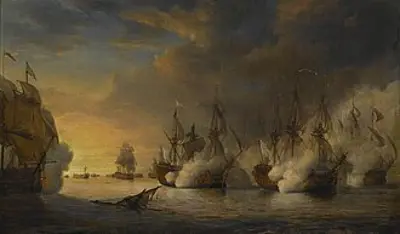
War of the Austrian Succession: A British fleet under Admiral Edward Hawke defeats the French at the Second Battle of…
The second battle of Cape Finisterre was a naval encounter fought during the War of the Austrian Succession on 25 October 1747. A British fleet of fourteen ships of the line comma…
War of the Austrian Succession: A British fleet under Admiral Edward Hawke defeats the French at the Second Battle of…
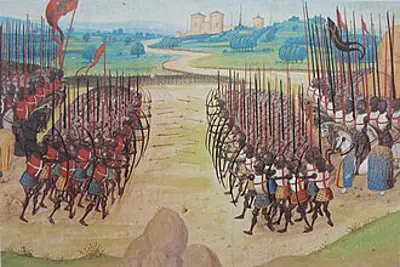
1415
Hundred Years' War: Henry V of England, with his men-at-arms and archers, defeats the larger French army in the Battle…
The Battle of Agincourt was an English victory in the Hundred Years' War (1337–1453). It took place on 25 October 1415 near Azincourt, in northern France. The unexpected victory o…
Hundred Years' War: Henry V of England, with his men-at-arms and archers, defeats the larger French army in the Battle…
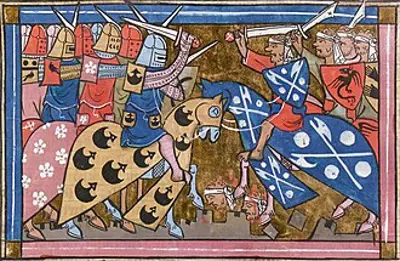
1147
Seljuk Turks defeat German crusaders under Conrad III at the Battle of Dorylaeum.
The second Battle of Dorylaeum took place near Dorylaeum in October 1147 during the Second Crusade. The battle consisted of a series of encounters over several days. The German Cr…
Seljuk Turks defeat German crusaders under Conrad III at the Battle of Dorylaeum.
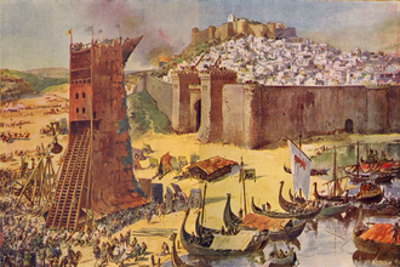
1147
Reconquista: After a siege of four months, crusader knights conquer Lisbon.
The siege of Lisbon, from 1 July to 25 October 1147, was the military action against the Almoravid dynasty that brought the city of Lisbon under the definitive control of the new …
Reconquista: After a siege of four months, crusader knights conquer Lisbon.
Comments 0
Sign in to join the discussion.