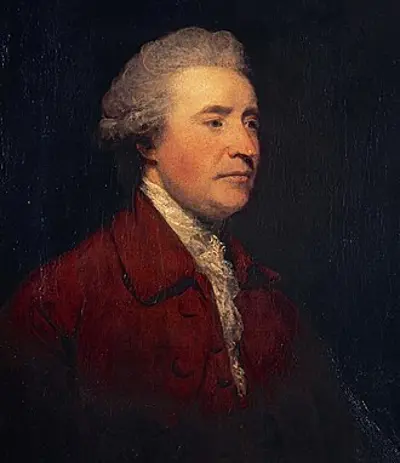
Edmund Burke was an Anglo-Irish writer, philosopher, and politician who is widely credited as the founder of the cultural and political philosophy of conservatism. Regarded as one of the most influential conservative thinkers and political writers of the 18th century, Burke spent the majority of his career in Great Britain and was elected as a member of Parliament (MP) from 1766 to 1794 in the House of Commons of Great Britain with the Whig Party. His writings played a significant role in influencing public views and opinions in both Great Britain and France following the French Revolution in 1789, and he remains a major figure in modern conservative circles.
Edmund Burke publishes Reflections on the Revolution in France, in which he predicts that the French Revolution will end in a disaster.
On November 1, in the year 1790, Edmund Burke publishes Reflections on the Revolution in France, in which he predicts that the French Revolution will end in a disaster. This event is recorded as a Historical Events event in the history of November 1, a notable event in this corner of history.
Key Facts
- This event took place on November 1, 1790 (AD era).
- It is categorised as a Historical Events event in recorded history.
- Referenced in 3 Wikipedia articles.
- Wikipedia source last updated on 10 October 2026.
On This Date in History
This article draws on content from Wikipedia, available under CC BY-SA 4.0.
More on November 1

1856
170 years ago
The British Empire declare war on Iran following Naser al-Din Shah's capture of Herat.
The British Empire comprised the dominions, colonies, protectorates, mandates, and other territories ruled or administered by the United Kingdom and its predecessor states. It beg…
The British Empire declare war on Iran following Naser al-Din Shah's capture of Herat.

1848
In Boston, Massachusetts, the first medical school for women, Boston Female Medical School (which later merged with…
Boston is the capital and most populous city of the U.S. state of Massachusetts. It serves as a cultural and financial center of New England, a region of the Northeastern United S…
In Boston, Massachusetts, the first medical school for women, Boston Female Medical School (which later merged with…
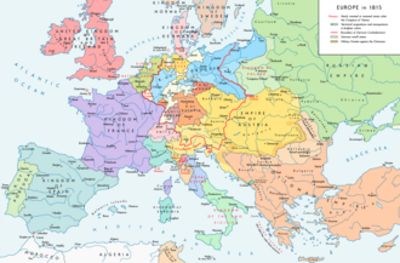
1814
Congress of Vienna opens to re-draw the European political map after the defeat of France in the Napoleonic Wars.
The Congress of Vienna of 1814–1815 was a series of international diplomatic meetings to discuss and agree upon a possible new layout of the European political and constitutional …
Congress of Vienna opens to re-draw the European political map after the defeat of France in the Napoleonic Wars.
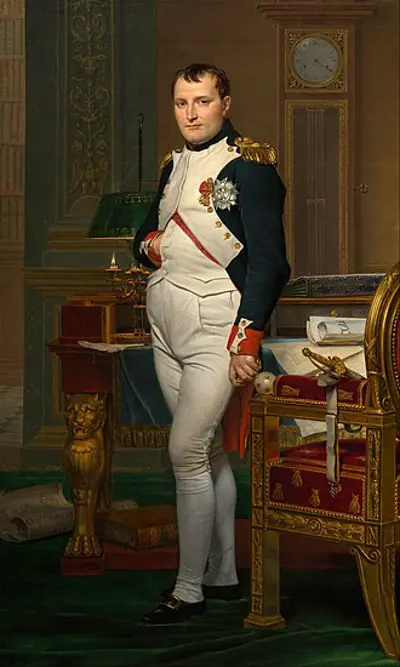
1805
Napoleon Bonaparte invades Austria during the War of the Third Coalition.
Napoleon Bonaparte, was Emperor of the French from 18 May 1804 until his first abdication in 1814, with a brief restoration during the Hundred Days in 1815. He rose to prominence …
Napoleon Bonaparte invades Austria during the War of the Third Coalition.
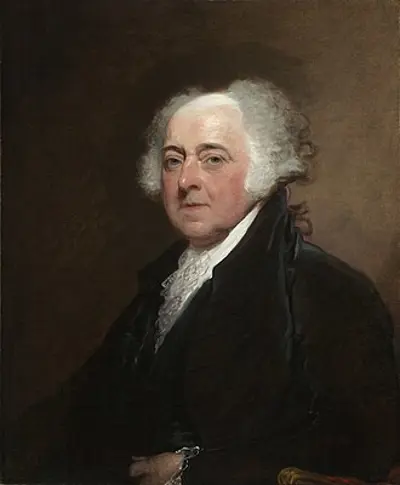
1800
John Adams becomes the first President of the United States to live in the Executive Mansion (later renamed the White…
John Adams was a Founding Father and the second president of the United States from 1797 to 1801. Before his presidency, he was a leader of the American Revolution that achieved i…
John Adams becomes the first President of the United States to live in the Executive Mansion (later renamed the White…
1765
The British Parliament enacts the Stamp Act on the Thirteen Colonies in order to help pay for British military…
The Parliament of Great Britain was formed in May 1707 following the ratification of the Acts of Union by both the Parliament of England and the Parliament of Scotland. The Acts r…
The British Parliament enacts the Stamp Act on the Thirteen Colonies in order to help pay for British military…

Comments 0
Sign in to join the discussion.