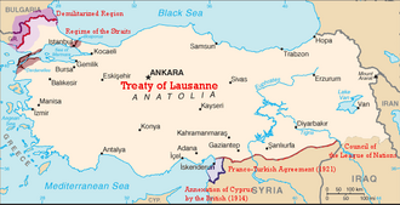
The Treaty of Lausanne is a peace treaty negotiated during the Lausanne Conference of 1922–1923 and signed in the Palais de Rumine in Lausanne, Switzerland, on 24 July 1923. The treaty officially resolved the conflict that had initially arisen between the Ottoman Empire and the Allied French Republic, British Empire, Kingdom of Italy, Empire of Japan, Kingdom of Greece, Kingdom of Yugoslavia, and the Kingdom of Romania since the outset of World War I. The original text of the treaty is in English and French. It emerged as a second attempt at peace after the failed and unratified Treaty of Sèvres, which had sought to partition Ottoman territories. The earlier treaty, signed in 1920, was later rejected by the Turkish National Movement which actively opposed its terms. As a result of Greek defeat in the Greco-Turkish War, Turkish forces recaptured İzmir, and the Armistice of Mudanya was signed in October 1922. This armistice provided for the exchange of Greek-Turkish populations and allowed unrestricted civilian, non-military passage through the Turkish Straits.
The Treaty of Lausanne was signed to settle part of the partition of the Ottoman Empire, establishing the boundaries of Greece, Bulgaria and Turkey.
On July 24, in the year 1923, The Treaty of Lausanne was signed to settle part of the partition of the Ottoman Empire, establishing the boundaries of Greece, Bulgaria and Turkey. This event is recorded as a Selected Events event in the history of July 24, one of 336 recorded events on this date across all of history.
Key Facts
- This event took place on July 24, 1923 (AD era).
- It is categorised as a Selected Events event in recorded history.
- Referenced in 2 Wikipedia articles.
- Wikipedia source last updated on 15 July 2026.
On This Date in History 336
This article draws on content from Wikipedia, available under CC BY-SA 4.0.
More on July 24
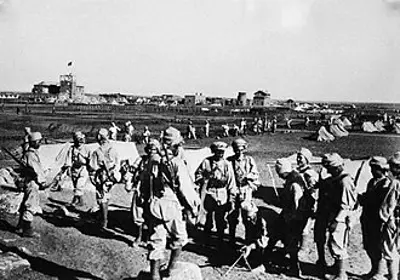
Franco-Syrian War: At the Battle of Maysalun, forces of the Arab Kingdom of Syria were defeated by a French army…
The Franco-Syrian War took place during 1920 between France and the Hashemite rulers of the newly established Arab Kingdom of Syria. During a series of engagements, which climaxed…
Franco-Syrian War: At the Battle of Maysalun, forces of the Arab Kingdom of Syria were defeated by a French army…
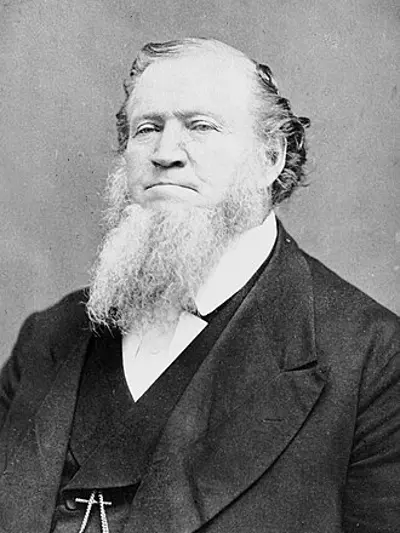
Brigham Young led the first group of Mormon pioneers into the Salt Lake Valley of Utah, at the time a part of Mexico.
Brigham Young was an American religious leader and politician. He was the second president of the Church of Jesus Christ of Latter-day Saints from 1847 until his death in 1877. He…
Brigham Young led the first group of Mormon pioneers into the Salt Lake Valley of Utah, at the time a part of Mexico.

Boris Johnson became Prime Minister of the United Kingdom after winning the Conservative Party leadership election.
Alexander Boris de Pfeffel Johnson is a British politician and writer who was Prime Minister of the United Kingdom and Leader of the Conservative Party from 2019 to 2022. He was p…
Boris Johnson became Prime Minister of the United Kingdom after winning the Conservative Party leadership election.
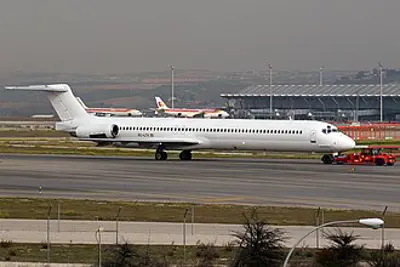
Air Algérie Flight 5017 disappeared from radar shortly after take-off from Ouagadougou, Burkina Faso; its wreckage was…
Air Algérie Flight 5017 was a scheduled international passenger flight from Ouagadougou, Burkina Faso, to Algiers, Algeria, which crashed near Gossi, Mali, on 24 July 2014. The Mc…
Air Algérie Flight 5017 disappeared from radar shortly after take-off from Ouagadougou, Burkina Faso; its wreckage was…
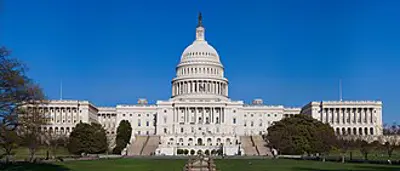
A gunman entered the United States Capitol and opened fire, killing two police officers.
The United States Capitol, often called the Capitol or the Capitol Building, is the seat of the United States Congress, the legislative branch of the federal government. It is loc…
A gunman entered the United States Capitol and opened fire, killing two police officers.
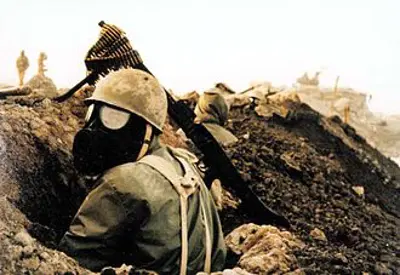
Iran–Iraq War: In opposition to the American plan to protect Kuwaiti tankers, Iran laid mines and damaged the…
The Iran–Iraq War, also referred to as the First Imposed War, began with the Iraqi invasion of Iran in September 1980. After eight years of conflict, both countries accepted a cea…
Iran–Iraq War: In opposition to the American plan to protect Kuwaiti tankers, Iran laid mines and damaged the…
Comments 0
Sign in to join the discussion.