
The Supreme Court of the United States (SCOTUS) is the highest court in the federal judiciary of the United States. It has ultimate appellate jurisdiction over all U.S. federal court cases, and over state court cases that turn on questions of U.S. constitutional or federal law. It also has original jurisdiction over a narrow range of cases, specifically "all Cases affecting Ambassadors, other public Ministers and Consuls, and those in which a State shall be Party". In 1803, the court asserted itself the power of judicial review, the ability to invalidate a statute for violating a provision of the Constitution. It is also able to strike down presidential directives for violating either the Constitution or statutory law.
The U.S. Supreme Court delivered its decision in the landmark case Miller v. California, establishing the Miller test for determining what is obscene material.
On June 21, in the year 1973, The U.S. Supreme Court delivered its decision in the landmark case Miller v. California, establishing the Miller test for determining what is obscene material. This event is recorded as a Selected Events event in the history of June 21, one of 526 recorded events on this date across all of history.
Key Facts
- This event took place on June 21, 1973 (AD era).
- It is categorised as a Selected Events event in recorded history.
- Referenced in 5 Wikipedia articles.
- The event is associated with a specific geographical location (see map below).
- Wikipedia source last updated on 13 June 2026.
On This Date in History 526
This article draws on content from Wikipedia, available under CC BY-SA 4.0.
More on June 21
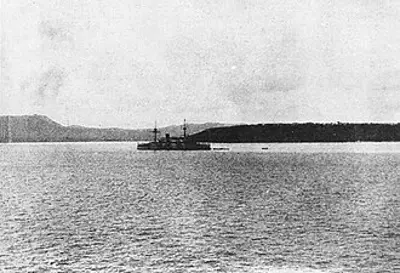
1898
The United States captured Guam from Spain in a bloodless event during the Spanish–American War
The capture of Guam from Spain by the United States took place in a bloodless engagement during the Spanish–American War. The U.S. Navy sent a single cruiser, USS Charleston, to …
The United States captured Guam from Spain in a bloodless event during the Spanish–American War
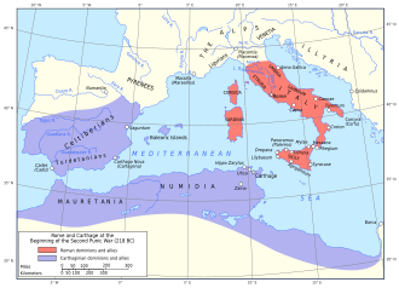
217 BC
Second Punic War: Commanded by Hannibal, the Carthaginians ambushed a Roman army at the Battle of Lake Trasimene, captur
The Second Punic War was the second of three wars fought between Carthage and Rome, the two main powers of the western Mediterranean in the 3rd century BC. For 17 years the two st…
Second Punic War: Commanded by Hannibal, the Carthaginians ambushed a Roman army at the Battle of Lake Trasimene, captur
2000
President Bill Clinton awarded the Medal of Honor to 22 Asian Americans, mostly from the 442nd Regimental Combat Team, f
William Jefferson Clinton is an American former politician and lawyer who served as the 42nd president of the United States from 1993 to 2001. A member of the Democratic Party, he…
President Bill Clinton awarded the Medal of Honor to 22 Asian Americans, mostly from the 442nd Regimental Combat Team, f
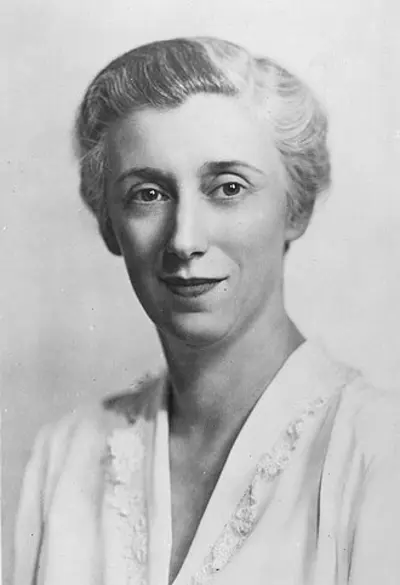
1957
Ellen Fairclough (pictured) became the first woman to be appointed to the cabinet of Canada
Ellen Louks Fairclough was a Canadian politician. A Progressive Conservative member of the House of Commons of Canada from 1950 to 1963, she was the first woman ever to serve in t…
Ellen Fairclough (pictured) became the first woman to be appointed to the cabinet of Canada
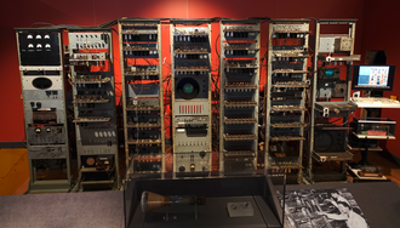
1948
The Manchester Baby (replica pictured), the world's first stored-program computer, ran its first program
The Manchester Baby, also called the Small-Scale Experimental Machine (SSEM), was the first electronic stored-program computer. It was built at the Victoria University of Manchest…
The Manchester Baby (replica pictured), the world's first stored-program computer, ran its first program

1940
World War II: The main offensive of the unsuccessful Italian invasion of France began
World War II, or the Second World War, was a global conflict between two coalitions: the Allies and the Axis powers. Nearly all of the world's countries participated. Tanks and ai…
World War II: The main offensive of the unsuccessful Italian invasion of France began

Comments 0
Sign in to join the discussion.