
The Helsinki Final Act, also known as Helsinki Accords or Helsinki Declaration, was the document signed at the closing meeting of the third phase of the Conference on Security and Co-operation in Europe (CSCE) held in Helsinki, Finland, between 30 July and 1 August 1975, following two years of negotiations known as the Helsinki Process. All then-existing European countries except Andorra and Hoxhaist Albania, as well as the United States and Canada, signed the Final Act in an attempt to improve the détente between the East and the West. The Helsinki Accords, however, were not binding as they did not have treaty status that would have to be ratified by parliaments. Sometimes the term "Helsinki pact(s)" was also used unofficially.
The final act of the CSCE meeting is signed in Helsinki, Finland.
On August 1, in the year 1975, The final act of the CSCE meeting is signed in Helsinki, Finland. This event is recorded as a Historical Events event in the history of August 1, one of 507 recorded events on this date across all of history.
Key Facts
- This event took place on August 1, 1975 (AD era).
- It is categorised as a Historical Events event in recorded history.
- Referenced in 3 Wikipedia articles.
- Wikipedia source last updated on 27 June 2026.
On This Date in History 507
This article draws on content from Wikipedia, available under CC BY-SA 4.0.
More on August 1
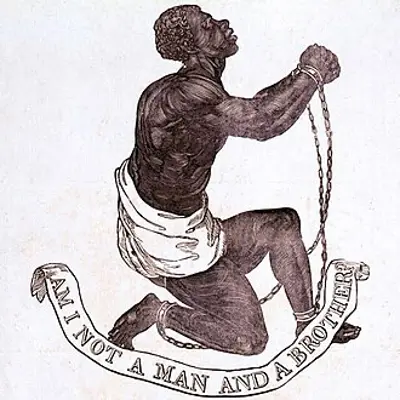
1834
Slavery is abolished in the British Empire as the Slavery Abolition Act 1833 comes into force, although it remains…
Abolitionism in the United Kingdom was the movement in the late 18th and early 19th centuries to end the practice of slavery, whether formal or informal, in the United Kingdom, th…
Slavery is abolished in the British Empire as the Slavery Abolition Act 1833 comes into force, although it remains…
1834
Construction begins on the Wilberforce Monument in Kingston Upon Hull.
The Wilberforce Monument is a monument honouring English politician and abolitionist William Wilberforce in Kingston Upon Hull, England. The ashlar structure consists of a Doric c…
Construction begins on the Wilberforce Monument in Kingston Upon Hull.
1801
225 years ago
First Barbary War: The American schooner USS Enterprise captures the Tripolitan polacca Tripoli in a single-ship…
The First Barbary War (1801–1805), also known as the Tripolitan War and the Barbary Coast War, was a conflict during the 1801–1815 Barbary Wars, in which the United States fought …
First Barbary War: The American schooner USS Enterprise captures the Tripolitan polacca Tripoli in a single-ship…
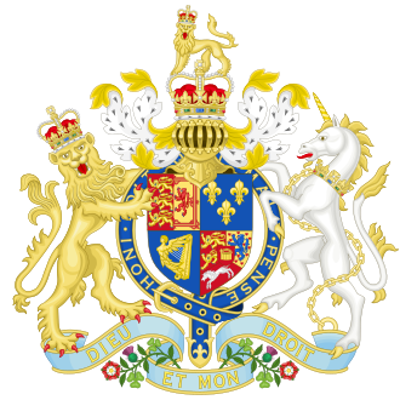
1800
The Acts of Union 1800 are passed which merge the Kingdom of Great Britain and the Kingdom of Ireland into the United…
The Acts of Union 1800 were parallel acts of the Parliament of Great Britain and the Parliament of Ireland which united the Kingdom of Great Britain and the Kingdom of Ireland to …
The Acts of Union 1800 are passed which merge the Kingdom of Great Britain and the Kingdom of Ireland into the United…

1798
French Revolutionary Wars: Battle of the Nile (Battle of Aboukir Bay): Battle begins when a British fleet engages the…
The French Revolutionary Wars were a series of sweeping military conflicts resulting from the French Revolution that lasted from 1792 until 1802. They pitted France against Great …
French Revolutionary Wars: Battle of the Nile (Battle of Aboukir Bay): Battle begins when a British fleet engages the…

1774
British scientist Joseph Priestley discovers oxygen gas, corroborating the prior discovery of this element by…
Joseph Priestley was an English chemist, Unitarian, natural philosopher, separatist theologian, grammarian, multi-subject educator and classical liberal political theorist. He pub…
British scientist Joseph Priestley discovers oxygen gas, corroborating the prior discovery of this element by…

Comments 0
Sign in to join the discussion.