On 25 August 1825, in a small town in the middle of what is now Uruguay, a provincial assembly passed three laws in one sitting. The first cut the territory loose from Portugal, Brazil and any other outside ruler. The second joined it to the United Provinces of the Río de la Plata, the loose union of provinces that later became Argentina. The third gave it a flag. Uruguayans have marked that day as their Independence Day ever since.
The real story is a bit more tangled than the holiday suggests. The assembly did not create the Uruguay we know today. It declared the old Provincia Oriental free from Brazil and asked to join its neighbours across the river. A truly separate country only appeared three years later, after a war that neither side could win and some firm British diplomacy. This article looks at how the 1825 declaration came about, what happened in Florida, and why people in Uruguay still discuss its place in their national story.
At a glance
- Date / period: 25 August 1825 (the assembly began meeting on 20 August)
- Location: Villa de San Fernando de la Florida, today the city of Florida, Uruguay
- Category: Declaration of independence; national holiday
- Main participants: The Sala de Representantes of the Provincia Oriental, Juan Antonio Lavalleja, Fructuoso Rivera, Juan Francisco Larrobla
- Outcome: Separation from Brazil declared and union with the United Provinces proposed; full independence followed in 1828
1. Historical background
The land east of the Uruguay River and north of the Río de la Plata was known as the Banda Oriental, the "Eastern Bank." It was good cattle country, and it sat between two rival empires. Portugal pushed down from Brazil and founded Colonia do Sacramento in 1680. Spain answered by building Montevideo in the 1720s. For a long time the area was a frontier that neither power fully controlled.
Things changed after 1810, when the colonies around Buenos Aires began breaking away from Spain. In the Banda Oriental, José Gervasio Artigas became the leading figure. He wanted self-government for the region inside a federation of provinces, and he built a loyal following among country people. His movement did not last. Portuguese troops invaded from Brazil in 1816 and took Montevideo in early 1817. Artigas kept fighting for a few more years, then crossed into Paraguay in 1820, and never returned.
In 1821 the territory was formally incorporated into the Portuguese-Brazilian crown as the Cisplatina Province. When Brazil became an independent empire a year later, Cisplatina stayed under its rule. That was the situation the people of the Banda Oriental were living under in the early 1820s.
2. Causes and factors leading to the event
There was no single cause, and historians weigh the factors differently.
Long-term factors. The region had a strong sense of its own identity, much of it inherited from the Artigas years. Many local landowners and townspeople also had closer commercial and cultural ties with Buenos Aires than with Rio de Janeiro. Being governed as a province of a distant empire, in a different language and by outside officials, left a lot of people unhappy.
The immediate trigger. A group of Orientals living in exile in Buenos Aires decided the moment had come to act. In April 1825 a small band led by Juan Antonio Lavalleja crossed the river and landed on the Uruguayan shore. They became known as the Treinta y Tres Orientales, the "Thirty-Three Orientals." The landing was bold, but it needed support to turn into anything lasting. That support came quickly when Fructuoso Rivera, an experienced commander who had been serving the Brazilian side, changed sides and joined the rebels.
What is still debated. Scholars do not fully agree on what the leaders of 1825 actually wanted. Was this a movement for a new, independent country, or an effort to bring the Banda Oriental back into a union of River Plate provinces? The text of the laws points more toward the second, and that is exactly why the date has been argued over later.
3. What happened?
The landing and the rebuilding of authority
The Thirty-Three Orientals came ashore on 19 April 1825. Over the following weeks they gathered volunteers and took control of most of the countryside, while the Brazilian forces held on in Montevideo and a few other strong points. Once the rebels held enough ground, they needed a legitimate body to speak for the province. A provisional government was set up in Florida in June, and elections were called in the towns.
The assembly meets in Florida
The elected deputies made their way to the town of Florida, some travelling a long way over rough country. The Honorable Sala de Representantes opened its first session on 20 August 1825. There were fourteen deputies. They chose Juan Francisco Larrobla, a priest who represented the town of Guadalupe (today Canelones), as president of the assembly. The draft laws were prepared the next day by two of the deputies, Carlos Anaya and Luis Eduardo Pérez.
The three laws of 25 August
On the morning of 25 August the assembly approved three "fundamental laws":
- The Law of Independence declared that the earlier acts joining the province to Portugal and Brazil were void, and that the Provincia Oriental was free from Portugal, Brazil and any other foreign power.
- The Law of Union stated that the province would be part of the United Provinces of the Río de la Plata, the group of provinces around Buenos Aires.
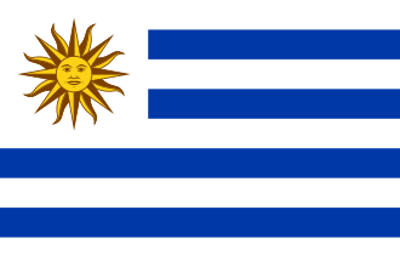
- The Law of the Flag set the provincial banner: three horizontal stripes in light blue, white and red.
A message announcing the decisions was sent out the following day, dated 26 August, and signed by Larrobla.
The first reactions
Events moved quickly. Rivera and Lavalleja won a cavalry clash at Sarandí on 12 September 1825, which boosted the rebel cause. The government in Buenos Aires hesitated for a while, then accepted the union in October. Brazil responded by declaring war on 10 December 1825. The assembly also kept legislating. On 6 September 1825 it passed a law of "free womb" (libertad de vientres), declaring that children born to enslaved women in the territory would be free, and it banned the slave trade.
4. Key people, groups and organizations
Juan Antonio Lavalleja led the landing of April 1825 and became the provisional governor of the province. His name is tied to the whole campaign more than to any single decision.
Fructuoso Rivera brought military experience and local followers when he joined the rebels. He was named general inspector of arms, and he later became a central figure in the country's early politics.
Juan Francisco Larrobla, the priest who presided over the assembly, gave the meeting its formal shape and signed its communications.
The deputies of the Sala de Representantes came from the towns of the province. Their election gave the declaration a claim to speak for the people, not just for an army.
José Gervasio Artigas was not in Florida. He was living in exile in Paraguay. But historians point to his ideas about republican government and local self-rule as a strong influence on the laws that were passed.
Pedro I, Emperor of Brazil was the ruler the declaration was aimed against, and his government's reaction turned the dispute into a war.
5. Outcome and immediate consequences
The declaration led straight to the Cisplatine War, which lasted from December 1825 until August 1828. It was fought between the Empire of Brazil and the United Provinces over control of the territory. The largest battle was Ituzaingó in February 1827, but it settled very little. Neither army could take the other's key cities, and Brazil's naval blockade of Buenos Aires was hurting trade and the economy there.
With the war at a stalemate, Britain stepped in as a mediator. The British diplomat John Ponsonby helped bring the two sides together, and on 27 August 1828 they signed the Preliminary Peace Convention. The treaty did not hand the territory to either side. It made it an independent state instead. Ratifications were exchanged in Montevideo on 4 October 1828.
So the outcome was different from what the Florida assembly had asked for in 1825. The province did not join the United Provinces. It became its own country.
6. Historical significance and long-term impact
The declaration mattered for several reasons.
First, it was the first piece of legislation of a locally elected body in the Oriental territory. Uruguayan historians often describe the Florida laws as the opening page of the country's own legal record.
Second, it gave the independence movement a legal and political footing. The rebels were no longer just armed exiles. They were an elected government acting in the name of the province, which made it easier to ask Buenos Aires for support and to argue their case in negotiations.
Third, it started a path that ended in a constitution. After the 1828 treaty, a constituent assembly drew up the first constitution of the Oriental Republic of Uruguay, which was sworn in on 18 July 1830. The new state also adopted its own national flag that year.
Finally, the 1828 settlement gave the region a lasting place on the map as an independent buffer between Brazil and Argentina. That outcome owed as much to the diplomacy of outside powers, Britain in particular, as to the courage of the men in Florida.
7. Legacy and historical interpretations
The weight of 25 August has been a real topic of debate in Uruguay, and not only among academics.
One reading treats the day as the birth of the nation. The historian Juan E. Pivel Devoto, for instance, described it as the founding of the homeland, and wrote that its emotional force goes beyond any legal argument. Another view points out that the assembly voted to join the United Provinces, and that real independence only arrived in 1828. For that reason some people argue that 18 July, the day the 1830 constitution was sworn, is a better candidate for the national day. Both dates are marked in Uruguay, and in the past the argument reached the floor of the national parliament.
The discussion also took a particular turn in the 1880s, when a public dispute between Francisco Berra and Carlos María Ramírez pushed attention back toward Artigas and the question of who deserved to be called the founder of the country.
It is also worth remembering that the Cisplatine War was not a war of independence in the strict sense, since none of the governments involved was fighting to create a new nation. Yet it holds a similar place in Uruguayan memory.
Today 25 August is a national holiday. Official ceremonies take place in Florida, with speeches, flag-raising and school events. In 2025 the government declared the whole year the Bicentennial of the Declaration of Independence, and the 200th anniversary was marked with commemorations across the country.
8. Timeline of important developments
- 1816–1817: Portuguese forces invade the Banda Oriental and take Montevideo.
- 1820: Artigas goes into exile in Paraguay.
- 31 July 1821: The territory is incorporated into the Portuguese-Brazilian crown as the Cisplatina Province.
- 19 April 1825: The Thirty-Three Orientals land under Lavalleja.
- 20 August 1825: The Sala de Representantes begins meeting in Florida.
- 25 August 1825: The laws of Independence, Union and the Flag are approved.
- 6 September 1825: The "free womb" law and the ban on the slave trade are passed.
- 12 September 1825: The rebels win the cavalry battle of Sarandí.
- 10 December 1825: Brazil declares war.
- February 1827: The Battle of Ituzaingó.
- 27 August 1828: The Preliminary Peace Convention is signed.
- 18 July 1830: The first constitution is sworn.
9. Frequently asked questions
What caused the Uruguayan Declaration of Independence?
The main causes were dissatisfaction with Brazilian rule, the memory of Artigas's movement, and the landing of Lavalleja's band in April 1825. Support from commanders such as Rivera gave the rebels enough control of the countryside to hold an assembly.
When and where did it happen?
It happened on 25 August 1825 in the town of Florida, in the centre of present-day Uruguay. The assembly had started meeting on 20 August.
What was the outcome?
The assembly declared separation from Brazil, announced union with the United Provinces of the Río de la Plata, and set a provincial flag. The result was a war, and after it the 1828 treaty made Uruguay a fully independent state.
Why is it important in history?
It gave the independence movement an elected, legal voice and started the process that led to the country's constitution in 1830. It is still the date Uruguayans celebrate as their Independence Day.
Why is Independence Day on 25 August and not 18 July?
Uruguay chose to honour the day of the declaration itself. The 1830 constitution is remembered separately on 18 July. The choice has been questioned over the years, but both dates remain part of the national calendar.
Conclusion
The declaration of 25 August 1825 did not finish the work of making Uruguay. It began it. A small assembly, meeting in a country town while a war was still going on around it, said out loud that the people of the Banda Oriental no longer accepted Brazilian rule, and it put that statement into law. Three more years of fighting and diplomacy were still needed before independence was settled. But Uruguayans have good reason to treat the day in Florida as the moment their story as a country started.
References and further reading
- Ministerio de Educación y Cultura (Uruguay), 25 de agosto de 1825: Declaratoria de la Independencia, gub.uy — https://www.gub.uy/ministerio-educacion-cultura/comunicacion/noticias/25-agosto-1825-declaratoria-independencia
- Ministerio de Educación y Cultura (Uruguay), Rememorando las leyes de libertad de vientres y prohibición del tráfico de esclavos, Archivo General de la Nación, gub.uy — https://www.gub.uy/ministerio-educacion-cultura/comunicacion/noticias/rememorando-leyes-libertad-vientres-prohibicion-del-trafico-esclavos
- Intendencia de Florida, Bicentenario de la Instalación del Gobierno Provisorio de la Provincia Oriental, gub.uy — https://www.gub.uy/intendencia-florida/politicas-y-gestion/bicentenario-instalacion-del-gobierno-provisorio-provincia-oriental
- Presidencia de la República, Decreto por el que se declara el año 2025 Bicentenario de la Declaratoria de la Independencia, gub.uy — https://www.gub.uy/presidencia/institucional/normativa/decreto-n-146024-se-declara-ano-2025-bicentenario-declaratoria
- Uruguay, Congress of 1825, Encyclopedia.com — https://encyclopedia.com/humanities/encyclopedias-almanacs-transcripts-and-maps/uruguay-congress-1825
- Cisplatine War, Wikipedia — https://en.wikipedia.org/wiki/Cisplatine_War
- Preliminary Peace Convention (1828), Wikipedia — https://en.wikipedia.org/wiki/Preliminary_Peace_Convention_(1828)
- Cisplatina, Wikipedia — https://en.wikipedia.org/wiki/Cisplatina


Comments 0
Sign in to join the discussion.