
1900
The second of the German Naval Laws was passed, authorising the doubling in size of the Imperial German Navy
The second of the German Naval Laws was passed, authorising the doubling in size of the Imperial German Navy.
1623 results for “Ernst Chladni, German physicist and author (died 1827)” — type: selected (1952 ms)
The second of the German Naval Laws was passed, authorising the doubling in size of the Imperial German Navy.

At the California Institute of Technology, American physicist Carl David Anderson proved the existence of antimatter with the discovery of the positron, for which he would receive the 1936 Nobel Prize�

Physicists of the LIGO and Virgo projects first observed gravitational waves, the existence of which was predicted by Henri Poincaré in 1905.
British physicist J. J. Thomson and his team announce the discovery of the electron.

French physicist Jean-Pierre Christin published the design of a mercury thermometer using the centigrade scale, with 0 representing the melting point of water and 100 its boiling point.
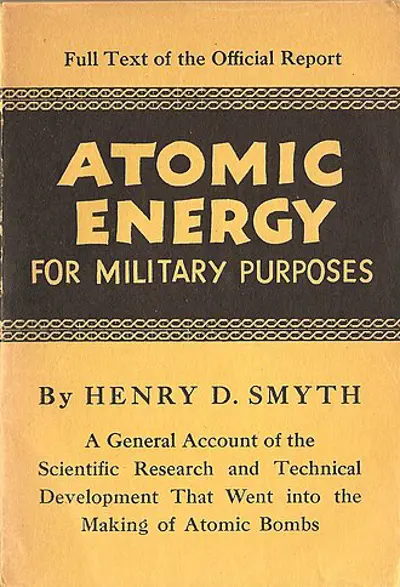
An official administrative history of the Manhattan Project, written by American physicist Henry DeWolf Smyth, was released to the public days after the atomic bombings of Hiroshima and Nagasaki.
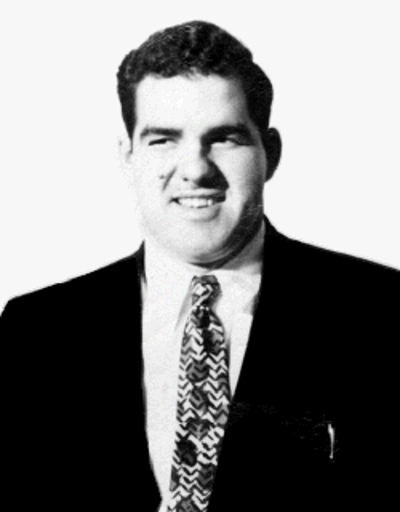
American physicist Harry Daghlian accidentally dropped a tungsten carbide brick onto a plutonium bomb core, exposing himself to neutron radiation and later becoming the first Manhattan Project fatalit�

American physicist Theodore Maiman operated the first working laser at Hughes Research Laboratories in Malibu.

�th a mass of plutonium known as the demon core, Manhattan Project physicist Louis Slotin accidentally exposed himself to a lethal dose of hard radiation, making him the second victim of a criticality�

The security clearance of American nuclear physicist J. Robert Oppenheimer, head of Project Y, was revoked.

French physicist Augustin-Jean Fresnel submitted a memoir on the diffraction of light to the Royal Academy of Sciences, providing strong support for the wave theory of light.
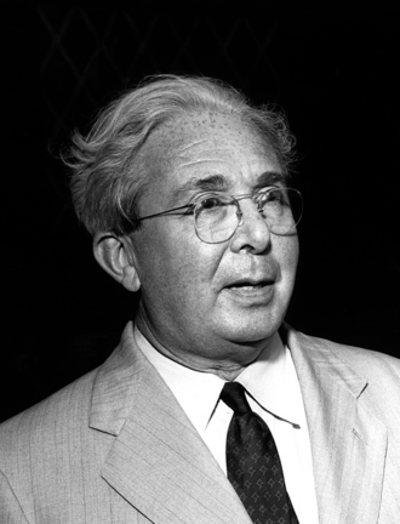
Hungarian-American physicist Leo Szilard conceived of the idea of the nuclear chain reaction while waiting for a traffic light in Bloomsbury, London.
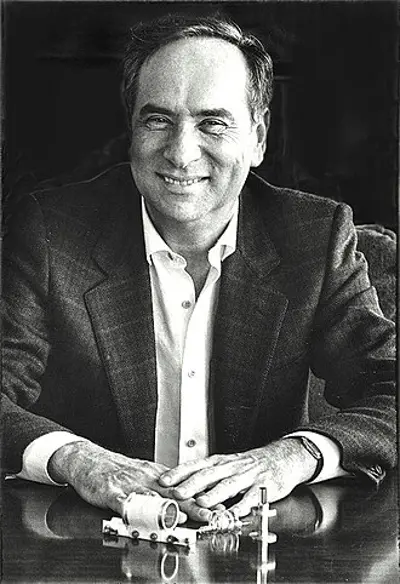
American physicist Theodore Maiman was given a patent for his ruby laser systems, the world's first laser.

Nuclear physicist Mohsen Fakhrizadeh, regarded as the chief of Iran's nuclear program, was assassinated, allegedly by Mossad.
Erich Honecker became First Secretary of the Socialist Unity Party of Germany, the governing party of East Germany.
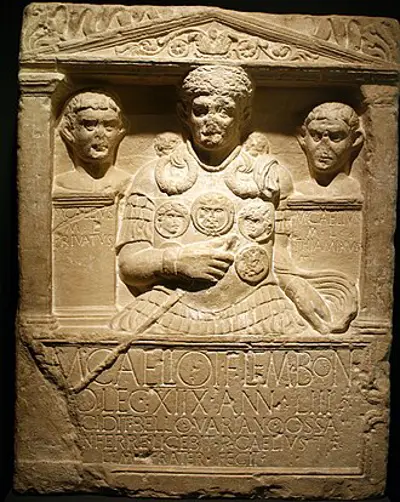
Germanic Wars: An alliance of Germanic tribes led by Arminius engaged Roman forces at the Battle of the Teutoburg Forest, defeating three legions within a few days.

Eight people escaped from East Germany to West Germany in a home-made hot air balloon.

East German official Günter Schabowski mistakenly announced the immediate opening of the inner German border, resulting in the fall of the Berlin Wall that night (border crossing pictured).
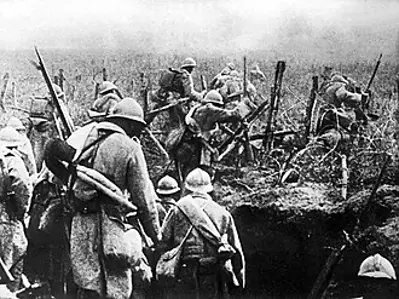
World War I: The civilian authorities of Antwerp surrendered and allowed the German army to capture the city.
First World War: The Allies devastated the German defence at the Battle of Broodseinde, prompting a crisis among German commanders and causing a severe loss of morale in the 4th Army.