Juan Fernández, a Spanish explorer, discovered an archipelago that now bears his name off the coast of Chile.
254 results for “Adam, Abbot of Ebrach” — type: selected (132 ms)
Juan Fernández, a Spanish explorer, discovered an archipelago that now bears his name off the coast of Chile.
Five minutes after taking off from Montréal–Dorval, Trans-Canada Air Lines Flight 831 crashed in bad weather, killing all 118 people on board.
World War II: Japanese warships defeated the U.S. Navy in a nighttime naval battle off Tassafaronga, Guadalcanal.
Flying Scotsman became the first steam locomotive officially to exceed 100 miles per hour (161 km/h).
Riots broke out in Washington, D.C., after a rookie police officer shot a Salvadoran man in the chest.
Police in Napier, New Zealand, began a 40-hour siege of the home of a former New Zealand Army member who had shot at officers during the routine execution of a search warrant.
During an exercise to demonstrate air power, United States Army Air Corps bomber aircraft intercepted the Italian ocean liner SS Rex (pictured) 620 nautical miles (1,100 km) off the US Atlantic coast.
On the day of the UEFA Cup Final, violence erupted between football hooligan supporters of both teams and the Greater Manchester Police, resulting in 39 arrests and 39 injured officers.
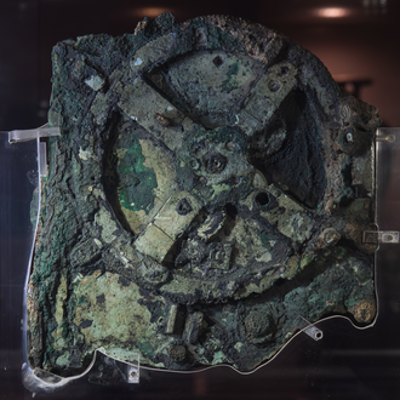
The Antikythera mechanism, the oldest known surviving geared mechanism, was discovered among artifacts retrieved from a shipwreck off the Greek island of Antikythera.
Button Gwinnett, a signer of the United States Declaration of Independence, is wounded in a duel with Continental Army officer Lachlan McIntosh, dying of his injuries several days later.
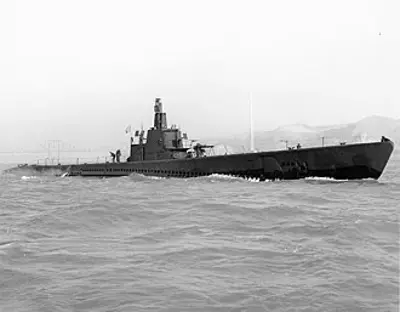
The U.S. Navy submarine Squalus sank off Portsmouth, New Hampshire, during tests, causing 26 men to drown.
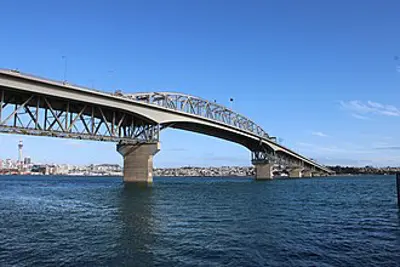
The Auckland Harbour Bridge, spanning Waitematā Harbour between the Saint Marys Bay and Northcote suburbs of Auckland, New Zealand, officially opened.
War of 1812: Mortally wounded, U.S. Navy captain James Lawrence ordered his crew "Don't give up the ship!" as USS Chesapeake was captured by HMS Shannon off the coast of Boston.
War of 1812: The British ambushed an American encampment near present-day Stoney Creek, Ontario, capturing two senior officers.
Greek War of Independence: A combined Egyptian and Ottoman army began an invasion of the Mani Peninsula, but were initially held off by the Maniots at the fortifications of Vergas.
A magnitude-6.5 earthquake struck northwestern Iran, killing at least 230 people and injuring 1,300 others; the official response, perceived to be slow, later caused widespread public anger.
The Holocaust: After a closely supervised visit to Theresienstadt Ghetto in German-occupied Czechoslovakia, Red Cross official Maurice Rossel reported that conditions there were "almost normal".
First World War: The British and French prime ministers, H. H. Asquith and René Viviani, met at Calais to discuss future offensives including the Gallipoli campaign.
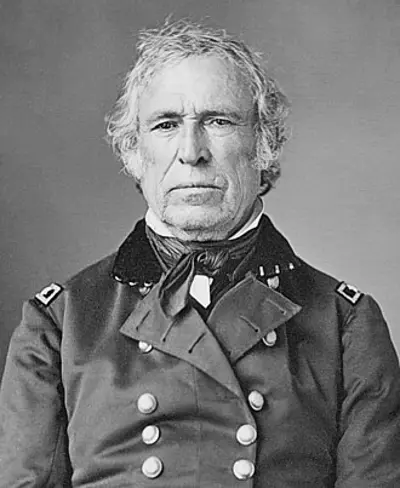
Following Zachary Taylor's death, Millard Fillmore (pictured) became president of the United States, the last member of the Whig Party to hold that office.
An explosion in the ammunition magazine of the Japanese battleship Kawachi resulted in the deaths of more than 600 officers and crewmen.