The Sedition Act of 1918 is passed by the U
The Sedition Act of 1918 is passed by the U.S. Congress, making criticism of the government during wartime an imprisonable offense. It will be repealed less than two years later.
2567 results for “World War” — type: events (290 ms)
The Sedition Act of 1918 is passed by the U.S. Congress, making criticism of the government during wartime an imprisonable offense. It will be repealed less than two years later.
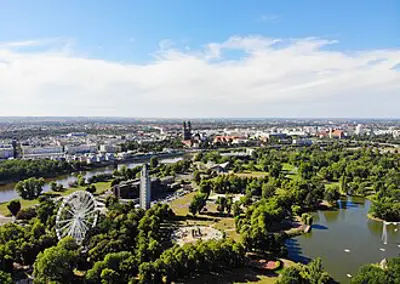
The city of Magdeburg in Germany is seized by forces of the Holy Roman Empire and most of its inhabitants massacred, in one of the bloodiest incidents of the Thirty Years' War.
�te Guard is held in Helsinki celebrating their decisive victory in the Finnish Civil War. The day also begin to be celebrated on the Defence Forces Flag Day before it is moved in 1942 to the June 4th.
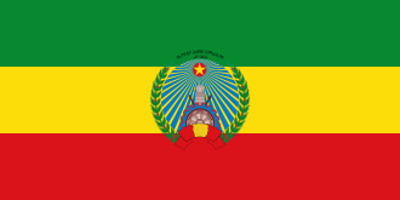
Mengistu Haile Mariam, president of the People's Democratic Republic of Ethiopia, flees Ethiopia, effectively bringing the Ethiopian Civil War to an end.
�how, otherwise known as the 9th Street Art Exhibition: A gathering of a number of notable artists, and the stepping-out of the post war New York avant-garde, collectively known as the New York School.
In the Concert of The Hague, the Dutch Republic, the Commonwealth of England and the Kingdom of France set out their views on how the Second Northern War should end.
Holy Roman Emperor Ferdinand II and Danish King Christian IV sign the Treaty of Lübeck ending Danish intervention in the Thirty Years' War.
Dutch rebels led by Louis of Nassau defeat Jean de Ligne and his loyalist troops in the Battle of Heiligerlee, opening the Eighty Years' War.
The International Criminal Tribunal for the former Yugoslavia in The Hague, Netherlands indicts Slobodan Milošević and four others for war crimes and crimes against humanity committed in Kosovo.
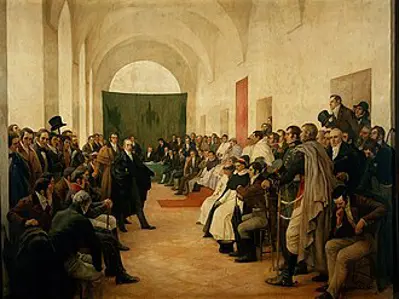
May Revolution: Citizens of Buenos Aires expel Viceroy Baltasar Hidalgo de Cisneros during the "May Week", starting the Argentine War of Independence.
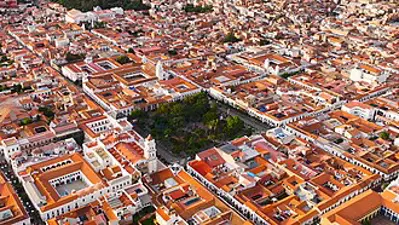
Chuquisaca Revolution: Patriot revolt in Chuquisaca (modern-day Sucre) against the Spanish Empire, sparking the Latin American wars of independence.
A Great Jubilee Day held at North Stratford, Connecticut, celebrates the end of fighting in the American Revolutionary War.
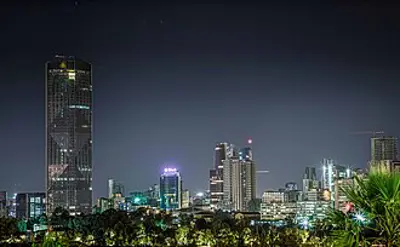
The capital city of Addis Ababa falls to the Ethiopian People's Revolutionary Democratic Front, ending both the Derg regime in Ethiopia and the Ethiopian Civil War.
�ats the numerically superior forces of Dou Jiande near the Hulao Pass (Henan). This victory decides the outcome of the civil war that followed the Sui dynasty's collapse in favour of the Tang dynasty.
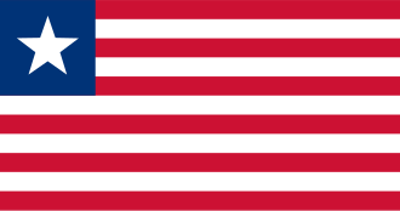
Former Liberian president Charles Taylor is sentenced to 50 years in prison for his role in atrocities committed during the Sierra Leone Civil War.
The United States Senate votes to cut off funding for the bombing of Khmer Rouge targets within Cambodia, hastening the end of the Cambodian Civil War.
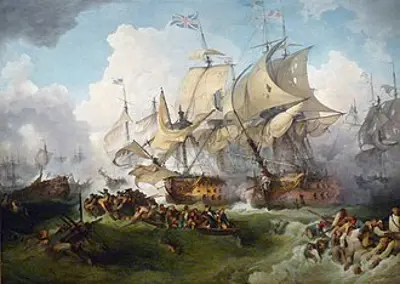
The battle of the Glorious First of June is fought, the first naval engagement between Britain and France during the French Revolutionary Wars.
The court-martial for malfeasance of Benedict Arnold, a general in the Continental Army during the American Revolutionary War, begins.
In Dover, England, Charles II of England and Louis XIV of France sign the Secret Treaty of Dover, which will force England into the Third Anglo-Dutch War.
In Humen, China, Lin Zexu destroys 1.2 million kilograms of opium confiscated from British merchants, providing Britain with a casus belli to open hostilities, resulting in the First Opium War.