
1895
The U
The U.S. Court of Private Land Claims ruled that James Reavis's claim to 18,600 sq mi (48,000 km2) of land in present-day Arizona and New Mexico was "wholly fictitious and fraudulent".
2954 results for “Thomas C. Mann” — type: selected (1025 ms)
The U.S. Court of Private Land Claims ruled that James Reavis's claim to 18,600 sq mi (48,000 km2) of land in present-day Arizona and New Mexico was "wholly fictitious and fraudulent".

The Soyuz 11 spacecraft experienced uncontrolled decompression during preparations for reentry, killing Soviet cosmonauts Vladislav Volkov, Georgy Dobrovolsky and Viktor Patsayev—the only human death�

The United States Army Air Corps aircraft Bird of Paradise landed at Wheeler Field on the Hawaiian island of Oahu to complete the first transpacific flight.

More than 50,000 Union and Confederate veterans gathered at the Gettysburg Battlefield, the largest combined reunion of American Civil War veterans ever held.

A passenger train fell through an open swing bridge into the Richelieu River near present-day Mont-Saint-Hilaire, Quebec, killing as many as 99 people and injuring 100 others in Canada's worst railwa�

Ryan White, an HIV/AIDS patient in the U.S., was denied re-admission to his school after he had contracted the disease from hemophilia treatments.

Anglo-Spanish War: After a 15-day siege Spanish troops in San Juan, modern-day Puerto Rico, surrendered to an English force under Sir George Clifford.
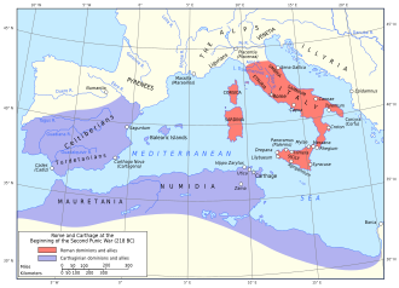
Second Punic War: Commanded by Hannibal, the Carthaginians ambushed a Roman army at the Battle of Lake Trasimene, capturing or killing 25,000 men.

On the First Sunday after Trinity, J. S. Bach led the first performance of Brich dem Hungrigen dein Brot, BWV 39 (page pictured), one of a few new cantatas written that year.

Julia Gillard was sworn in as the first female prime minister of Australia after incumbent Kevin Rudd declined to contest a leadership spill in the Labor Party.

The Book of Common Prayer, a major component of the Elizabethan religious settlement, was introduced as the liturgy of the Church of England through the Act of Uniformity 1558.

First World War: The first day of the Battle of Albert, the opening phase of the Battle of the Somme, became the bloodiest day in the British Army's history, with 57,470 casualties, including 19,240 �
Jan van Essen and Hendrik Vos were burnt at the stake in Brussels (pictured), becoming the first Lutherans executed by the Council of Brabant.

Confederate forces were defeated by the Union Army on the last day of the Battle of Gettysburg (pictured), a turning point in the American Civil War.

French and Indian War: George Washington surrendered Fort Necessity in Pennsylvania, the only military surrender in his career.
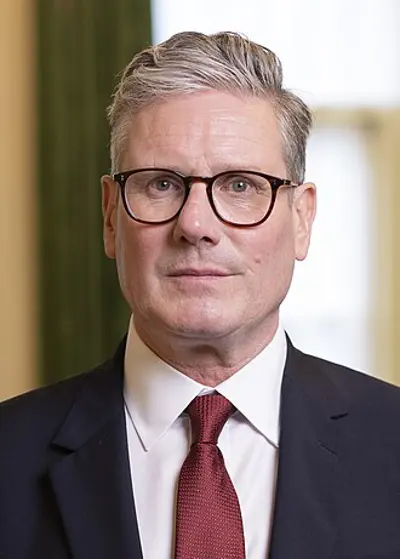
Keir Starmer leads the Labour Party to a landslide victory in the United Kingdom general election, ending fourteen years of Conservative rule.
The Holocaust: During the German occupation of Latvia, a number of synagogues in Riga were set on fire, killing many Jews who were confined within.
World War I: Allied forces led by the Australian general John Monash won the Battle of Hamel, demonstrating the effectiveness of combined-arms techniques in trench warfare.

In Philadelphia, the Continental Congress adopted the Declaration of Independence (signing pictured), announcing that the thirteen American colonies were no longer a part of the British Empire.
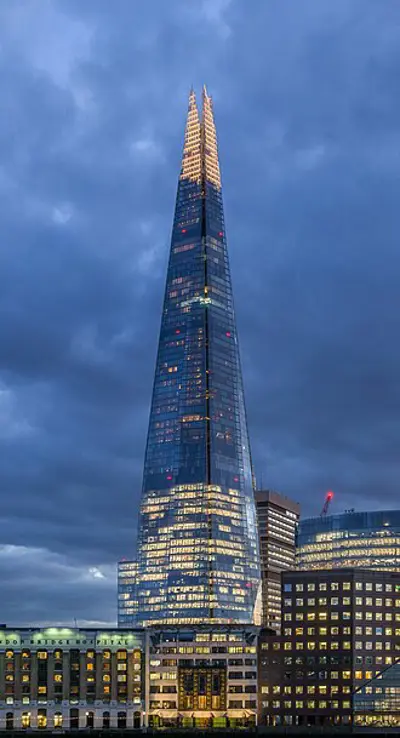
The Shard (pictured) in London was inaugurated as the tallest building in Europe, with a height of 310 m (1,020 ft), but was surpassed by Moscow's Mercury City Tower four months later.