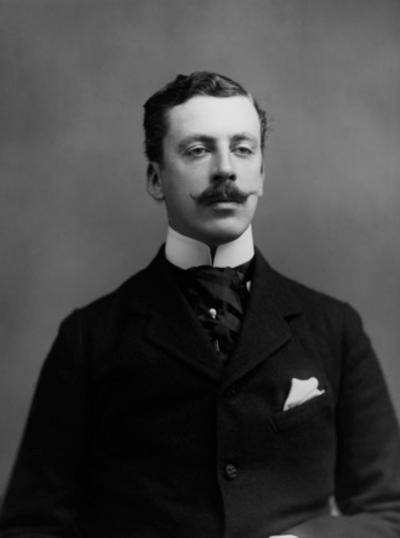
James Hamilton, 3rd Duke of Abercorn, English lawyer and politician, Governor of Northern Ireland (died 1953)
949 results for “Sterling North” (147 ms)
James Hamilton, 3rd Duke of Abercorn, English lawyer and politician, Governor of Northern Ireland (died 1953)
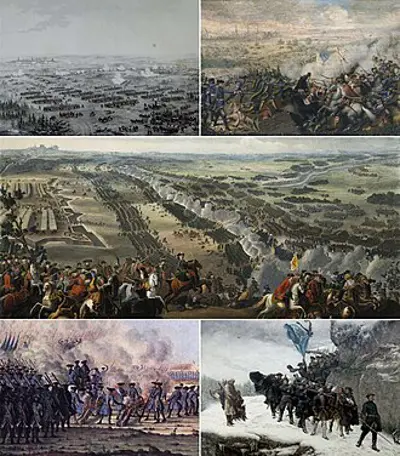
Great Northern War: Swedish forces led by King Charles XII defeated the Russian army at the Battle of Narva.
The Operation Big Bang, the largest non-nuclear man-made explosion to that time, destroys bunkers and military installations on the North Sea island of Heligoland, Germany.
Vietnam War: President of South Vietnam Nguyễn Văn Thiệu flees Saigon, as Xuân Lộc, the last South Vietnamese outpost blocking a direct North Vietnamese assault on Saigon, falls.
�o Austrian army corps are driven from Landshut by a First French Empire army led by Napoleon as two French corps to the north hold off the main Austrian army on the first day of the Battle of Eckmühl.
John Campbell released the first issue of The Boston News-Letter, the first continuously published newspaper in British North America.
�he U.S. begins to evacuate U.S. citizens from Saigon before an expected North Vietnamese takeover. U.S. involvement in the war comes to an end. This happens after the Bombing of Tan Son Nhut Air Base.
Vietnam War: United States and South Vietnamese forces invade Cambodia to interdict the Ho Chi Minh Trail in an attempt to cut off supplies to the Viet Cong and the North Vietnamese Army.
American forces completed a helicopter evacuation of U.S. citizens, South Vietnamese civilians and others from Saigon, just before North Vietnamese troops captured the city and ended the Vietnam War.
American Civil War: The Battle of Chancellorsville between Robert E. Lee's Confederate Army of Northern Virginia and the Union Army of the Potomac under Joseph Hooker begins.
Lieutenant Colonels Joseph O. Fletcher and William P. Benedict of the United States land a plane at the North Pole.
World War II: The German surrender at Lüneburg Heath is signed, coming into effect the following day. It encompasses all Wehrmacht units in the Netherlands, Denmark and northwest Germany.
The 6.5 Mw Friuli earthquake affects Northern Italy with a maximum Mercalli intensity of X (Extreme), leaving 900–978 dead and 1,700–2,400 injured.
American Civil War: The Battle of Chancellorsville ends with a major defeat of the Union's Army of the Potomac under Joseph Hooker by the Confederate Army of Northern Virginia under Robert E. Lee.
The 7.1 Mw Salmas earthquake shakes northwestern Iran and southeastern Turkey with a maximum Mercalli intensity of IX (Violent). Up to three-thousand people were killed.
A convoy of circus wagons carrying lions, horses, ponies and an ass lost control and overturned into some shop fronts in Dungannon, Northern Ireland.
Vietnam War: U.S. President Richard Nixon announces his order to place naval mines in major North Vietnamese ports in order to stem the flow of weapons and other goods to that nation.
Admiral Richard E. Byrd and Floyd Bennett claim to have flown over the North Pole (later discovery of Byrd's diary appears to cast some doubt on the claim.)
�he Tea Act, designed to save the British East India Company by reducing taxes on its tea and granting it the right to sell tea directly to North America. The legislation leads to the Boston Tea Party.
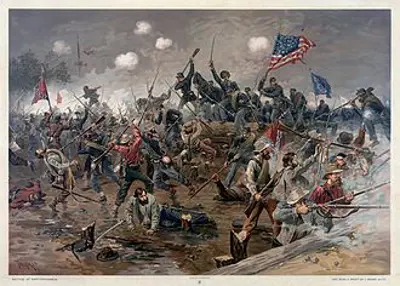
�e: Union troops assault a Confederate salient known as the "Mule Shoe", with some of the fiercest fighting of the war, much of it hand-to-hand combat, occurring at "the Bloody Angle" on the northwest.