In an address to Congress, U
�o Congress, U.S. president John F. Kennedy announced his support for the Apollo program, with "the goal, before this decade is out, of landing a man on the Moon and returning him safely to the Earth".
90 results for “moon” (27 ms)
�o Congress, U.S. president John F. Kennedy announced his support for the Apollo program, with "the goal, before this decade is out, of landing a man on the Moon and returning him safely to the Earth".
Apollo program: Apollo 10 returns to Earth after a successful eight-day test of all the components needed for the forthcoming first crewed Moon landing.
Near-Earth asteroid 2002 MN misses the Earth by 75,000 miles (121,000 km), about one-third of the distance between the Earth and the Moon.
Project Apollo: At a press conference, NASA announces lunar orbit rendezvous as the means to land astronauts on the Moon, and return them to Earth.
The Apollo 11 Lunar Module Eagle landed on the Sea of Tranquillity, where Neil Armstrong and Buzz Aldrin became the first men to walk on the Moon six and a half hours later (bootprint pictured).
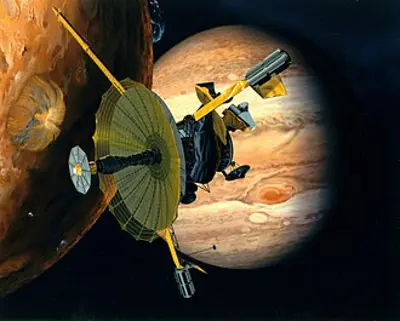
The NASA spacecraft Galileo flew by the asteroid 243 Ida and took photographs that later revealed the first known asteroid moon (both pictured).
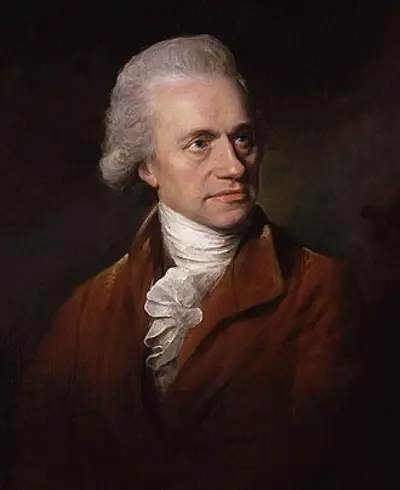
With the first use of his 1.2-metre (3.9 ft) telescope, then the largest in the world, William Herschel discovered a new moon of Saturn, later named Enceladus (pictured).
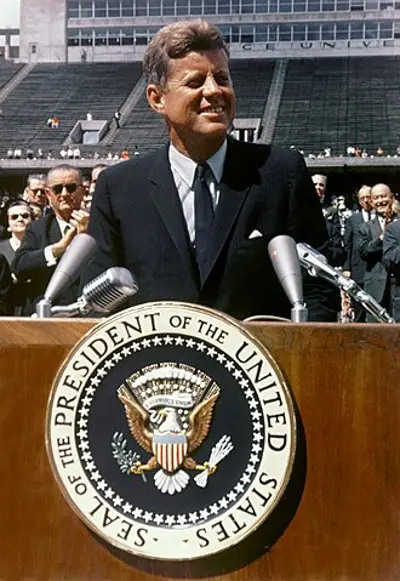
In a speech at Rice Stadium in Houston, U.S. president John F. Kennedy reiterated an aspiration to land a man on the Moon before 1970 (video featured).
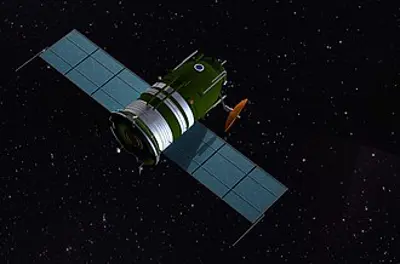
The Soviet Union's Zond 5 landed in the Indian Ocean, becoming the first spacecraft to safely return to Earth after travelling around the Moon.
The China National Space Administration launches an experimental lunar mission, Chang'e 5-T1, which will loop behind the Moon and return to Earth.