World War II: The Soviet Union invaded Poland from the east, sixteen days after Nazi Germany's attack on the country…
World War II: The Soviet Union invaded Poland from the east, sixteen days after Nazi Germany's attack on the country from the west.
1209 results for “War of the First Coalition: Napoleon Bonaparte conquers Venice” — type: selected (444 ms)
World War II: The Soviet Union invaded Poland from the east, sixteen days after Nazi Germany's attack on the country from the west.
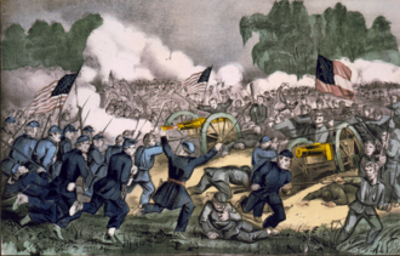
American Civil War: Almost 23,000 total casualties were suffered at the Battle of Antietam near Sharpsburg, Maryland, where Confederate and Union troops fought to a tactical stalemate.
War of the Pyrenees: Forces from the French Army of the Eastern Pyrenees defeated two divisions of the Army of Catalonia, ending the furthest Spanish encroachment in their invasion of Roussillon.
American Revolutionary War: The Continental Army under Richard Montgomery began the Siege of Fort St. Jean in the British province of Quebec.
Portuguese Restoration War: Having crossed the Minho and entered Portuguese territory, a Spanish army was victorious in the Battle of Vilanova.
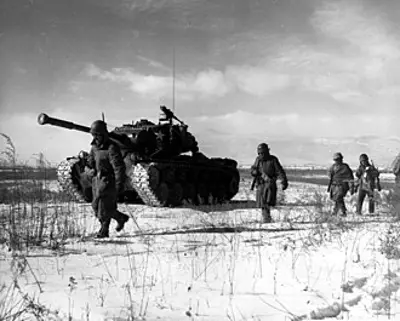
Korean War: A North Korean attack was repelled by Allied forces at the Battle of Nam River.
World War II: Polish resistance leader Witold Pilecki allowed himself to be captured by German forces and sent to Auschwitz to gather intelligence.
American Civil War: The Battle of Chickamauga began in northwestern Georgia and would end in the most significant Union defeat in the Western Theater.
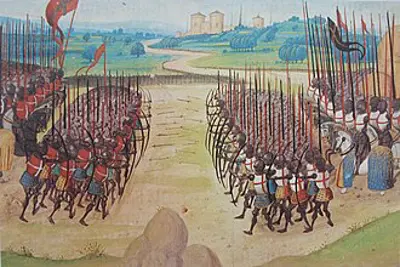
Hundred Years' War: English forces led by Edward the Black Prince decisively won the Battle of Poitiers and captured John II of France.
Second World War: Allied forces captured San Marino from the German Army.
World War II: Australian troops led by Gordon Grimsley King defeated Imperial Japanese forces at the Battle of Kaiapit in New Guinea.
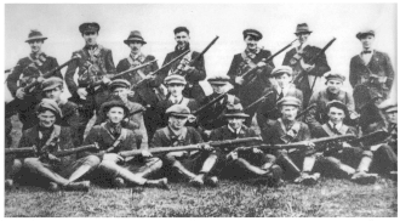
Irish War of Independence: British auxiliary police officers known as Black and Tans went on a rampage in Balbriggan, burning more than fifty homes and businesses and killing two people.
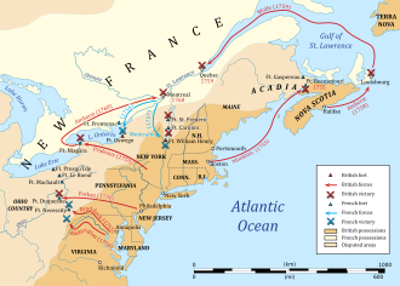
French and Indian War: Despite being ambushed at the start of the Battle of Lake George, British colonial troops and their Mohawk allies were able to defeat French and Canadien troops and their Indian�
Ottoman–Venetian War: After a 40-day siege, the Cypriot city of Nicosia fell to the Ottomans, leading to a massacre of more than 20,000 citizens.
World War II: Nazi forces began a mass extermination campaign against the civilian residents of around 20 villages on the Greek island of Crete, eventually killing more than 500 men.
Second World War: The German Army began the Massacre of the Acqui Division on the Greek island of Cephalonia, executing 5,155 Italian soldiers in the next five days.
World War I: The Battle of Nazareth ended with the British Empire victorious over the Ottomans.
American Revolutionary War: The Great Fire of New York (depicted) broke out during the British occupation of New York City, destroying up to 1,000 buildings.
American Revolutionary War: British officer John André was captured by Patriot forces, thereby revealing a plot by Continental Army general Benedict Arnold to hand over West Point, New York.
English Civil War: Royalists commanded by King Charles I suffered a significant defeat at the Battle of Rowton Heath.