
1944
World War II: U
World War II: U.S. Navy submarines began attacks on Japan's Take Ichi convoy as it sailed in waters between Taiwan and the Philippines, eventually sinking four vessels and killing more than 4,000 troo�
1662 results for “Mary I” — type: selected (713 ms)
World War II: U.S. Navy submarines began attacks on Japan's Take Ichi convoy as it sailed in waters between Taiwan and the Philippines, eventually sinking four vessels and killing more than 4,000 troo�

Spanish Civil War: The Bombing of Guernica by the Condor Legion of the Luftwaffe resulted in a devastating firestorm that caused widespread destruction and civilian deaths and inspired one of Pablo Pi�

American Revolutionary War: Sixteen-year-old Sybil Ludington allegedly rode forty miles (64 km) through the night to warn militiamen under her father Henry's command that British troops were planning�
Aelia Eudoxia married Byzantine emperor Arcadius without the knowledge or consent of Rufinus, the Praetorian prefect who had intended for his own daughter to wed the emperor.
The 1,388-foot-tall (423.2 m) Trump International Hotel and Tower in Chicago, with the world's highest residence above ground level at the time, held its grand opening.
The Sibley Commission issued their final report, urging the government of the U.S. state of Georgia to abandon its strategy of massive resistance and legalize some instances of school integration.
The New Yorker published an online article and photographs detailing accounts of torture and abuse by American military personnel of Iraqi prisoners held at Abu Ghraib prison in Baghdad.
Second World War: The Royal Navy submarine HMS Seraph began Operation Mincemeat to deceive Germany about the upcoming invasion of Sicily.
Second World War: Japanese forces began an invasion of Tulagi and nearby islands in the British Solomon Islands, enabling them to threaten and intercept supply and communication routes between the Uni�
Philippine broadcast network ABS-CBN was forced to go off-air by the National Telecommunications Commission after Congress failed to renew its franchise granted in 1995.
Project Mercury: American astronaut Alan Shepard made a sub-orbital spaceflight on board Freedom 7, becoming the second person to travel into outer space.
Carnegie Hall (interior pictured) in New York City, built by the philanthropist Andrew Carnegie, officially opened with a concert conducted by Pyotr Ilyich Tchaikovsky.

American Civil War: Union Lt. Gen. Ulysses S. Grant's Overland Campaign in Virginia began with the inconclusive Battle of the Wilderness in Spotsylvania County.
American entertainer Bob Hope performed his first show with the United Service Organizations, beginning a 50-year involvement with them.
Irish civil servants Thomas Henry Burke and Lord Frederick Cavendish were stabbed to death by members of the radical Irish National Invincibles in Phoenix Park, Dublin.
U.S. president Chester A. Arthur signed the Chinese Exclusion Act into law (cartoon pictured), implementing a ban on Chinese immigration to the United States that remained for 61 years.
Cardinal Robert Francis Prevost was elected as Pope Leo XIV (pictured), making him the first pope born in the United States, the first to hold either U.S. or Peruvian citizenship, the first from the O�
Prominent Iranian Jew Habib Elghanian was executed after having been convicted by a revolutionary tribunal of various charges, triggering a mass exodus of Jews from Iran.
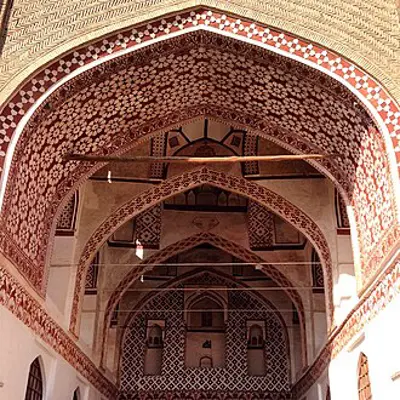
An earthquake registering 7.3 Mw struck near Qaen, Iran, killing at least 1,567 and leaving around 50,000 others homeless.
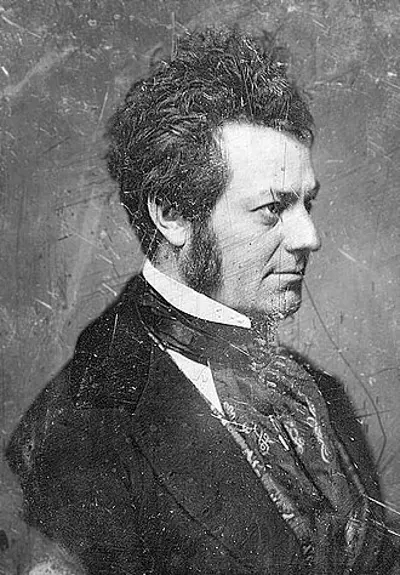
A personal dispute between actors Edwin Forrest and William Macready in New York City devolved into a riot that left at least 22 dead and more than 120 injured.