First World War: The Battle of Cambrai began with British forces having initial success over Germany's Hindenburg Line.

199 results for “Karin Guthke, German diver” — type: selected (243 ms)
First World War: The Battle of Cambrai began with British forces having initial success over Germany's Hindenburg Line.
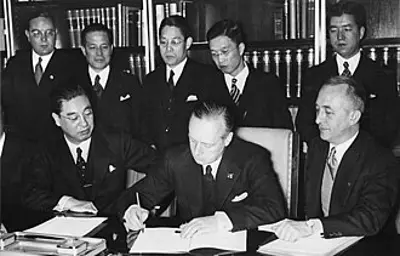
Nazi Germany and the Empire of Japan signed the Anti-Comintern Pact, agreeing that, if the Soviet Union attacked one of them, they would consult each other on measures to "safeguard their common inter�
World War I: German troops invaded Portuguese East Africa in an attempt to escape superior British forces to the north and resupply from captured Portuguese materiel.
The National Diet of Japan, a bicameral legislature modelled after both the German Reichstag and the British Westminster system, first met in Tokyo.
World War I: Hit by ground fire, French aviation pioneer Roland Garros (pictured) landed his aircraft behind enemy lines and was taken prisoner by German forces.
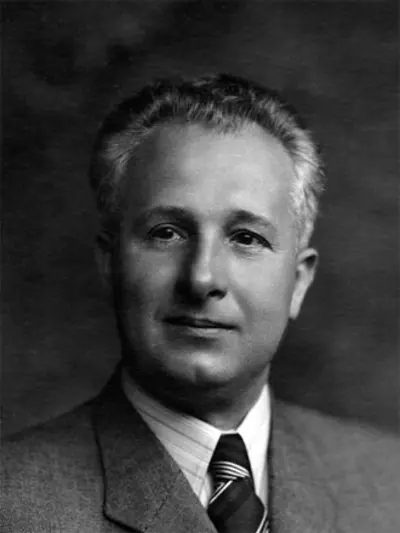
The Franck–Hertz experiment, the first electrical measurement to clearly demonstrate quantum mechanics, was presented to the German Physical Society.
An expelled student murdered sixteen people and wounded seven others before committing suicide at the Gutenberg-Gymnasium Erfurt in Erfurt, Germany.
World War II: The U.S. Army liberated Dachau, the first Nazi concentration camp, and killed German prisoners of war.
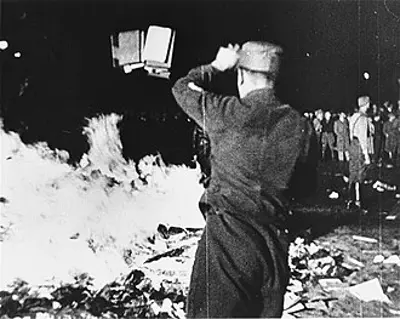
As part of Nazi Germany's persecution of transgender people, thousands of books taken from the Institute for Sexual Science were burned in Bebelplatz square for being "un-German".
World War II: The Royal Air Force began Operation Bellicose, a four-day shuttle-bombing mission that included raids on Germany and Italy and a refuelling and rearming stop in Algeria.
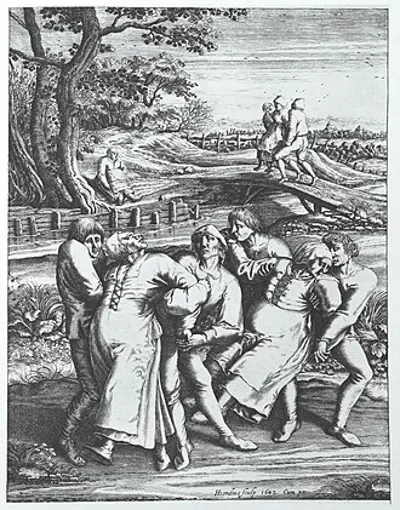
An outbreak of dancing mania, in which crowds of people danced themselves to exhaustion, began in Aachen (in present-day Germany) before spreading to other parts of Europe.
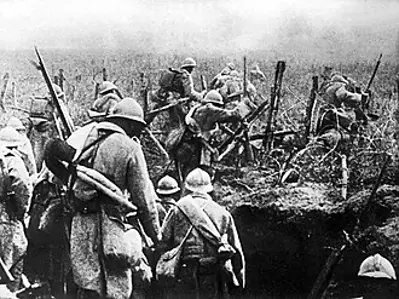
World War I: The 26-day Battle of Belleau Wood near the Marne River in France ended with American forces finally clearing that forest of German troops.
On the Feast of the Visitation, Bach led the first performance of his Meine Seel erhebt den Herren, BWV 10, based on the German Magnificat.
Second World War: The Royal Navy attacked the French fleet at Mers El Kébir (pictured), fearing that the ships would fall into Axis hands after the French–German armistice.
Archaeologist Ivan Borkovský discovered a medieval skeleton at Prague Castle; competing factions claimed the skeleton as Germanic or Slavic in origin.
First World War: The "worst 24 hours in Australia's entire history" occurred when Australian forces unsuccessfully attacked German defences at Fromelles, France.
World War II: In opposition to the government-in-exile based in London, the Soviet-backed Polish Committee of National Liberation was proclaimed to govern territory recaptured from Germany.
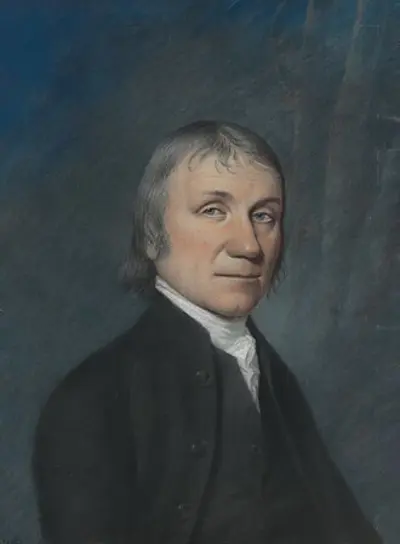
British scientist Joseph Priestley (pictured) liberated oxygen gas, corroborating the discovery of the element by the German-Swedish chemist Carl Wilhelm Scheele.
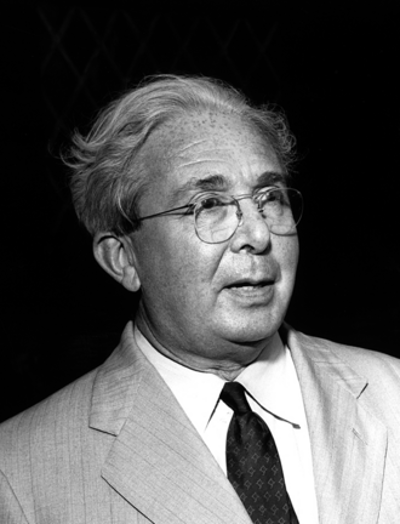
�penned a letter, signed by Albert Einstein and addressed to U.S. president Franklin D. Roosevelt, warning that Germany may develop atomic bombs, leading to the establishment of the Manhattan Project.
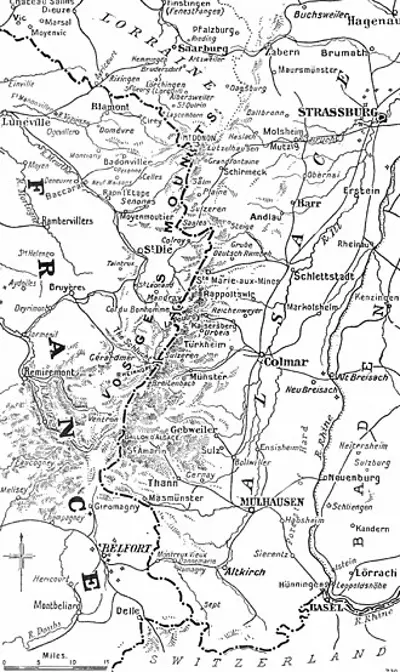
The Battle of Mulhouse began with France's first attack of World War I in an ultimately unsuccessful attempt to recover the region of Alsace from Germany.