Polish–Soviet War: The Polish army launched the Vilna offensive to capture Vilnius (now in Lithuania) from the Red Army
Polish–Soviet War: The Polish army launched the Vilna offensive to capture Vilnius (now in Lithuania) from the Red Army.
72 results for “Stefan Filipkiewicz, Polish painter (died 1944)” — type: selected (567 ms)
Polish–Soviet War: The Polish army launched the Vilna offensive to capture Vilnius (now in Lithuania) from the Red Army.
Polish workers demanding better working conditions began massive protests in Poznań, but were later violently repressed by the Polish People's Army and the Internal Security Corps.
The Battle of Radzymin, one of the bloodiest and most intense battles of the Polish–Soviet War, concluded with a Polish victory.
The Polish Partition Sejm met to discuss the First Partition of Poland, carried out the previous year by Russia, Prussia and Austria.
Faustina Kowalska, a Polish nun whose apparitions of Jesus inspired the Catholic devotion to the Divine Mercy, was canonized by Pope John Paul II.
Stephen Báthory and Anna Jagiellon (pictured) were crowned as the elected rulers of the Polish–Lithuanian Commonwealth.
The Great Sejm of the Polish–Lithuanian Commonwealth ratified the first codified national constitution in Europe.
The Great Sejm of the Polish–Lithuanian Commonwealth was disbanded following the Russian invasion of Poland.
The aircraft carrying Władysław Sikorski, prime minister of the Polish government-in-exile, crashed off Gibraltar, killing him and fifteen others and leading to several conspiracy theories.
First World War: Russian troops won a victory in the Battle of Kostiuchnówka, with the Polish Legions playing a key role on the Austro-Hungarian side.
The all-female Emilia Plater Independent Women's Battalion was formed in the Soviet Union's First Polish Army.
Great Northern War: Polish–Saxon forces were defeated by a Swedish army half their size at the Battle of Kliszów.
World War II: In opposition to the government-in-exile based in London, the Soviet-backed Polish Committee of National Liberation was proclaimed to govern territory recaptured from Germany.
World War II: A combined Canadian–Polish force captured the town of Falaise, France, in the final offensive of the Battle of Normandy.
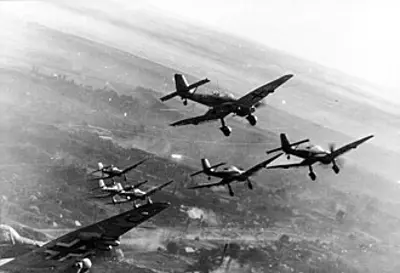
World War II: About 3,000 Polish Army troops began a nearly month-long defence of the Hel Peninsula during the German invasion of Poland.
Solidarity, a Polish trade union, was founded as the first independent labor union in an Eastern Bloc country.
World War II: Polish resistance leader Witold Pilecki allowed himself to be captured by German forces and sent to Auschwitz to gather intelligence.
Second World War: General Władysław Sikorski (pictured) became the first prime minister of the Polish government-in-exile.
Smolensk War: Forces from the Polish–Lithuanian Commonwealth broke the Russian siege of Smolensk (depicted).
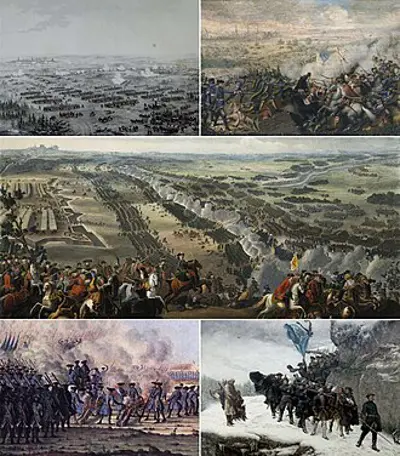
Great Northern War: Russia defeated Sweden at the Battle of Lesnaya on the Russian–Polish border, in present-day Belarus.