Thomas Doughty, English explorer
Thomas Doughty was an English nobleman, soldier, scholar and personal secretary of Christopher Hatton. His association with Francis Drake, on a 1577 voyage to raid Spanish treasure…
Thomas Doughty, English explorer
Explore 117 historical events from 1570β1579.
Thomas Doughty was an English nobleman, soldier, scholar and personal secretary of Christopher Hatton. His association with Francis Drake, on a 1577 voyage to raid Spanish treasure…
Thomas Doughty, English explorer
Sebastian was King of Portugal from 11 June 1557 to 4 August 1578 and the penultimate Portuguese monarch of the House of Aviz.
Sebastian of Portugal (born 1554)
Pedro Nunes was a Portuguese mathematician, cosmographer, and professor, probably from a New Christian family.
Pedro Nunes, Portuguese mathematician and academic (born 1502)
Nur Jahan, born Mehr-un-Nissa, was the twentieth wife and chief consort of the Mughal emperor Jahangir.
Nur Jahan, Empress consort of the Mughal Empire (died 1645)
Paul Guldin was a Swiss Jesuit mathematician and astronomer. He discovered the Guldinus theorem to determine the surface and the volume of a solid of revolution. Guldin was noted f…
Paul Guldin, Swiss astronomer and mathematician (died 1643)
Sir Peter Paul Rubens was a Flemish artist and diplomat. He is considered the most influential artist of the Flemish Baroque tradition. Rubens's highly charged compositions referen…
Peter Paul Rubens, Flemish painter and diplomat (died 1640)
Thomas West, 3rd Baron De La Warr was an English colonial administrator for whom the bay, the river, and, consequently, a Native American people and U.S. state, all later called "D…
Thomas West, 3rd Baron De La Warr, English-American soldier and politician, Colonial Governor of Virginia (died 1618)
Sir Thomas Smith was an English scholar, parliamentarian and diplomat.
Thomas Smith, English scholar and diplomat (born 1513)
Tycho Brahe, generally called Tycho for short, was a Danish astronomer known for his comprehensive and unprecedentedly accurate astronomical observations which helped to turn astro…
The cornerstone for Tycho Brahe's Uraniborg observatory is laid on the island of Hven.
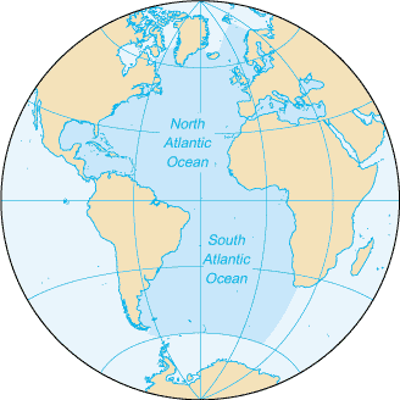
The Atlantic Ocean is the second largest of the world's five oceanic divisions, with an area of about 85,133,000 square kilometers (32,870,000 sq mi). It covers approximately 17% o…
While exploring the North Atlantic Ocean in an attempt to find the Northwest Passage, Martin Frobisher sights…
The Mughal Empire was an early modern empire in South Asia. At its peak, the empire stretched from the outer fringes of the Indus River Basin in the west, northern Afghanistan in t…
Mughal Empire annexes Bengal after defeating the Bengal Sultanate at the Battle of Rajmahal.
Lady Elizabeth Berkeley, was an English courtier and patron of the arts.
Elizabeth Carey, Lady Berkeley, English courtier (died 1635)
Caspar Schoppe was a German Catholic polemicist, philosopher and scholar.
Caspar Schoppe, German author and scholar (died 1649)
Giovanni Diodati or Deodati was a Genevan-born Italian Calvinist theologian and translator. His translation of the Bible into Italian from Hebrew, Greek, Latin, and Syriac sources …
Giovanni Diodati, Swiss-Italian minister, theologian, and academic (died 1649)
Tahmasp I was the second shah of Safavid Iran from 1524 until his death in 1576. He was the eldest son of Shah Ismail I and his principal consort, the Mawsillu princess Tajlu Khanu…
Tahmasp I, Shah of Persia (born 1514)
Eleonora di Garzia di Toledo or Leonor Álvarez de Toledo Osorio, more often known as "Leonora" or "Dianora", was the daughter of García Álvarez de Toledo, 4th Marquis of Villafranc…
Eleonora di Garzia di Toledo, Italian noble (born 1553)
Tiziano Vecellio, Latinized as Titianus, hence known in English as Titian, was an Italian Renaissance painter. The most important artist of Renaissance Venetian painting, he was bo…
Titian, Italian painter and educator (born 1488)
Stephen Báthory was King of Poland and Grand Duke of Lithuania as well as Prince of Transylvania (1576–1586), after previously being Voivode of Transylvania (1571–1576).
Stephen Báthory and Anna Jagiellon (pictured) were crowned as the elected rulers of the Polish–Lithuanian Commonwealth
A cornerstone is the first stone set in the construction of a masonry foundation. All other stones will be set in reference to this stone, thus determining the position of the enti…
The cornerstone of Danish astronomer Tycho Brahe's observatory Uraniborg was laid on the island of Hven.
Princess Isabella Romola de' Medici, Duchess of Bracciano, was a Tuscan noblewoman, daughter of Cosimo I de' Medici, first Grand Duke of Tuscany, and Eleanor of Toledo. Beautiful, …
Isabella de' Medici, Italian noble (born 1542)
The Sengoku period was the period in Japanese history in which civil wars and social upheavals took place almost continuously in the 15th and 16th centuries. The Kyōtoku incident …
Sengoku period of Japan: The combined forces of Oda Nobunaga and Tokugawa Ieyasu are victorious in the Battle of Nagashi
The Raid of the Redeswire, also known as the Redeswire Fray, was a border skirmish between England and Scotland on 7 July 1575 which took place at Carter Bar, the Cheviot pass whic…
The Raid of the Redeswire is the last major battle between England and Scotland.
Marie de' Medici was Queen of France and Navarre as the second wife of King Henry IV. Marie served as regent of France between 1610 and 1617 during the minority of her son Louis XI…
Marie de' Medici, queen of Henry IV of France (died 1642)
Sir Robert Heath was an English judge and politician who sat in the House of Commons from 1621 to 1625.
Robert Heath, English judge and politician (died 1649)