1635
Philippe Quinault, French playwright and composer (died 1688)
Philippe Quinault was a French dramatist and librettist.
Philippe Quinault, French playwright and composer (died 1688)
Explore 187 historical events from 1630–1639.
Philippe Quinault was a French dramatist and librettist.
Philippe Quinault, French playwright and composer (died 1688)
John Hale was the Puritan pastor of Beverly, Massachusetts, and took part in the Salem witch trials in 1692. He was one of the most prominent and influential ministers associated w…
John Hale, American minister (died 1700)
Pieter Gerritsz van Roestraten or Pieter Gerritsz van Roestraeten was a Dutch painter of still lifes, in particular floral and vanitas still lifes. He also painted genre scenes and…
Pieter Gerritsz van Roestraten, Dutch-English painter (died 1700)
Francesco Maidalchini was an Italian Cardinal of the Roman Catholic Church.
Francesco Maidalchini, Catholic cardinal (died 1700)
Edward Stillingfleet was an English Christian theologian and scholar. Considered an outstanding preacher as well as a strong polemical writer defending Anglicanism, Stillingfleet w…
Edward Stillingfleet, British theologian and scholar (died 1699)
The Eighty Years' War or Dutch Revolt was an armed conflict in the Habsburg Netherlands between disparate groups of rebels and the Spanish government. The causes of the war include…
Eighty Years' War: Dutch Republic forces recapture a strategically important fort from Spain after a nine-month siege
Esaias Reusner was a German lutenist and composer.
Esaias Reusner, German lute player and composer (died 1679)
The Treaty of Zuhab, also called Treaty of Qasr-e Shirin, signed on 17 May 1639 at Qasr-e Shirin in western Iran, ended the Ottoman–Safavid War of 1623–1639. It strove to clarify t…
The treaty of Zuhab ends the fifteen year long war between the Ottomans and the Safavids
Tommaso Campanella, baptized Giovanni Domenico Campanella, was an Italian Dominican friar, philosopher, theologian, astrologer, and poet.
Tommaso Campanella, Italian astrologer, theologian, and poet (born 1568)
Charles Weston, 3rd Earl of Portland, was the only son and heir of the 2nd Earl of Portland and Lady Frances Stuart.
Charles Weston, 3rd Earl of Portland, English soldier and noble (died 1665)
William Coddington was an early magistrate of the Massachusetts Bay Colony and later of the Colony of Rhode Island and Providence Plantations. He served as the judge of Portsmouth …
William Coddington founds Newport, Rhode Island
The Treaty of Zuhab, also called Treaty of Qasr-e Shirin, signed on 17 May 1639 at Qasr-e Shirin in western Iran, ended the Ottoman–Safavid War of 1623–1639. It strove to clarify t…
The treaty of Zuhab ends the fifteen year long war between the Ottomans and the Safavids

Chennai, also known as Madras, is the capital and largest city of Tamil Nadu, the southernmost state of India. It is located on the Coromandel Coast of the Bay of Bengal. As per th…
Madras (now Chennai), India, is founded by the British East India Company on a sliver of land bought from local Nayak…
Giovanni Battista Gaulli, also known as Baciccio or Baciccia, was an Italian Baroque painter working in the High Baroque and early Rococo periods. He is best known for his grand il…
Giovanni Battista Gaulli, Italian artist (died 1709)
Charles Weston, 3rd Earl of Portland, was the only son and heir of the 2nd Earl of Portland and Lady Frances Stuart.
Charles Weston, 3rd Earl of Portland, English soldier and noble (died 1665)
Old Style (O.S.) and New Style (N.S.) indicate dating systems before and after a calendar change, respectively. Usually, they refer to the change from the Julian calendar to the Gr…
(O
Hans Herr was a Swiss-American Mennonite bishop. He was born in Zürich, Switzerland. In 1710, Herr was among a group of settlers who purchased 10,000 acres (40 km2) of land along P…
Hans Herr, Swiss bishop (died 1725)
William Russell, Lord Russell was an English Country Party politician. He was a leading member of the Country Party, forerunners of the Whigs, who during the reign of Charles II of…
William Russell, Lord Russell, English politician (died 1683)
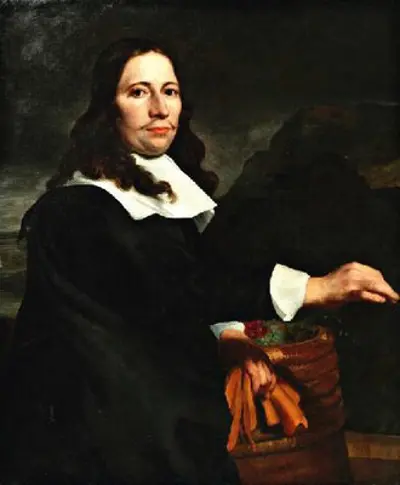
Simon van der Stel was the first Governor of the Dutch Cape Colony (1691), the settlement at the Cape of Good Hope. He was interested in botany, establishing vineyards Groot and Kl…
Simon van der Stel, Dutch commander and politician, 1st Governor of the Dutch Cape Colony (died 1712)
Tommaso Campanella, baptized Giovanni Domenico Campanella, was an Italian Dominican friar, philosopher, theologian, astrologer, and poet.
Tommaso Campanella, Italian astrologer, theologian, and poet (born 1568)
Melchior Franck was a German composer of the late Renaissance and early Baroque eras. He was a hugely prolific composer of Lutheran church music, especially motets, and assisted in…
Melchior Franck, German composer (born 1579)
Bernard of Saxe-Weimar was a duke of Saxe-Weimar and a politically active Protestant general during the Thirty Years' War (1618–48). Known as one of the most capable field commande…
Bernard of Saxe-Weimar, German general (born 1604)
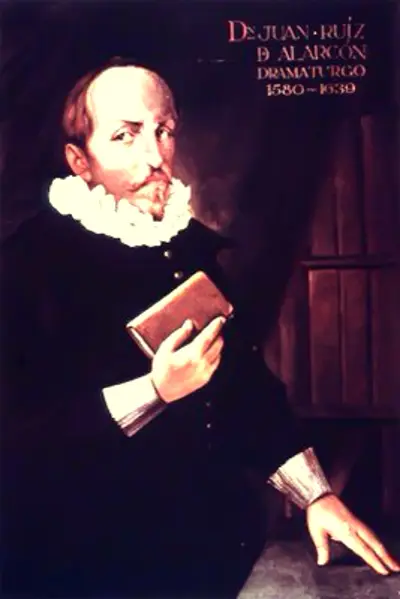
Juan Ruiz de Alarcón was a New Spanish writer of the Golden Age who cultivated different variants of dramaturgy. His works include the comedy La verdad sospechosa, which is conside…
Juan Ruiz de Alarcón, Mexican actor and playwright (born 1581)
Martin (Maarten) van den Hove (Latinized as Martinus Hortensius (Ortensius)) (1605 – 7 August 1639) was a Dutch astronomer and mathematician. His adopted Latin name is a translatio…
Martin van den Hove, Dutch astronomer and mathematician (born 1605)
Martin Opitz von Boberfeld was a German poet, regarded as the greatest of that nation during his lifetime.
Martin Opitz, German poet and hymnwriter (born 1597)
Johannes Meursius was a Dutch classical scholar and antiquary.
Johannes Meursius, Dutch historian and scholar (born 1579)
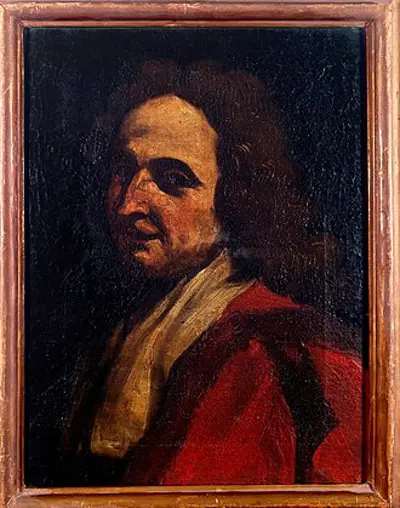
Stefano Landi was an Italian composer and teacher of the early Baroque Roman School. He was an influential early composer of opera, and wrote the earliest opera on a historical sub…
Stefano Landi, Italian composer and educator (born 1587)
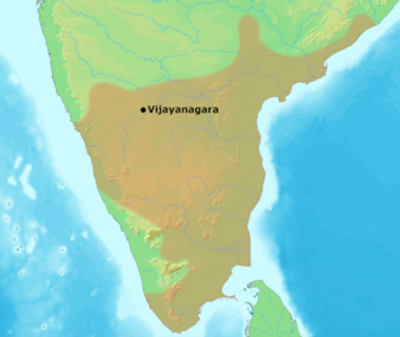
The Vijayanagara Empire, also known as the Karnāta Empire, was a late medieval Hindu empire that ruled much of southern India. It was established in 1336 by the brothers Harihara I…
The Vijayanagara Empire leased a small strip of land in present-day Chennai, the capital of the present-day Indian…
Bernard of Saxe-Weimar was a duke of Saxe-Weimar and a politically active Protestant general during the Thirty Years' War (1618–48). Known as one of the most capable field commande…
An army under Bernard of Saxe-Weimar defeats imperial troops at the battle of Wittenweiher.
Richard Simon CO, was a French priest, a member of the Oratorians, who was an influential biblical critic, orientalist and controversialist.
Richard Simon, French priest and scholar (died 1712)
Henry Hyde, 2nd Earl of Clarendon, PC was an English aristocrat and politician. He held high office at the beginning of the reign of his brother-in-law, King James II.
Henry Hyde, 2nd Earl of Clarendon (died 1709)
David Teniers III, also referred to as David Teniers Junior was a Flemish painter and tapestry designer who was mainly active in Antwerp, Madrid and Brussels. He is known for his p…
David Teniers III, Flemish painter (died 1685)
Giovanni Buonaventura Viviani was an Italian composer and violinist. He worked in the court at Innsbruck as a violinist at least between 1656 and 1660. Between 1672 and 1676 he was…
Giovanni Buonaventura Viviani, Italian violinist and composer (died 1693)
Nicolas Malebranche was a French Oratorian Catholic priest and rationalist philosopher. In his works, he sought to synthesise the thought of St. Augustine and Descartes, in order t…
Nicolas Malebranche, French priest and philosopher (died 1715)