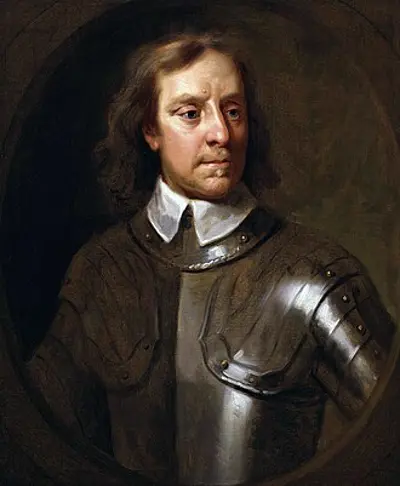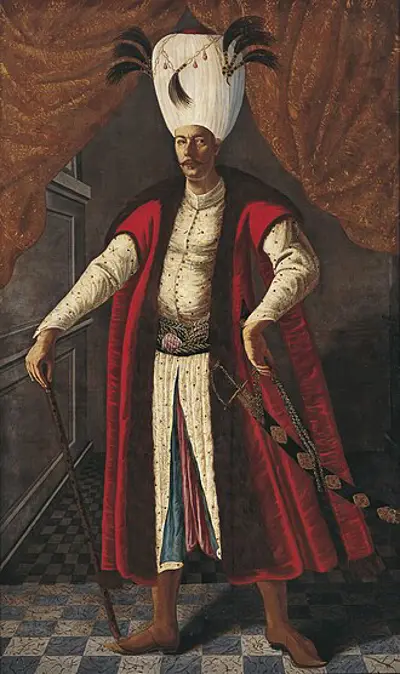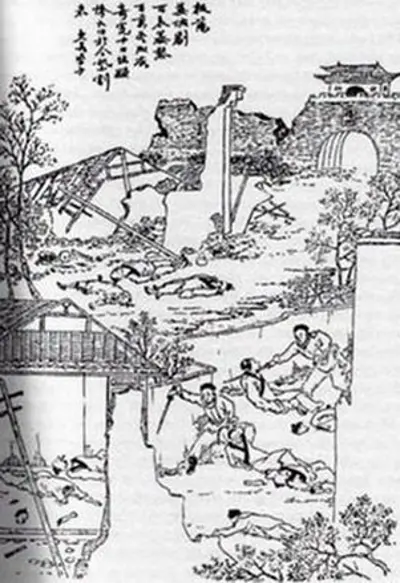
King Charles I of England dissolves the Short Parliament
Charles I was King of England, Scotland, and Ireland from 27 March 1625 until his execution in 1649.
King Charles I of England dissolves the Short Parliament
Explore 75 historical events from 1640β1649.
Charles I was King of England, Scotland, and Ireland from 27 March 1625 until his execution in 1649.
King Charles I of England dissolves the Short Parliament
Jules Hardouin-Mansart was a French Baroque architect and builder whose major work included the Place des Victoires (1684–1690); Place Vendôme (1690); the domed chapel of Les Inval…
Jules Hardouin-Mansart, French architect (probable; (died 1708)
Sir William Ashhurst was a British banker, merchant and Whig politician who sat in the English and British House of Commons from 1689 to 1710. He also served as the Lord Mayor of L…
William Ashhurst, English banker, Sheriff of London, Lord Mayor of London and politician (died 1720)
The First English Civil War took place in England and Wales from 1642 to 1646, and forms part of the 1639 to 1653 Wars of the Three Kingdoms. An estimated 15% to 20% of adult males…
First English Civil War: Despite being vastly outnumbered, a Parliamentarian force under James Chudleigh defeated a Roya
Tobias Hume was a Scottish composer, viol player and soldier.
Tobias Hume, Scottish soldier, viol player, and composer (born 1569)
Countess Charlotte Flandrina of Nassau was a French abbess. She was the fourth daughter of William the Silent and his third spouse Charlotte of Bourbon.
Countess Charlotte Flandrina of Nassau (born 1579)
The First English Civil War took place in England and Wales from 1642 to 1646, and forms part of the 1639 to 1653 Wars of the Three Kingdoms. An estimated 15% to 20% of adult males…
First English Civil War: Charles I surrendered himself to Scottish Covenanter leader David Leslie near Newark, England
The transition from Ming to Qing, also known as the Manchu conquest of China or Ming-Qing transition, was a decades-long period of conflict between the Qing dynasty, established by…
Transition from Ming to Qing: The Chongzhen Emperor, the last Emperor of Ming China, commits suicide during a peasant re
Charles Plumier was a French botanist after whom the frangipani genus Plumeria is named. Plumier is considered one of the most important of the botanical explorers of his time. He …
Charles Plumier, French botanist and author (died 1704)
Simon de la Loubère was a French diplomat to Siam (Thailand), writer, mathematician and poet. He is credited with bringing back a document which introduced Europe to Indian astrono…
Simon de la Loubère, French mathematician, poet, and diplomat (died 1729)
Maharaja Chhatrasal Bundela was the Bundela Maharaja of Panna or Maharaja of Bundelkhand from 1675 to 1731. He is well known for his resistance against the Mughal Empire and leadin…
Chhatrasal, Indian ruler (died 1731)
Adrien Baillet was a French scholar and critic. He is now best known as a biographer of René Descartes.
Adrien Baillet, French scholar and critic (died 1706)
Friedrich Spanheim the Elder was a Calvinistic theology professor at the University of Leiden.
Friedrich Spanheim, Swiss theologian and academic (born 1600)
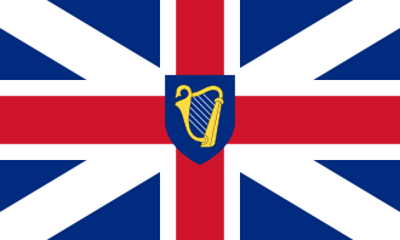
An act of parliament, as a form of primary legislation, is a text of law passed by the legislative body of a jurisdiction. In most countries with a parliamentary system of governme…
An Act of Parliament declaring England a Commonwealth is passed by the Long Parliament
During the Spanish colonial period in the Philippines (1565–1898), dozens of revolts against the Spanish colonial government were made by Indios, Moros, Lumad, Chinese (Sangleys), …
Start of the Sumuroy Revolt: Filipinos in Northern Samar led by Agustin Sumuroy revolt against Spanish colonial authorit
Manuel de Faria e Sousa was a Portuguese historian and poet who frequently wrote in Spanish.
Manuel de Faria e Sousa, Portuguese historian and poet (born 1590)
Injo, personal name Yi Jong, was the 16th monarch of Joseon. He was the eldest son of Prince Jeongwon and a grandson of King Seonjo, and ascended to the throne after leading a coup…
Injo of Joseon, Korean king (born 1595)
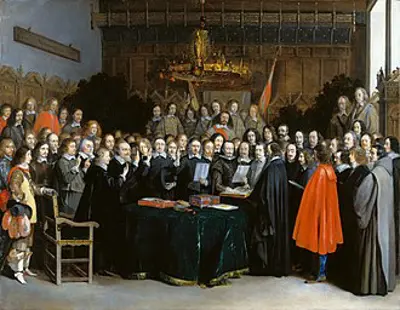
The Peace of Münster, signed on 30 January 1648, was a treaty between Philip IV of Spain and the Lords States General of the Dutch Republic. Negotiated in parallel to, but not part…
The Peace of Münster is ratified, by which Spain acknowledges Dutch sovereignty
The Battle of Zusmarshausen was fought on 17 May 1648 between Bavarian-Imperial forces under von Holzappel and an allied Franco-Swedish army under the command of Carl Gustaf Wrange…
An allied French and Swedish army defeats Imperial and Bavarian forces in the Battle of Zusmarshausen
The Parliamentarians, commonly called Roundheads by their enemies and in modern historiography, were the supporters of the Parliament of England during the English Civil War (1642–…
The Roundheads defeat the Cavaliers at the Battle of Maidstone in the Second English Civil War
Dom Pedro II, nicknamed the Pacific was King of Portugal from 1683 until his death, previously serving as regent for his brother Afonso VI from 1668 until his own accession. He was…
Peter II of Portugal (died 1706)
Władysław IV Vasa or Ladislaus IV was King of Poland, Grand Duke of Lithuania and claimant of the thrones of Sweden and Russia. Born into the House of Vasa as a prince of Poland an…
Władysław IV Vasa, Polish son of Sigismund III Vasa (born 1595)
Vincent Voiture, French Mannerist and Baroque Précieuses poet and writer of prose, was the son of a rich wine merchant of Amiens. He was introduced by a schoolfellow, the count Cla…
Vincent Voiture, French poet and author (born 1597)
Sir William Ashhurst was a British banker, merchant and Whig politician who sat in the English and British House of Commons from 1689 to 1710. He also served as the Lord Mayor of L…
William Ashhurst, English banker, Sheriff of London, Lord Mayor of London and politician (died 1720)
Old Style (O.S.) and New Style (N.S.) indicate dating systems before and after a calendar change, respectively. Usually, they refer to the change from the Julian calendar to the Gr…
(O
Pieter Corneliszoon Hooft - Knight in the Order of Saint Michael - was a Dutch historian, poet and playwright who lived during the Dutch Golden Age in literature.
Pieter Corneliszoon Hooft, Dutch poet and playwright (born 1581)
Canonicus was a chief of the Narragansett people. He was wary of the colonial settlers, but he ultimately befriended Roger Williams and other settlers.
Canonicus, Grand Chief Sachem of the Narragansett (born 1565)
Leonard Calvert was an English-born colonial administrator who served as the first proprietary governor of Maryland from 1634 to 1647. He was the second son of George Calvert, 1st …
Leonard Calvert, Colonial governor of Maryland (born 1606)
Thomas Farnaby was an English schoolmaster and scholar. He operated a successful school in the Cripplegate ward of London and enjoyed great success with his annotations of classic …
Thomas Farnaby, English scholar and educator (born 1575)
Jules Hardouin-Mansart was a French Baroque architect and builder whose major work included the Place des Victoires (1684–1690); Place Vendôme (1690); the domed chapel of Les Inval…
Jules Hardouin-Mansart, French architect (probable; (died 1708)
Charles Plumier was a French botanist after whom the frangipani genus Plumeria is named. Plumier is considered one of the most important of the botanical explorers of his time. He …
Charles Plumier, French botanist and author (died 1704)
Elena Lucrezia Cornaro Piscopia or Elena Lucrezia Corner, also known in English as Helen Cornaro, was a Venetian philosopher of noble descent who in 1678 became one of the first wo…
Elena Cornaro Piscopia, Italian mathematician and philosopher (died 1684)
The First English Civil War took place in England and Wales from 1642 to 1646, and forms part of the 1639 to 1653 Wars of the Three Kingdoms. An estimated 15% to 20% of adult males…
First English Civil War: Charles I surrendered himself to Scottish Covenanter leader David Leslie near Newark, England
The Franco-Spanish War, May 1635 to November 1659, was fought between France and Spain, each supported by various allies at different points. It consists of two distinct phases, th…
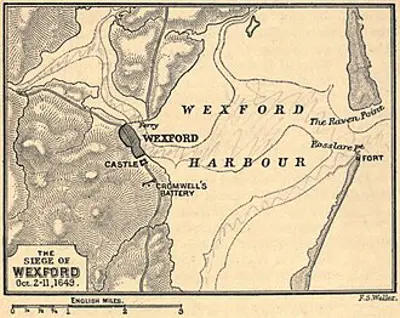
Franco-Spanish War: French and Spanish fleets fought the inconclusive Battle of Orbetello, with sailing vessels of both