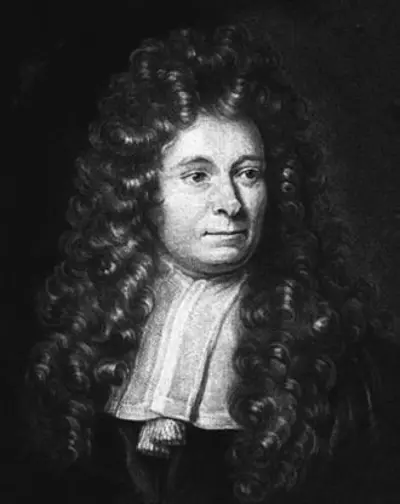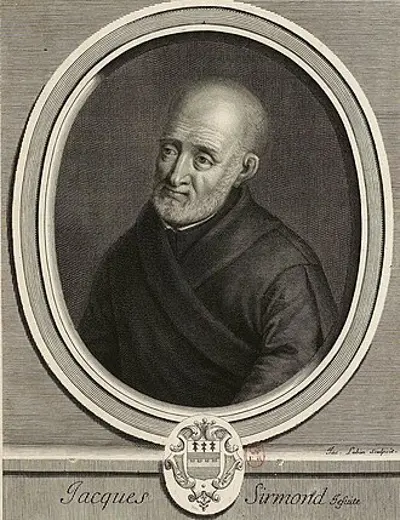
Jacques Sirmond, French scholar (born 1559)
Jacques Sirmond, pseudonym Jacobus Cosmas Fabricius, was a French scholar and Jesuit.
Jacques Sirmond, French scholar (born 1559)
Explore 197 historical events from 1650β1659.
Jacques Sirmond, pseudonym Jacobus Cosmas Fabricius, was a French scholar and Jesuit.
Jacques Sirmond, French scholar (born 1559)
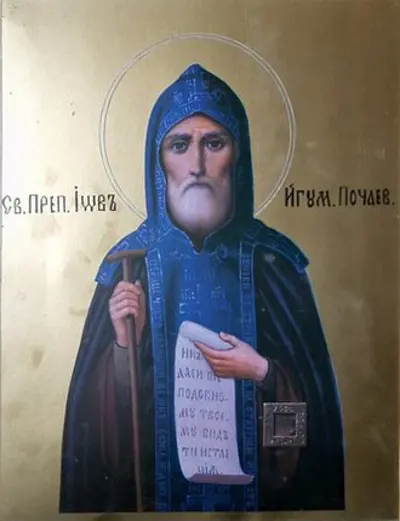
Job of Pochayev, to the world Ivan Zalizo, in Great Schema John was an Eastern Orthodox monk and saint.
Saint Job of Pochayiv, Ukrainian Orthodox Christian saint (born 1551)
Tokugawa Iemitsu was a Japanese samurai, daimyo and the third shōgun of the Tokugawa dynasty. He was the eldest son of Tokugawa Hidetada with Oeyo, and the grandson of Tokugawa Ie…
Tokugawa Iemitsu, Japanese shōgun (born 1604)
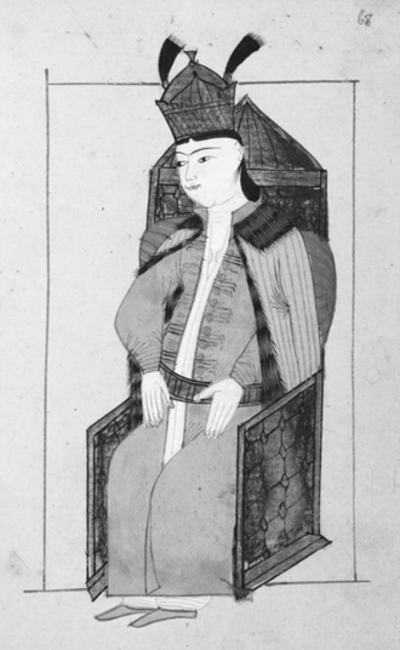
Kösem Sultan, also known as Mahpeyker Sultan, was the Haseki Sultan as a favorite consort and legal wife of Ottoman sultan Ahmed I, mother of Murad IV and Ibrahim, and grandmother …
Kosem Sultan, Ottoman Valide sultan and regent (born 1589)
The Wars of the Three Kingdoms is the collective term for a series of conflicts fought between 1639 and 1653 in England, Scotland and Ireland, then separate entities in a personal …
Wars of the Three Kingdoms: After crossing the Firth of Forth, English Commonwealth forces defeated a Scottish army at…
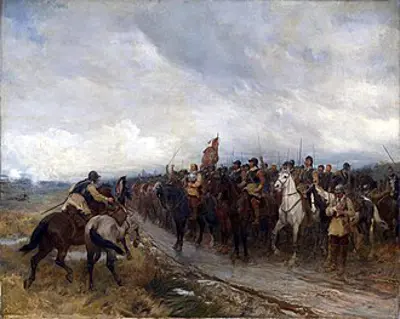
The Parliamentarians, commonly called Roundheads by their enemies and in modern historiography, were the supporters of the Parliament of England during the English Civil War (1642–…
English Parliamentarian forces under Oliver Cromwell (pictured) won the Battle of Worcester, the final battle of the…
The Battle of Carbisdale took place close to the village of Culrain, Sutherland, Scotland on 27 April 1650 and was part of the Wars of the Three Kingdoms. It was fought by the Roya…
The Battle of Carbisdale: A Royalist army from Orkney invades mainland Scotland but is defeated by a Covenanter army
George Monck, 1st Duke of Albemarle was a professional soldier from Devon who fought on both sides during the Wars of the Three Kingdoms. A prominent military figure under the Comm…
Colonel George Monck of the English Army forms Monck's Regiment of Foot, which will later become the Coldstream Guards.
The Battle of Dunbar was fought between the English New Model Army, under Oliver Cromwell, and a Scottish army commanded by David Leslie on 3 September 1650 near Dunbar, Scotland. …
Victory over the royalists in the Battle of Dunbar opens the way to Edinburgh for the New Model Army in the Third…
William Bedloe was an English fraudster and Popish Plot informer.
William Bedloe, English spy (died 1680)
Charlotte Amalie of Hesse-Kassel was Queen of Denmark and Norway by marriage to King Christian V. Although she did not have much political influence, she was a successful businessw…
Charlotte Amalie of Hesse-Kassel, Queen Consort of Denmark (1670–1699) (died 1714)
Richard Brakenburgh or Brakenburg, was a Dutch Golden Age painter.
Richard Brakenburgh, Dutch Golden Age painter (died 1702)
General John Churchill, 1st Duke of Marlborough, 1st Prince of Mindelheim, 1st Count of Nellenburg, Prince of the Holy Roman Empire was a British army officer and statesman. From a…
John Churchill, 1st Duke of Marlborough, English general and politician, Lord Lieutenant of Oxfordshire (died 1722)
Vincenzo Maria Coronelli was an Italian Franciscan friar, cosmographer, cartographer, publisher, and encyclopedist known in particular for his atlases and globes. He is considered …
Vincenzo Coronelli, Italian monk, cosmographer, and cartographer (died 1718)
Juan Manuel Fernández Pacheco y Zúñiga, Duke of Escalona and Marquess of Villena, was a Spanish aristocrat, politician, and academic who founded the Royal Spanish Academy.
Juan Manuel María de la Aurora, 8th duke of Escalona (died 1725)
Jeremy Collier was an English theatre critic, non-juror bishop and theologian.
Jeremy Collier, English bishop and theologian (died 1726)
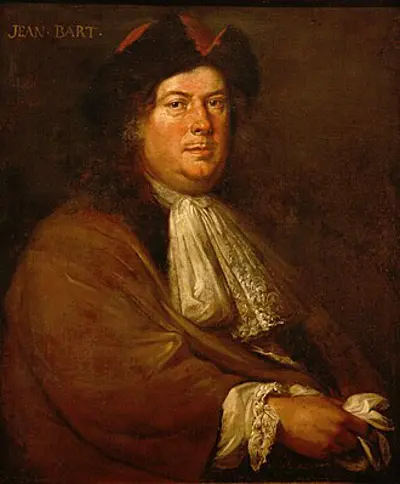
Jean Bart was a Franco-Flemish naval commander and privateer.
Jean Bart, French admiral (died 1702)
Sir Simonds d'Ewes, 1st Baronet was an English antiquary and politician. He was bred for the bar, was a member of the Long Parliament and left notes on its transactions. D'Ewes t…
Simonds d'Ewes, English lawyer and politician (born 1602)
Yagyū Jūbē Mitsuyoshi was one of the most famous and romanticized of the samurai in Japan's feudal era.
Yagyū Jūbei Mitsuyoshi, Japanese samurai (born 1607)
Steven Blankaart Latinized as Stephanus Blancardus was a Dutch physician, iatrochemist, and entomologist, who worked on the same field as Jan Swammerdam. Blankaart proved the exist…
Steven Blankaart, Dutch entomologist (died 1704)
James Graham, 1st Marquess of Montrose was a Scottish nobleman, poet, soldier and later viceroy and captain general of Scotland. Montrose initially joined the Covenanters in the Wa…
James Graham, 1st Marquess of Montrose, Scottish general and politician (born 1612)
Christoph Scheiner was a Jesuit priest, physicist and astronomer in Ingolstadt.
Christoph Scheiner, German priest, physicist, and astronomer (born 1575)
Matthäus Merian der Ältere was a Swiss-born engraver who worked in Frankfurt, Germany for most of his career, where he also ran a publishing house. He was a member of the patrician…
Matthäus Merian, Swiss-German engraver and publisher (born 1593)
Robert Levinz, Levens or Levinge was an English Royalist during the English Civil War.
Robert Levinz, English Royalist, hanged in London by Parliamentary forces as a spy (born 1615)