1667
Pope Alexander VII (born 1599)
Pope Alexander VII, born Fabio Chigi, was head of the Catholic Church and ruler of the Papal States from 7 April 1655 to his death, in May 1667.
Pope Alexander VII (born 1599)
Explore 207 historical events from 1660–1669.
Pope Alexander VII, born Fabio Chigi, was head of the Catholic Church and ruler of the Papal States from 7 April 1655 to his death, in May 1667.
Pope Alexander VII (born 1599)
Baron Gustaf Bonde was a Swedish statesman. He was a persistent advocate of a pacifist policy at a time when war on the slightest provocation was the watchword of every Swedish pol…
Gustaf Bonde, Finnish-Swedish politician, 5th Lord High Treasurer of Sweden (born 1620)
Thomas Wriothesley, 4th Earl of Southampton, KG, styled Lord Wriothesley before 1624, was an English statesman, a staunch supporter of King Charles II who after the Restoration of …
Thomas Wriothesley, 4th Earl of Southampton, English politician, Lord High Treasurer (born 1607)
Francesco Maria Sforza Pallavicino or Pallavicini, was an Italian cardinal, philosopher, theologian, literary theorist, and church historian.
Francesco Sforza Pallavicino, Italian cardinal and historian (born 1607)

Abraham Cowley was an English poet and essayist born in the City of London late in 1618. He was one of the leading English poets of the 17th century, with 14 printings of his Works…
Abraham Cowley, English poet and author (born 1618)
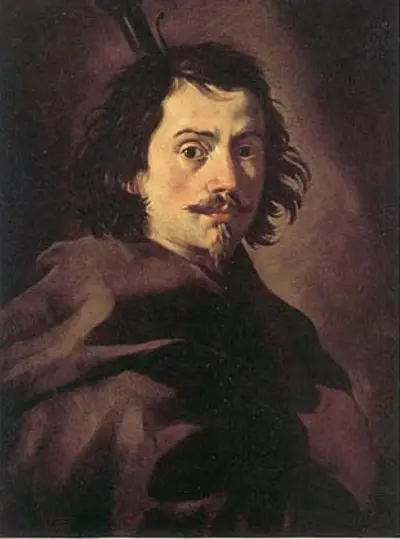
Francesco Borromini, byname of Francesco Castelli, was an Italian architect born in the modern Swiss canton of Ticino who, with his contemporaries Gian Lorenzo Bernini and Pietro d…
Francesco Borromini, Swiss architect, designed San Carlo alle Quattro Fontane and Sant'Agnese in Agone (born 1599)
Jeremy Taylor (1613–1667) was an English cleric in the Church of England who achieved fame as an author during the Protectorate of Oliver Cromwell. He is sometimes known as the "Sh…
Jeremy Taylor, Irish bishop and saint (born 1613)
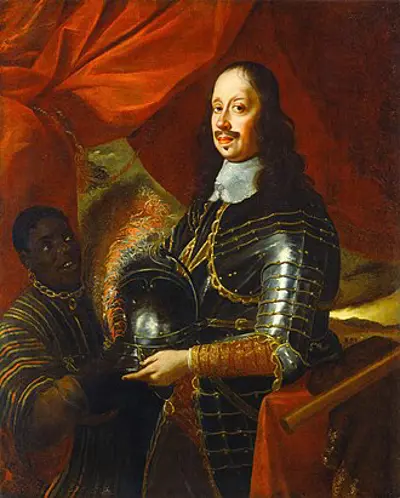
Mattias de' Medici was the third son of Grand Duke Cosimo II de' Medici of Tuscany and Archduchess Maria Maddalena of Austria. He was governor of Siena, with interruptions, from 16…
Mattias de' Medici, Italian noble (born 1613)
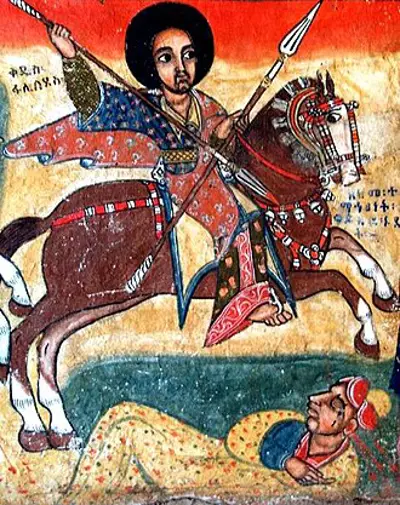
Fasilides, also known as Fasil, Basilide, or Basilides, was Emperor of Ethiopia from 1632 to his death on 18 October 1667, and a member of the Solomonic dynasty. His throne name wa…
Fasilides, Ethiopian emperor (born 1603)
Louis XIV was King of France from 14 May 1643 until his death in 1715. He is a symbol of the Age of Absolutism in Europe for styling himself as "The Sun King", which portrayed him …
Led by King Louis XIV, the French army invaded the Spanish Netherlands, beginning the War of Devolution
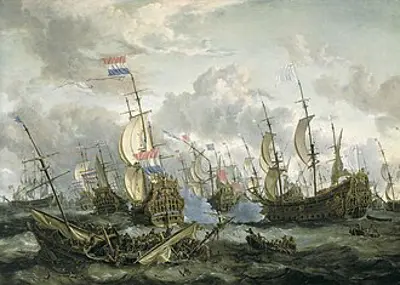
The Second Anglo-Dutch War began on 4 March 1665 and concluded with the signing of the Treaty of Breda on 31 July 1667. It was the second in a series of naval wars fought between E…
The Second Anglo-Dutch War ended with the signing of the Treaty of Breda.
The Four Days' Battle was a naval engagement fought from 11 to 14 June 1666 during the Second Anglo-Dutch War. It began off the Flemish coast and ended near the English coast, and …
A four day long naval engagement between the Dutch and English fleet ends, with the English suffering heavier losses
The Second Anglo-Dutch War began on 4 March 1665 and concluded with the signing of the Treaty of Breda on 31 July 1667. It was the second in a series of naval wars fought between E…
Second Anglo-Dutch War: Rear Admiral Robert Holmes leads a raid on the Dutch island of Terschelling, destroying 116 to…
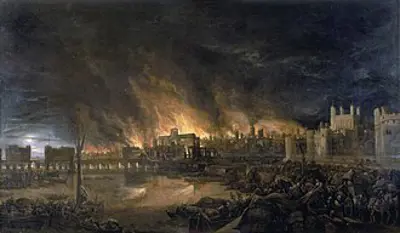
The Great Fire of London was a major conflagration that occurred in central London from Sunday 2 September to Wednesday 5 September 1666, gutting the medieval City of London inside…
The Great Fire of London breaks out and burns for three days, destroying 10,000 buildings, including Old St Paul's…
The Royal Exchange is a building in central London, built to house the London Stock Exchange, which now operates elsewhere. Today, the Royal Exchange contains restaurants and luxur…
The Royal Exchange burns down in the Great Fire of London.
The Great Fire of London was a major conflagration that occurred in central London from Sunday 2 September to Wednesday 5 September 1666, gutting the medieval City of London inside…
In London, England, the most destructive damage from the Great Fire occurs.
Jean-Féry Rebel was an innovative French Baroque composer and violinist.
Jean-Féry Rebel, French violinist and composer (died 1747)
Johann Heinrich Buttstett was a German Baroque organist and composer. Although he was Johann Pachelbel's most important pupil and one of the last major exponents of the south Germa…
Johann Heinrich Buttstett, German organist and composer (died 1727)
Victor Amadeus II was the head of the House of Savoy and ruler of the Savoyard states from 12 June 1675 until his abdication in 1730. He was the first of his house to acquire a roy…
Victor Amadeus II of Sardinia (died 1732)
John Ernest Grabe, Anglican divine, was born at Königsberg, where his father, Martin Sylvester Grabe, was professor of theology and history.
John Ernest Grabe, German theologian and academic (died 1711)
Maria Sophia Elisabeth of Neuburg was Queen of Portugal as the wife of King Peter II from 1687 until her death in 1699. A popular queen, she was noted for her extraordinary generos…
Maria Sophia of Neuburg (died 1699)
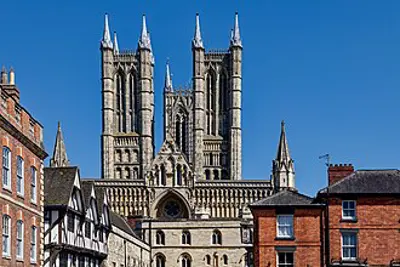
The Fujita scale, or Fujita–Pearson scale, was a scale for rating tornado intensity, based primarily on the damage tornadoes inflict on human-built structures and vegetation. The o…
The most intense tornado on record in English history, an F4 storm on the Fujita scale or T8 on the TORRO scale,…
William Wotton was an English theologian, classical scholar and linguist. He is chiefly remembered for his remarkable abilities in learning languages and for his involvement in t…
William Wotton, English linguist and scholar (died 1727)
Gottfried Arnold was a German Lutheran theologian and historian.
Gottfried Arnold, German historian and theologian (died 1714)