John III Sobieski becomes king of Poland-Lithuania
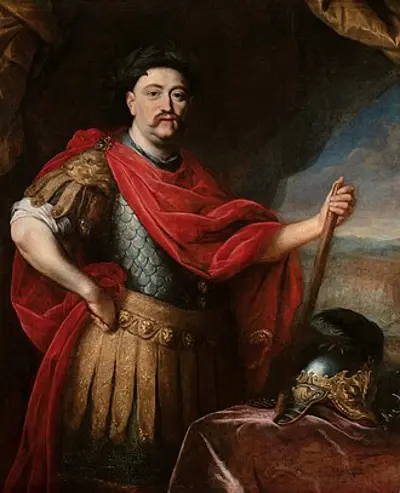
John III Sobieski was King of Poland and Grand Duke of Lithuania from 1674 until his death in 1696.
John III Sobieski becomes king of Poland-Lithuania
Explore 59 historical events from 1670β1679.
John III Sobieski was King of Poland and Grand Duke of Lithuania from 1674 until his death in 1696.
John III Sobieski becomes king of Poland-Lithuania
The szlachta were the noble estate of the realm in the Kingdom of Poland, the Grand Duchy of Lithuania, and the Polish–Lithuanian Commonwealth. It was the dominating social class i…
The nobility elect John Sobieski King of Poland and Grand Duke of Lithuania
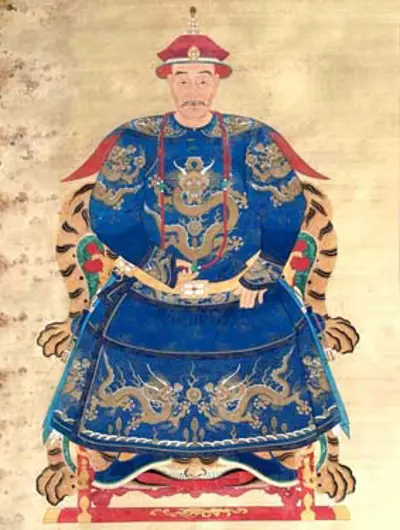
Shivaji I was an Indian ruler and a member of the Bhonsle dynasty. Shivaji inherited a fiefdom from his father who served as a retainer for the Sultanate of Bijapur, which later fo…
Shivaji is crowned as the first Chhatrapati of the Maratha Empire at Raigad Fort
John Graunt has been regarded as the founder of demography. Graunt was one of the first demographers, and perhaps the first epidemiologist, though by profession he was a haberdashe…
John Graunt, English demographer and statistician (born 1620)
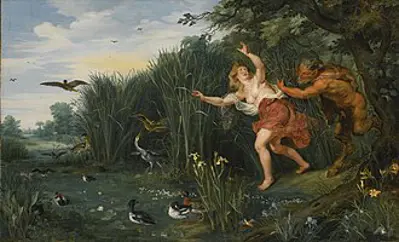
Marin le Roy, sieur du Parc et de Gomberville was a French poet and novelist.
Marin le Roy de Gomberville, French author and poet (born 1600)
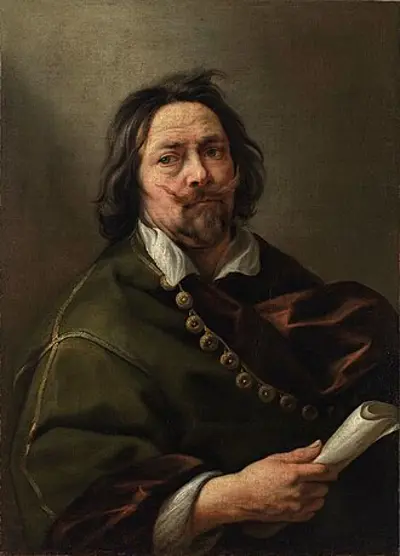
Tomás de Yepes or Hiepes was a Spanish Baroque painter in the Kingdom of Valencia. He worked as a painter of still life and bodegón—still life paintings depicting pantry items. He …
Tomás Yepes, Spanish painter (born 1595 or 1600)
Jijabai, was the mother of Chhatrapati Shivaji Maharaj, founder of the Maratha Kingdom. She was a daughter of Lakhujirao Jadhav of Sindkhed Raja. He belonged to the lineage of Deva…
Jijabai, Dowager Queen, mother of Shivaji (born 1598)
Shivaji I was an Indian ruler and a member of the Bhonsle dynasty. Shivaji inherited a fiefdom from his father who served as a retainer for the Sultanate of Bijapur, which later fo…
Shivaji (pictured), who led a resistance to free the Maratha from the Bijapur Sultanate and the Mughal Empire, was crown
Shivaji I was an Indian ruler and a member of the Bhonsle dynasty. Shivaji inherited a fiefdom from his father who served as a retainer for the Sultanate of Bijapur, which later fo…
Shivaji, who led a resistance to free the Maratha from the Bijapur Sultanate and the Mughal Empire, was crowned the firs
Louis Jolliet was a French-Canadian explorer known for his discoveries in North America. In 1673, Jolliet and Jacques Marquette, a Jesuit Catholic priest and missionary, were the f…
Louis Jolliet and Jacques Marquette begin exploring the Mississippi River
French people are the individuals who are identified with the country of France, or more broadly, a global sociolinguistic group that share a common connection through the French l…
French explorers Jacques Marquette and Louis Jolliet reach the Mississippi River and become the first Europeans to make
Wilhelmine Amalie of Brunswick-Lüneburg was Holy Roman Empress, Queen of the Germans, Queen of Hungary, Queen of Bohemia, Archduchess consort of Austria etc. as the spouse of Josep…
Wilhelmine Amalia of Brunswick-Lüneburg (died 1742)
Antoni de Literes, also known as Antonio de Literes or Antoni Literes Carrión, was a Spanish composer of zarzuelas. As with other national forms of baroque opera, Literes's stage w…
Antonio de Literes, Spanish composer (died 1747)
Jeanne Mance was a French nurse and settler of New France. She arrived in New France two years after the Ursuline nuns came to Quebec. Among the founders of Montreal in 1642, she e…
Jeanne Mance, French-Canadian nurse, founded the Hôtel-Dieu de Montréal (born 1606)
Joseph Addison was a British writer and politician. He was the eldest son of Lancelot Addison. His name is usually remembered alongside that of his long-standing friend Richard Ste…
Joseph Addison, English essayist, poet, playwright, and politician (died 1719)
Peter I was the Tsar of all Russia from 1682 and the first Emperor of Russia from 1721 until his death in 1725. He reigned jointly with his half-brother Ivan V until 1696. Peter, a…
Peter the Great, Russian emperor (died 1725)
Francesco Antonio Bonporti was an Italian priest and amateur composer.
Francesco Antonio Bonporti, Italian priest and composer (died 1749)
Georg Stiernhielm was a Swedish civil servant, mathematician, linguist and poet. He has been called "the father of the Swedish skald art".
Georg Stiernhielm, Swedish linguist and poet (born 1598)
Marie of the Incarnation was a French Ursuline nun from Quebec City. As part of a group of nuns sent to New France to establish the Ursuline Order, Marie was crucial in the spread …
Marie of the Incarnation, French-Canadian nun and saint, founded the Ursulines of Quebec (born 1599)
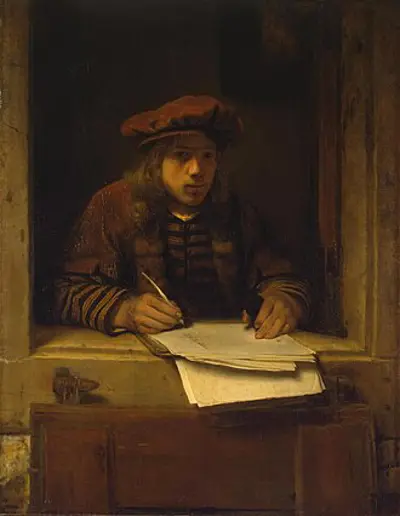
Samuel Cooper, sometimes spelt Samuel Cowper, was an English miniature painter. He was the younger brother of Alexander Cooper.
Samuel Cooper, English painter and linguist (born 1609)
Sir John Trevor III was a Welsh politician who sat in the House of Commons at various times between 1646 and 1672.
John Trevor, Welsh politician, Secretary of State for the Northern Department (born 1626)
John Law was a Scottish-French economist and financier. He rose to power in France where he created a novel financial scheme for French public finances known as Law's System with t…
John Law, Scottish economist (died 1729)
Gian Gastone de' Medici was the seventh and last Medicean grand duke of Tuscany.
Gian Gastone de' Medici, Grand Duke of Tuscany (died 1737)
Tomaso Giovanni Albinoni was an Italian composer of the Baroque era. His output includes operas, concertos, sonatas for one to six instruments, sinfonias, and solo cantatas. While …
Tomaso Albinoni, Italian violinist and composer (died 1751)