Thomas Campbell, Scottish-French poet and academic (died 1844)
Thomas Campbell was a Scottish poet at the intersection of the neoclassical with the Romantic style of British poetry.
Thomas Campbell, Scottish-French poet and academic (died 1844)
Explore 456 historical events from 1770β1779.
Thomas Campbell was a Scottish poet at the intersection of the neoclassical with the Romantic style of British poetry.
Thomas Campbell, Scottish-French poet and academic (died 1844)
General Henry Otway Trevor, 21st Baron Dacre, CB was a peer and British Army officer.
Henry Trevor, 21st Baron Dacre, English general (died 1853)
Pedro Ignacio de Castro Barros was an Argentine statesman and priest. He was a representative to the Congress of Tucumán which on 9 July 1816 declared the Independence of Argentina…
Pedro Ignacio de Castro Barros, Argentine priest and politician (died 1849)
Hans Christian Ørsted, sometimes transliterated as Oersted, was a Danish chemist and physicist who discovered that electric currents create magnetic fields. This phenomenon is know…
Hans Christian Ørsted, Danish physicist and chemist (died 1851)
Francis I of the Two Sicilies was King of the Two Sicilies from 1825 to 1830 and regent of the Kingdom of Sicily from 1806 to 1814.
Francis I, king of the Two Sicilies (died 1830)
Nikita Yakovlevich Bichurin, better known under his archimandrite monastic name Hyacinth, sometimes known as Joacinth or Iakinf, was one of the founding fathers of Russian Sinology…
Hyacinth, Russian religious leader, founded Sinology (died 1853)
Heinrich David Stölzel was a German horn player who developed some of the first valves for brass instruments. He developed the first valve for a brass musical instrument, the Stölz…
Heinrich Stölzel, German horn player and composer (died 1844)
James Carr, son of U.S. Congressman Francis Carr, was a member of the United States House of Representatives from Maine, then a District of Massachusetts.
James Carr, American soldier and politician (died 1818)
Nathan Mayer Rothschild, also known as Baron Nathan Mayer Rothschild, was a British-German banker, businessman and financier. Born in Frankfurt am Main, he was the third of the fiv…
Nathan Mayer Rothschild, German-English banker and financier (died 1836)
Jean-Baptiste-Louis Gresset was a French poet and dramatist, best known for his poem Vert-Vert.
Jean-Baptiste-Louis Gresset, French poet and playwright (born 1709)
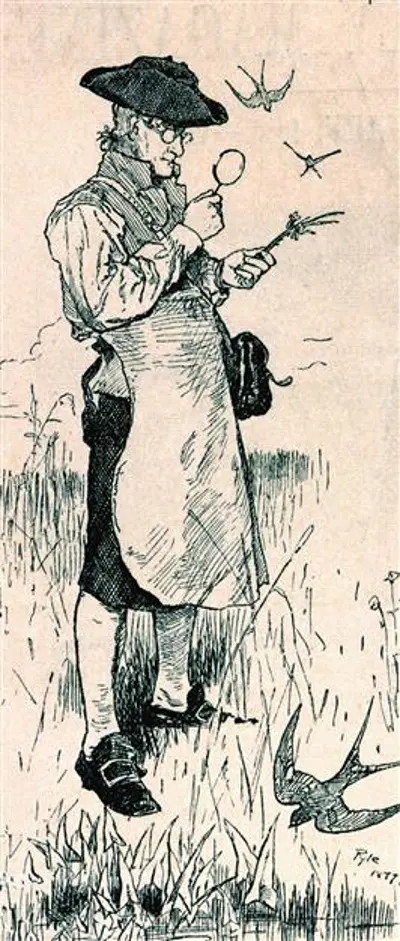
John Bartram was an American botanist, horticulturist, and explorer, based in Philadelphia, Pennsylvania, for most of his career. Swedish botanist and taxonomist Carl Linnaeus spok…
John Bartram, American botanist and explorer (born 1699)
Johann Heinrich Lambert was an Alsatian polymath from the Republic of Mulhouse—then an associate of the Swiss Confederacy—who made fundamental contributions to mathematics, physics…
Johann Heinrich Lambert, Swiss mathematician, physicist, and astronomer (born 1728)
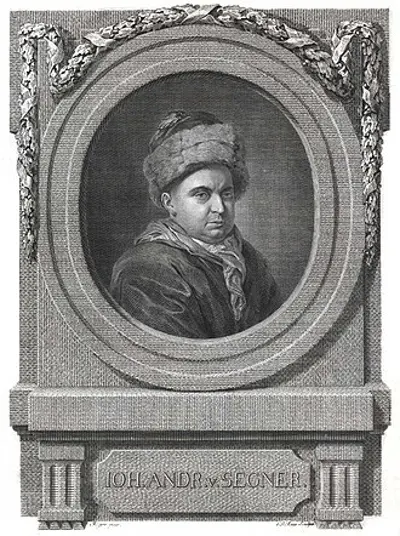
Johann Andreas von Segner was a Hungarian scientist of German descent. He was born in the Kingdom of Hungary, in the former Hungarian capital city of Pozsony, or Pressburg.
Johann Andreas Segner, Slovak-German mathematician, physicist, and physician (born 1704)
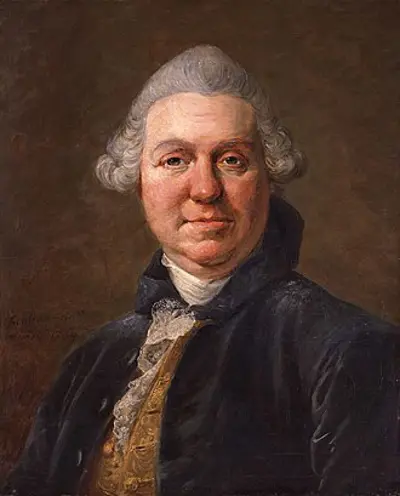
Samuel Foote was a Cornish dramatist, actor and theatre manager. He was known for his comedic acting and writing, and for turning the loss of a leg in a riding accident in 1766 to …
Samuel Foote, English actor and playwright (born 1720)
Sybil Ludington was an alleged heroine of the American Revolution and daughter of Patriot colonel Henry Ludington. Relatives of Ludington have claimed that on April 26, 1777, at …
Sybil Ludington, aged 16, allegedly rides 40 miles (64 km) to alert American colonial forces to the approach of British
The Continental Army was the army of the United Colonies representing the Thirteen Colonies and later the United States during the American Revolutionary War. It was formed on June…
Continental Army officer Lachlan McIntosh fatally wounds Button Gwinnett, a signer of the United States Declaration of I
The American Revolutionary War, also known as the Revolutionary War or American War of Independence or simply the American Revolution, was the armed conflict that comprised the fin…
American Revolutionary War: Gilbert du Motier, Marquis de Lafayette lands near Charleston, South Carolina, in order to h
The Second Continental Congress (1775–1781) was the meeting of delegates from the Thirteen Colonies that united in support of the American Revolution and Revolutionary War, which e…
The Second Continental Congress passes the Flag Act of 1777 adopting the Stars and Stripes as the Flag of the United Sta
The American Revolutionary War, also known as the Revolutionary War or American War of Independence or simply the American Revolution, was the armed conflict that comprised the fin…
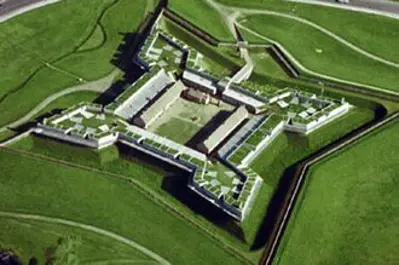
American Revolutionary War: Siege of Fort Ticonderoga: After a bombardment by British artillery under General John…
The Continental Army was the army of the United Colonies representing the Thirteen Colonies and later the United States during the American Revolutionary War. It was formed on June…
American forces retreating from Fort Ticonderoga are defeated in the Battle of Hubbardton.
The Second Continental Congress (1775–1781) was the meeting of delegates from the Thirteen Colonies that united in support of the American Revolution and Revolutionary War, which e…
The U.S. Second Continental Congress passes a resolution that the services of Gilbert du Motier, Marquis de Lafayette…
The American Revolutionary War, also known as the Revolutionary War or American War of Independence or simply the American Revolution, was the armed conflict that comprised the fin…
American Revolutionary War: The bloody Battle of Oriskany prevents American relief of the Siege of Fort Stanwix.
The American Revolutionary War, also known as the Revolutionary War or American War of Independence or simply the American Revolution, was the armed conflict that comprised the fin…
American Revolutionary War: The Americans led by General John Stark rout British and Brunswick troops under Friedrich…
The siege of Fort Stanwix began on August 2, 1777, and ended on August 22, 1777. Fort Stanwix, at the western end of the Mohawk River Valley, was a primary defense point for the Co…
British forces abandon the Siege of Fort Stanwix after hearing rumors of Continental Army reinforcements.