1788
Charles A
Charles Anderson Wickliffe was an American politician who was the 11th U.S. postmaster general from 1841 to 1845. He served as the 14th governor of Kentucky from 1839 to 1840 and a…
Charles A
Explore 404 historical events from 1780–1789.
Charles Anderson Wickliffe was an American politician who was the 11th U.S. postmaster general from 1841 to 1845. He served as the 14th governor of Kentucky from 1839 to 1840 and a…
Charles A
Thomas Blanchard was an American inventor who lived much of his life in Springfield, Massachusetts, where in 1819, he pioneered the assembly line style of mass production in Americ…
Thomas Blanchard, American inventor (died 1864)
Jean-Victor Poncelet was a French engineer and mathematician who served most notably as the Commanding General of the École Polytechnique. He is considered a reviver of projective …
Jean-Victor Poncelet, French mathematician and engineer (died 1867)
Leopold Gmelin was a German chemist. Gmelin was a professor at the University of Heidelberg. He worked on the red prussiate and created Gmelin's test, and wrote his Handbook of Che…
Leopold Gmelin, German chemist and academic (died 1853)
Adoniram Judson was an American Particular Baptist missionary who worked in Burma for almost 40 years. At the age of 25, Judson was sent from North America to preach in Burma. His…
Adoniram Judson, American missionary and lexicographer (died 1850)
Jacques Boucher de Crèvecœur de Perthes, sometimes referred to as Boucher de Perthes, was a French archaeologist and antiquary notable for his discovery, in about 1830, of flint to…
Jacques Boucher de Crèvecœur de Perthes, French archaeologist and author (died 1868)
Theodore Edward Hook was an English writer, intellectual, prankster and civil servant. One of the first writers of the English fashionable novel, he is best known for his practical…
Theodore Hook, English composer and educator (died 1841)
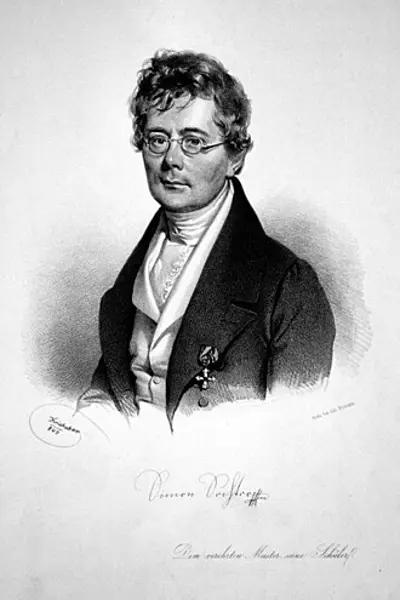
Simon Sechter was an Austrian music theorist, composer, conductor, and organist. He is best known as a strict music teacher, whose many students included Anton Bruckner, Sigismond …
Simon Sechter, Austrian organist, composer, and conductor (died 1867)
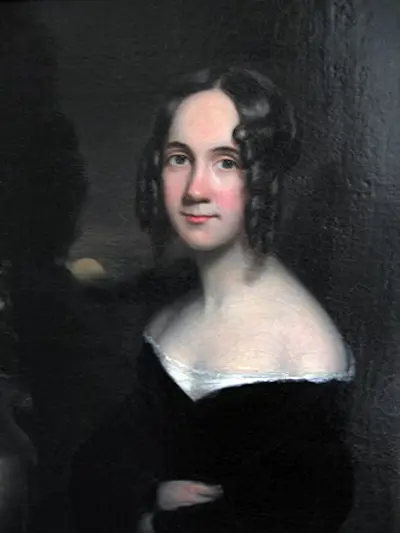
Sarah Josepha Buell Hale was an American writer, activist, and editor of the most widely circulated magazine in the period before the Civil War, Godey's Lady's Book. She was the au…
Sarah Josepha Hale, American author and poet (died 1879)
Georges-Louis Leclerc, Comte de Buffon was a French naturalist, mathematician, and cosmologist. He held the position of intendant (director) at the Jardin du Roi, now called the Ja…
Georges-Louis Leclerc, Comte de Buffon, French mathematician, cosmologist, and author (born 1707)
Giovanni Antonio Scopoli was an Italian medical doctor and naturalist. His biographer Otto Guglia named him the "first anational European" and the "Linnaeus of the Austrian Empire"…
Giovanni Antonio Scopoli, Italian physician and botanist (born 1723)
Adam Gib was a Scottish religious leader, head of the Antiburgher section of the Scottish Secession Church. He reportedly wrote his first covenant with God in the blood of his own …
Adam Gib, Scottish religious leader (born 1714)
Thomas Gainsborough was an English painter, draughtsman and printmaker who specialised in portrait and landscape painting. Along with his rival Sir Joshua Reynolds, he was one of t…
Thomas Gainsborough, English painter (born 1727)
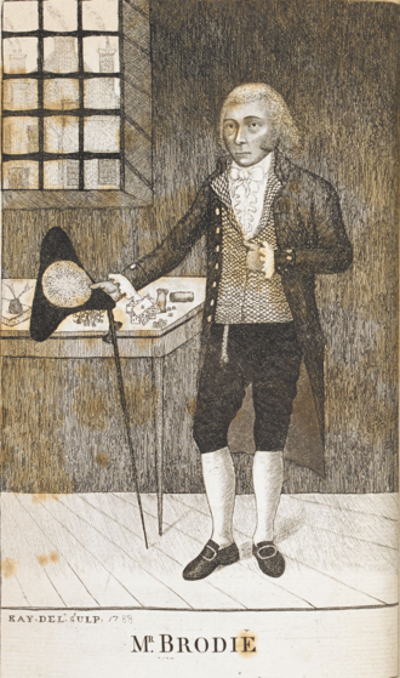
William Brodie, often known by his title of Deacon Brodie, was a Scottish cabinet-maker, deacon of a trades guild, and Edinburgh city councillor, who maintained a secret life as a …
William Brodie, Scottish businessman and politician (born 1741)
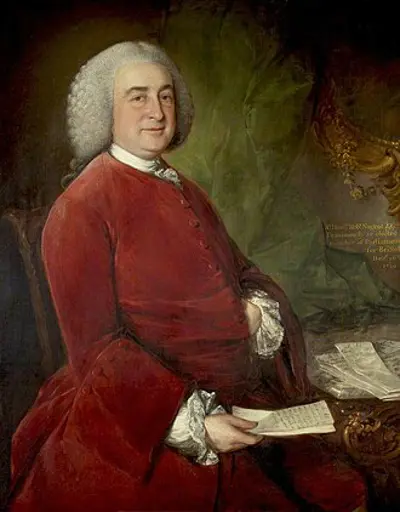
Robert Craggs-Nugent, 1st Earl Nugent, PC was an Anglo-Irish politician and poet. He was tersely described by Richard Glover as a jovial and voluptuous Irishman who had left "Poper…
Robert Nugent, 1st Earl Nugent, Irish poet and politician (born 1702)
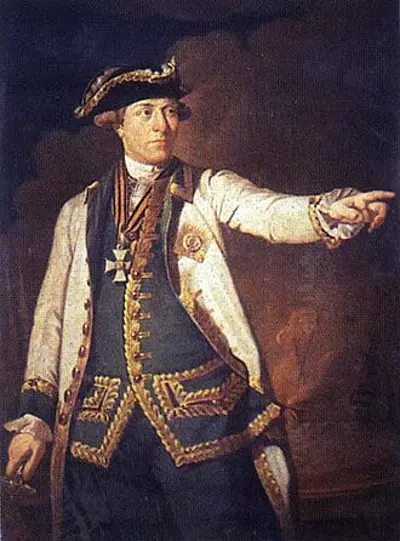
Samuel Greig, also known as Samuil Karlovich Greig, was a Scottish-born Russian naval officer who served in the Seven Years' War, Russo-Turkish War and Russo-Swedish War. His son A…
Samuel Greig, Scottish-Russian admiral (born 1735)

Wolfgang Amadeus Mozart was a Classical composer and musician. He completed more than 800 works in his life—including outstanding examples of most of the genres of his time: sympho…
Mozart completed his Symphony No. 40, one of his two extant symphonies in a minor key.

New Hampshire is a state in the New England region of the Northeastern United States. It borders Massachusetts to the south, Vermont to the west, Maine and the Gulf of Maine to the…
New Hampshire ratified the U
Oliver Ellsworth was a Founding Father of the United States, attorney, jurist, politician, and diplomat. Ellsworth was a framer of the United States Constitution, United States sen…
Oliver Ellsworth moves at the Federal Convention to call the government the 'United States'
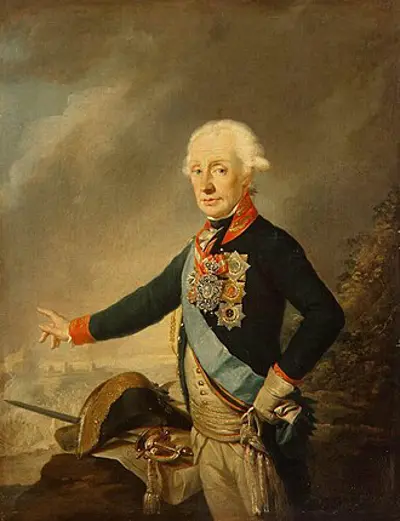
Count Alexander Vasilyevich Suvorov-Rymniksky, Prince of Italy was a Russian general and military theorist in the service of the Russian Empire.
Russians under Alexander Suvorov defeat the Turks at Kinburn.
Erastus "Deaf" Smith, who earned his nickname due to hearing loss in childhood, was an American frontiersman noted for his part in the Texas Revolution and the Army of the Republic…
Deaf Smith, American soldier (died 1837)
Johann Ludwig Uhland was a German poet, philologist, literary historian, lawyer and politician.
Ludwig Uhland, German poet, philologist, and historian (died 1862)

The Constitutional Convention took place in Philadelphia from May 25 to September 17, 1787. While the convention was initially intended to revise the league of states and the first…
After a delay of 11 days, the United States Constitutional Convention formally convenes in Philadelphia after a quorum o
The Congress of the Confederation, or the Confederation Congress, formally referred to as the United States in Congress Assembled, was the governing body of the United States from …
The Congress of the Confederation enacts the Northwest Ordinance establishing governing rules for the Northwest…