Murong Yanchao, Chinese general
Murong Yanchao, known at one point as Yan Kunlun (閻崑崙), was a Chinese general of the Later Tang, Later Jin, and Later Han dynasties. As a half-brother of the Later Han founding emp…
Murong Yanchao, Chinese general
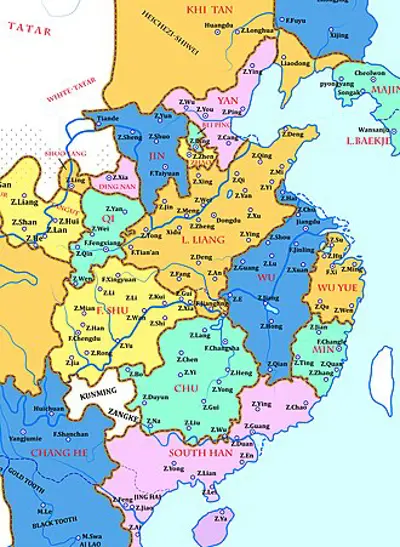
Explore 42 historical events from 950β959.
Murong Yanchao, known at one point as Yan Kunlun (閻崑崙), was a Chinese general of the Later Tang, Later Jin, and Later Han dynasties. As a half-brother of the Later Han founding emp…
Murong Yanchao, Chinese general
Abu Mansur Nizar, known by his regnal name as al-Aziz Billah, was the fifth caliph of the Fatimid dynasty, from 975 to his death in 996. His reign saw the capture of Damascus and t…
Al-Aziz Billah, Fatimid caliph (died 996)
Muhammad III was the Shirvanshah from 981 to 991. He was the son and successor of Ahmad.
Muhammad III of Shirvan, Muslim ruler
Lu Wenji, courtesy name Zichi (子持), was a Chinese official who served the Later Liang, Later Tang, Later Jin, Later Han, and Later Zhou dynasties. He was a chancellor during the re…
Lu Wenji, Chinese chancellor (born 876)
Robert, also spelled Ruotbert or Rotbert, was the archbishop of Trier from 931 until his death. He played a leading role in the politics of both Germany and France, and especially …
Robert, archbishop of Trier
Hugh the Great was the duke of the Franks and count of Paris. He was the most powerful magnate in France. Son of King Robert I of France and Beatrice of Vermandois, Hugh was Margra…
Hugh the Great, Frankish nobleman (born 898)
Zhao Ying, courtesy name Yuanhui (元輝), was a Chinese historian, military general, and politician of the Chinese Five Dynasties and Ten Kingdoms period Later Tang and Later Jin stat…
Zhao Ying, Chinese chancellor (born 885)
Guadamir was the bishop of Vic from 948 until his death.
Guadamir, bishop of Vic (Spain)
Feng Dao, courtesy name Kedao, posthumous title the Wenyi Prince of Ying, was a Chinese inventor, printer, and official. He was a government official during the Five Dynasties and …
Feng Dao, Chinese prince and chancellor (born 882)
Emperor Reizei was the 63rd emperor of Japan, according to the traditional order of succession.
Reizei, Japanese emperor (died 1011)
Eraclus, alternatively Eraclius or Evraclus, was the 25th bishop of Liège (959–971).
Eraclus becomes the 25th bishop of Liège.
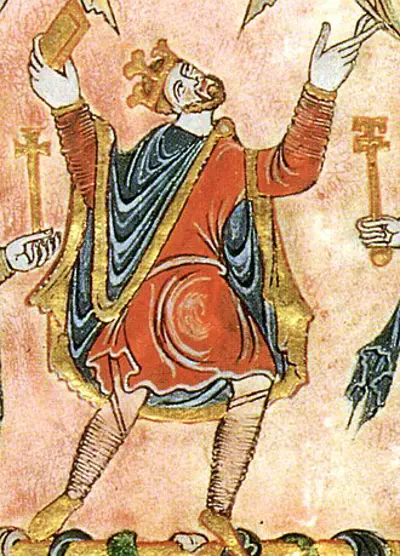
Edgar, also known as Edgar the Peaceful, the Peacemaker and the Peaceable, was King of the English from 959 until his death in 975. He became king of all England on his brother Ead…
Edgar the Peaceful becomes king of all England, in succession to Eadwig.
Chai Rong, later known as Guo Rong (郭榮), also known by his temple name as the Emperor Shizong of Later Zhou, was the second emperor of the Later Zhou dynasty of China, during the F…
Chai Rong, emperor of Later Zhou
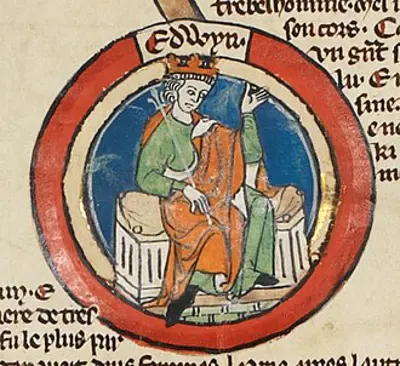
Eadwig was King of England from 23 November 955 until his death in 959. He was the elder son of Edmund I and his first wife Ælfgifu, who died in 944. Eadwig and his brother Edgar w…
Eadwig, English king (born 941)
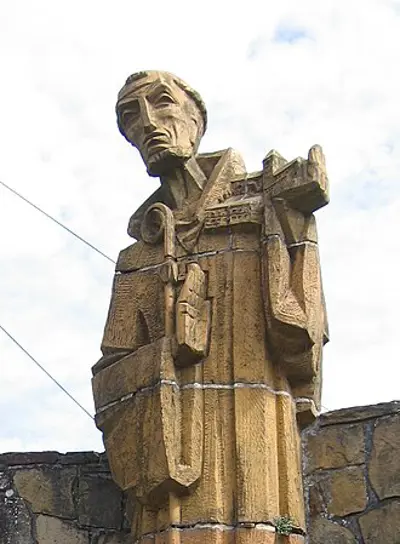
Saint Gérard founded Brogne Abbey and reformed eighteen others according to the Benedictine Rule.
Gérard of Brogne, Frankish abbot
Edgar, also known as Edgar the Peaceful, the Peacemaker and the Peaceable, was King of the English from 959 until his death in 975. He became king of all England on his brother Ead…
Edgar acceded to the English throne upon the death of his brother Eadwig.
Li Jingsui, né Xu Jingsui (徐景遂), courtesy name Tuishen (退身), formally Crown Prince Wencheng (文成太弟), was an imperial prince of the Chinese Five Dynasties and Ten Kingdoms period sta…
Li Jingsui, Chinese prince (born 920)
Liu Sheng, born Liu Hongxi (劉弘熙), possibly nicknamed Jun (雋), also known by his temple name as the Emperor Zhongzong of (Southern) Han ( 漢中宗), was the third emperor of the Southern…
Liu Sheng, Chinese emperor (born 920)
Guadamir was the bishop of Vic from 948 until his death.
Guadamir, bishop of Vic (Spain)
Liudolf, a member of the Ottonian dynasty, was duke of Swabia from 950 until 954. His rebellion in 953/54 led to a major crisis in East Francia.
Liudolf, duke of Swabia (born 930)
Robert, also spelled Ruotbert or Rotbert, was the archbishop of Trier from 931 until his death. He played a leading role in the politics of both Germany and France, and especially …
Robert, archbishop of Trier
Muhammad III was the Shirvanshah from 981 to 991. He was the son and successor of Ahmad.
Muhammad III of Shirvan, Muslim ruler
Empress Fu, posthumously Empress Xuanyi (宣懿皇后) was an empress consort of the Chinese Later Zhou dynasty during the Five Dynasties and Ten Kingdoms period. She was invested the empr…
Fu the Elder, Chinese empress
Hugh the Great was the duke of the Franks and count of Paris. He was the most powerful magnate in France. Son of King Robert I of France and Beatrice of Vermandois, Hugh was Margra…
Hugh the Great, Frankish nobleman (born 898)
The Battle of Lechfeld, also known as the Second Battle of Lechfeld, was a series of military engagements over the course of three days from 10–12 August 955 in which the Kingdom o…
Battle of Lechfeld: Otto I, Holy Roman Emperor defeats the Magyars, ending 50 years of Magyar invasion of the West.
The Battle on the Raxa river was fought on 16 October 955 over control of the Billung march between the forces of Otto I of Germany allied with the Rani tribe on one side, and the …
King Otto I defeats a Slavic revolt in what is now Mecklenburg-Vorpommern.
Abu Mansur Nizar, known by his regnal name as al-Aziz Billah, was the fifth caliph of the Fatimid dynasty, from 975 to his death in 996. His reign saw the capture of Damascus and t…
Al-Aziz Billah, Fatimid caliph (died 996)
Qian Weijun (錢惟濬), courtesy name Yuchuan (禹川), formally Prince Anxi of Bin, was the heir apparent to Qian Chu, the fifth and last king of Wuyue of the Chinese Five Dynasties and Te…
Qian Weijun, king of Wuyue (died 991)
He Ning, courtesy name Chengji (成績), noble title Duke of Lu (魯公), was an official of the Later Liang, Later Tang, Later Jin, Liao, Later Han, and Later Zhou dynasties, serving as a…
He Ning, Chinese chancellor (born 898)
Conrad, called the Red, was Duke of Lorraine from 944 until 953. He became the progenitor of the Imperial Salian dynasty.
Conrad ('the Red'), duke of Lorraine
Bulcsú was a chieftain of the Hungarians and military leader in the 10th century. He held the title of harka. Despite not being a member of the ruling Árpád dynasty, he was one of …
Bulcsú, Hungarian tribal chieftain (harka)
Lehel, a member of the Árpád dynasty, was a Magyar chieftain and, together with Bulcsú, one of the most important figures of the Hungarian invasions of Europe. After the Magyar def…
Lehel, Hungarian tribal chieftain
Súr or Sur was a Hungarian chieftain and military leader in the 10th century. He was one of the generals, alongside Bulcsú and Lehel, who were executed after the Battle of Lechfeld…
Súr, Hungarian tribal chieftain
The Hungarian invasions of Europe occurred in the 9th and 10th centuries, during the period of transition in the history of Europe of the Early Middle Ages, when the territory of t…
Hungarian invasions of Europe: Forces under Otto the Great were victorious at the Battle of Lechfeld (depicted) near…