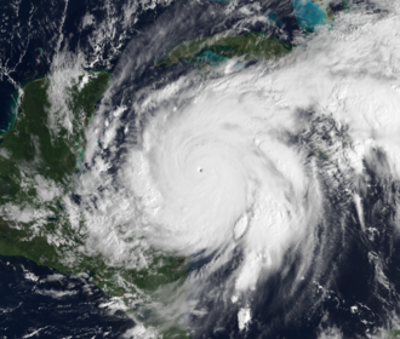
Hurricane Wilma was the most intense tropical cyclone in the Atlantic basin and the second-most intense tropical cyclone in the Western Hemisphere, both based on barometric pressure, after Hurricane Patricia in 2015. Wilma's rapid intensification led to a 24-hour pressure drop of 97 mbar (2.9 inHg), setting a new basin record. At its peak, Hurricane Wilma's eye contracted to a record minimum diameter of 2.3 mi (3.7 km). In the record-breaking 2005 Atlantic hurricane season, Wilma was the twenty-second storm, thirteenth hurricane, sixth major hurricane, and fourth Category 5 hurricane, and was the second costliest hurricane in Mexican history, behind Hurricane Otis in 2023.
Hurricane Wilma makes landfall in Florida, resulting in 35 direct and 26 indirect fatalities and causing $20.6B USD in damage.
On October 24, in the year 2005, Hurricane Wilma makes landfall in Florida, resulting in 35 direct and 26 indirect fatalities and causing $20.6B USD in damage. This event is recorded as a Historical Events event in the history of October 24, one of 534 recorded events on this date across all of history.
Key Facts
- This event took place on October 24, 2005 (AD era).
- It is categorised as a Historical Events event in recorded history.
- Referenced in 1 Wikipedia article.
- Wikipedia source last updated on 19 October 2026.
On This Date in History 534
This article draws on content from Wikipedia, available under CC BY-SA 4.0.
More on October 24
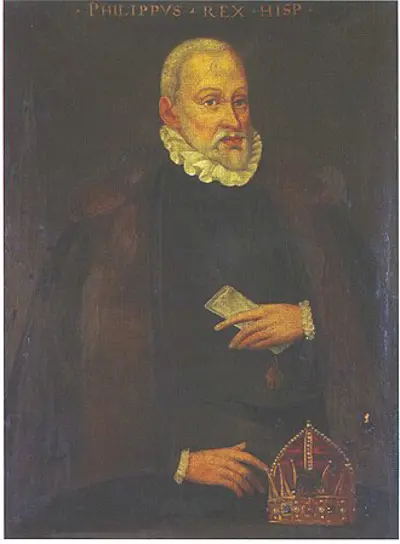
1596
430 years ago
The second Spanish armada sets sail to strike against England, but is smashed by storms off Cape Finisterre forcing a…
The Second Spanish Armada also known as the Spanish Armada of 1596 was a naval operation that took place during the Anglo–Spanish War. Another invasion of England or Ireland was a…
The second Spanish armada sets sail to strike against England, but is smashed by storms off Cape Finisterre forcing a…
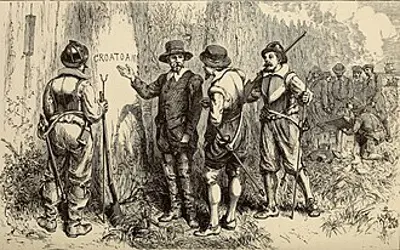
1590
John White, the governor of the second Roanoke Colony, returns to England after an unsuccessful search for the "lost"…
John White was an English colonial governor, explorer, artist, and cartographer. White was among those who sailed with Richard Grenville in the first attempt to colonise Roanoke I…
John White, the governor of the second Roanoke Colony, returns to England after an unsuccessful search for the "lost"…
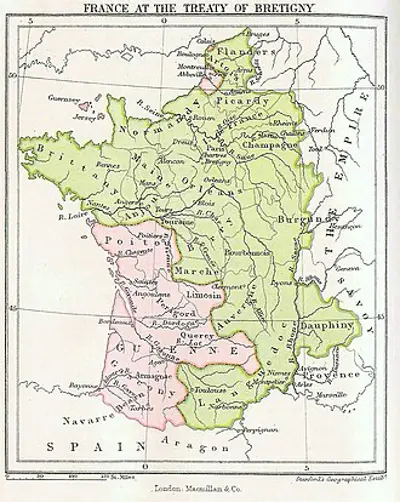
1360
The Treaty of Brétigny is ratified, marking the end of the first phase of the Hundred Years' War.
The Treaty of Brétigny was a treaty, drafted on 8 May 1360 and ratified on 24 October 1360, between Kings Edward III of England and John II of France. In retrospect, it is seen as…
The Treaty of Brétigny is ratified, marking the end of the first phase of the Hundred Years' War.
1273
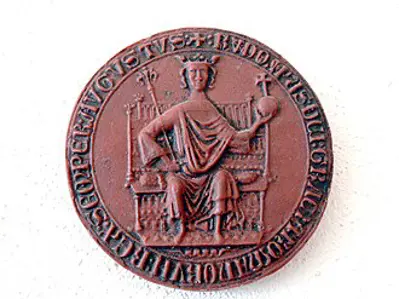
Rudolf of Habsburg is crowned king of the Romans in Aachen.
Rudolf of Habsburg (1 May 1218 – 15 July 1291) was a German nobleman and the first member of the House of Habsburg to become King of the Romans, reigning from 1273 until his death…
Rudolf of Habsburg is crowned king of the Romans in Aachen.

1260
Chartres Cathedral is dedicated in the presence of King Louis IX of France.
Chartres Cathedral is a Catholic cathedral in Chartres, France, about 80 km southwest of Paris, and is the seat of the Bishop of Chartres. Dedicated in honour of the Virgin Mary, …
Chartres Cathedral is dedicated in the presence of King Louis IX of France.
1260
After defeating the Mongols at the Battle of Ain Jalut and assassinating the previous Mamluk sultan, Qutuz, Baybars…
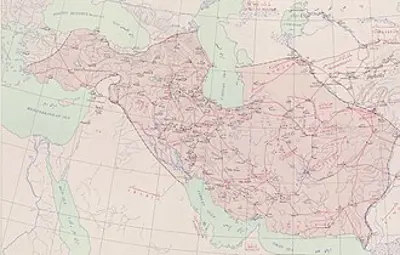
The Ilkhanate or Il-khanate was a Mongol khanate founded in the southwestern territories of the Mongol Empire. It was ruled by the Il-Khans or Ilkhanids, and was known to the Mong…
After defeating the Mongols at the Battle of Ain Jalut and assassinating the previous Mamluk sultan, Qutuz, Baybars…
Comments 0
Sign in to join the discussion.