Jacques Lelong, French author (died 1721)
Jacques Lelong was a French bibliographer born in Paris. He joined the Knights of Malta at the age of ten, but later joined the Oratorians.
Jacques Lelong, French author (died 1721)
Explore 145 historical events from 1660β1669.
Jacques Lelong was a French bibliographer born in Paris. He joined the Knights of Malta at the age of ten, but later joined the Oratorians.
Jacques Lelong, French author (died 1721)
The Treaty or Peace of Oliva was one of the peace treaties ending the Second Northern War (1655–1660). It was signed on 3 May [O.S. 23 April] 1660. The Treaty of Oliva, the Treaty …
Treaty of Oliva is established between Sweden and Poland
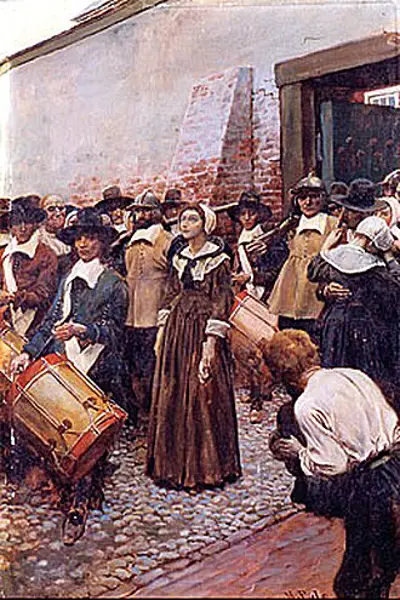
Mary Dyer was an English and colonial American Puritan-turned-Quaker who was hanged in Boston, Massachusetts Bay Colony, for repeatedly defying a Puritan law banning Quakers from t…
Mary Dyer was hanged in Boston for repeatedly defying a law banning Quakers from the Massachusetts Bay Colony
The French Royal Army was the principal land force of the Kingdom of France. It served the Bourbon dynasty from the reign of Louis XIV in the mid-17th century to that of Charles X …
The French Royal Army crosses the border into the Spanish Netherlands, starting the War of Devolution opposing France to
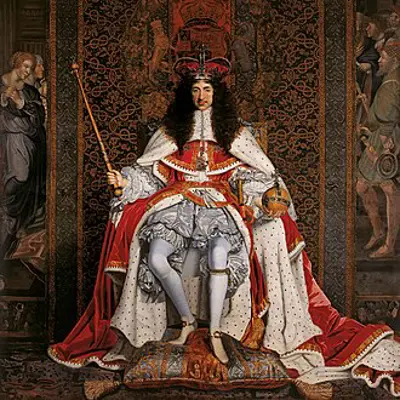
Charles II was King of Scotland from 1649 until 1651 and King of England, Scotland, and Ireland from the 1660 Restoration of the monarchy until his death in 1685.
King Charles II of England, Scotland and Ireland is crowned in Westminster Abbey
Charles II was King of Scotland from 1649 until 1651 and King of England, Scotland, and Ireland from the 1660 Restoration of the monarchy until his death in 1685.
Charles II was crowned King of England, Scotland and Ireland at Westminster Abbey
The Battle of Long Sault occurred over a five-day period in early May 1660 during the Beaver Wars. It was fought between French colonial militia, with their Huron and Algonquin all…
The Battle of Long Sault concludes after five days in which French colonial militia, with their Huron and Algonquin alli
Paradise Lost is an epic poem in blank verse by the English poet John Milton (1608–1674). The poem concerns the biblical story of the fall of man: the temptation of Adam and Eve by…
Blind and impoverished, John Milton sells Paradise Lost to a printer for £10, so that it could be entered into the Stati
Charles II was King of Scotland from 1649 until 1651 and King of England, Scotland, and Ireland from the 1660 Restoration of the monarchy until his death in 1685.
Charles II lands at Dover at the invitation of the Convention Parliament, which marks the end of the Cromwell-proclaimed
Sir Hans Sloane, 1st Baronet, was an Anglo-Irish physician, naturalist, and collector. He had a collection of 71,000 items which he bequeathed to the British nation, thus providing…
Hans Sloane, Irish-English physician and academic (died 1753)
Henry Morgan's raid on Lake Maracaibo, also known as the Sack of Maracaibo and the Battle of Lake Maracaibo, was a military event that took place between 16 March and 21 May 1669 d…
Henry Morgan's raid on Lake Maracaibo: the Spanish Armada de Barlovento is defeated by an English Privateer fleet led by
Samuel Pepys was an English writer and Tory politician. He served as an official in the Navy Board and Member of Parliament, but is now most renowned for the diary he kept for almo…
Citing poor eyesight as a reason, Samuel Pepys records the last event in his diary
Emerentia von Düben also called Menza, was a Swedish lady-in-waiting, the favourite of Ulrika Eleonora, Queen of Sweden. She was known for her influence over Ulrika Eleonora.
Emerentia von Düben, Swedish royal favorite (died 1743)
Sébastien Vaillant was a French botanist who was born at Vigny in present-day Val d'Oise.
Sébastien Vaillant, French botanist and mycologist (died 1722)
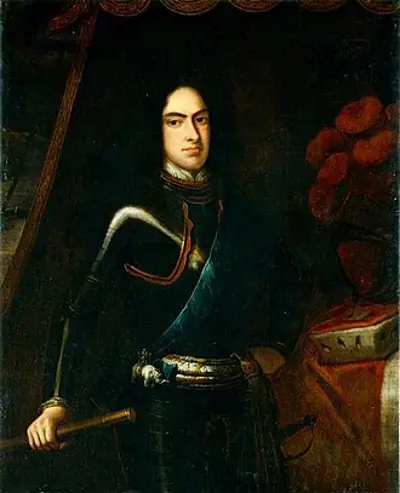
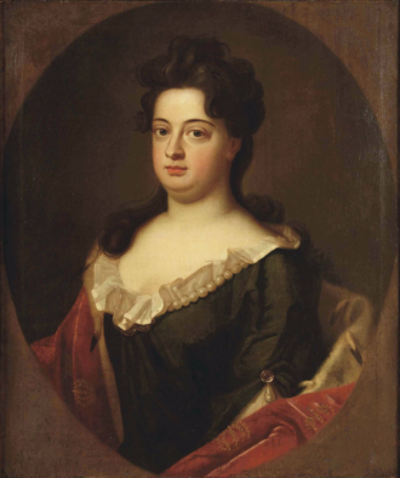
Anne Marie d'Orléans was Queen of Sardinia by marriage to King Victor Amadeus II. She served as regent of Savoy during the absence of her spouse in 1686 and again during the War of…
Anne Marie d'Orléans, queen of Sardinia (died 1728)
Antonio Bertali was an Italian composer and violinist of the Baroque era.
Antonio Bertali, Italian violinist and composer (born 1605)
Pietro da Cortona was an Italian Baroque painter and architect. Along with his contemporaries and rivals Gian Lorenzo Bernini and Francesco Borromini, he was one of the key figures…
Pietro da Cortona, Italian painter and architect, designed the Santi Luca e Martina (born 1596)
François de Vendôme, duc de Beaufort was the son of César, Duke of Vendôme, and Françoise de Lorraine. He was a prominent figure in the Fronde, and later went on to fight in the Me…
François de Vendôme, duke of Beaufort (born 1616)
The Anglo-Spanish War of 1654–1660 was fought between the Commonwealth of England and Habsburg Spain. It was driven by the economic and religious rivalry between the two countries,…
Anglo-Spanish War (1654–1671): Notable Buccaneer Henry Morgan with an English Privateer force lands at Porto Bello in…
A major earthquake occurred during the rule of the Qing dynasty in Shandong Province on July 25, 1668. It had an estimated magnitude of Ms 8.5, making it the largest historical ear…
A magnitude 8.5 earthquake strikes eastern China, killing over 43,000 people.
Alain-René Lesage was a French novelist and playwright. Lesage is best known for his comic novel The Devil upon Two Sticks, his comedy Turcaret (1709), and his picaresque novel Gil…
Alain-René Lesage, French author and playwright (died 1747)
Giambattista Vico was an Italian philosopher, rhetorician, historian, and jurist during the Italian Enlightenment. He criticized the expansion and development of modern rationalism…
Giambattista Vico, Italian jurist, historian, and philosopher (died 1744)
Jan Boeckhorst or Johann Bockhorst was a German-born Flemish Baroque painter and draughtsman who worked most of his career in Antwerp. He was a versatile artist who produced histor…
Jan Boeckhorst, Flemish painter (born c
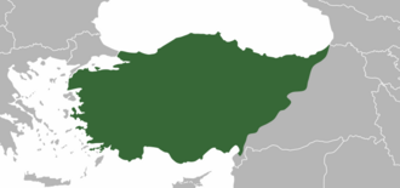
Northern Anatolia was struck by a large earthquake on 17 August 1668 in the late morning. It had an estimated magnitude in the range 7.8–8.0 Ms and the maximum felt intensity was I…
The magnitude 8.0 North Anatolia earthquake causes 8,000 deaths in northern Anatolia, Ottoman Empire.
Frans Luycx or Frans Luyckx was a Flemish painter who became the leading portrait painter at the imperial court of Emperor Ferdinand III in Vienna. He is best known for his portrai…
Frans Luycx, Flemish painter (born 1604)
Mary Catherine of St. Augustine, OSA was a French canoness regular who was instrumental in the development of the Hôtel-Dieu de Québec in the colony of New France. She has been bea…
Catherine of St
Charles Berkeley, 2nd Viscount Fitzhardinge was an English politician who sat in the House of Commons at various times between 1621 and 1668. He supported the Royalist cause in t…
Charles Berkeley, 2nd Viscount Fitzhardinge, English politician (born 1599)
Heinrich Roth, also known as Henricus Rodius or Henrique Roa, was a German missionary and pioneering Sanskrit scholar.
Heinrich Roth, German missionary and scholar (born 1620)
The Anglo-Spanish War of 1654–1660 was fought between the Commonwealth of England and Habsburg Spain. It was driven by the economic and religious rivalry between the two countries,…
Anglo-Spanish War (1654–1660): Henry Morgan with an English privateer force landed at Porto Bello (in modern-day…
Northern Anatolia was struck by a large earthquake on 17 August 1668 in the late morning. It had an estimated magnitude in the range 7.8–8.0 Ms and the maximum felt intensity was I…
An earthquake struck the North Anatolia region, killing over 8,000 people.
Paradise Lost is an epic poem in blank verse by the English poet John Milton (1608–1674). The poem concerns the biblical story of the fall of man: the temptation of Adam and Eve by…
Blind and impoverished, John Milton sells Paradise Lost to a printer for £10, so that it could be entered into the Stati
The Peace of Breda, or Treaty of Breda was signed in the Dutch city of Breda, on 31 July 1667. It consisted of three separate treaties between England and each of its opponents in …
The treaty of Breda ends the second Anglo-Dutch War and grants England in possession of New Amsterdam.
John Arbuthnot FRS, often known simply as Dr Arbuthnot, was a Scottish physician, satirist and polymath in London. He is best remembered for his contributions to mathematics, his m…
John Arbuthnot, Scottish-English physician and polymath (died 1735)
Abraham de Moivre was a French mathematician known for de Moivre's formula, a formula that links complex numbers and trigonometry, and for his work on the normal distribution and p…
Abraham de Moivre, French-English mathematician and theorist (died 1754)